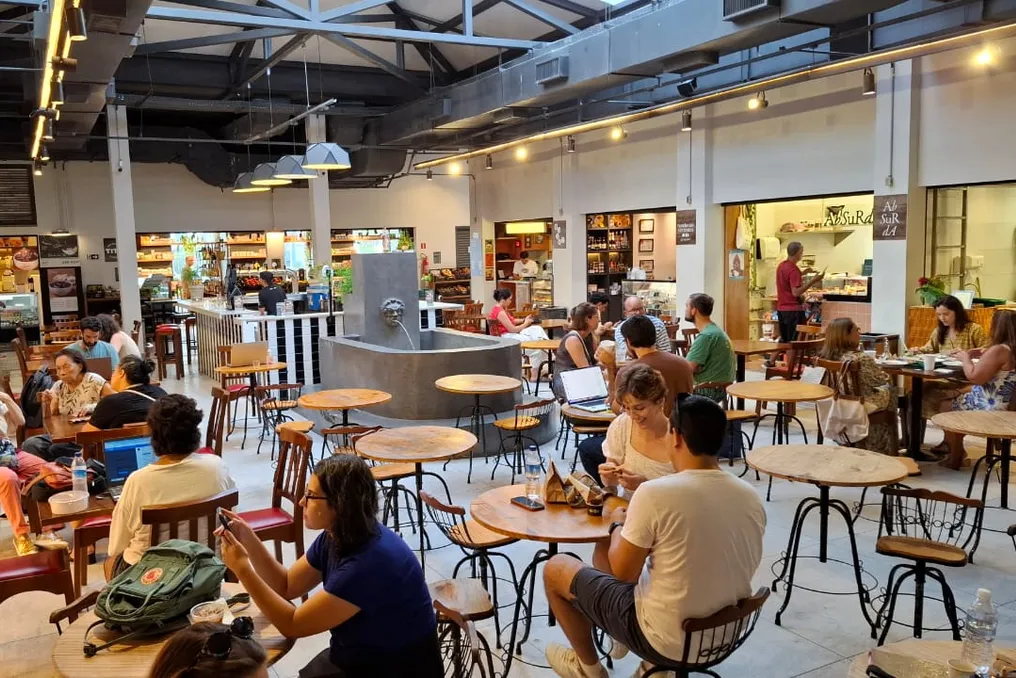
Time Out Magazine ranks neighborhoods in Rio de Janeiro and São Paulo among the world's most modern
Read more
Viagem e Turismo
viagemeturismo.abril.com.br

Time Out Magazine ranks neighborhoods in Rio de Janeiro and São Paulo among the world's most modern

The British magazine Time Out included two Brazilian neighborhoods in its ranking of the planet's most contemporary places. Laranjeiras, located in the South Zone of Rio de Janeiro, reached 17th place, while República, situated in the center of São Paulo, is ranked 25th. This ranking, released this Wednesday (16th), features a total of 40 neighborhoods considered the most stylish of the moment.

Annually, the publication selects areas that stand out for the combination of good gastronomy, active nightlife, diverse local commerce, high quality of life, and a strong sense of community. The selection is based on suggestions from the Time Out editorial team, which closely monitors the urban dynamics of its cities.

In the 2025 ranking, the chosen Brazilian representative was Barra Funda, which secured third place. Regarding the neighborhoods selected for 2026, Time Out characterized Laranjeiras as one of the most charming and cultural spots in Rio.

The South Zone neighborhood has several historical identities. Its name dates back to the period when the area was covered by vast orange groves next to the Carioca River. Later, it became home to aristocratic families, leaving behind mansions and attractions such as Guinle Park, which is surrounded by beautiful modernist buildings.

After this period, the region developed an industrial profile focused on textile production. Currently, what attracts attention is the coexistence of these distinct phases: there are tree-lined streets, old buildings, bars integrated into local routines, green areas, and a cultural agenda that has gained new points in recent years.

For those seeking more green areas, Guinle Park serves as a refuge within the neighborhood. This area was once the residence of Eduardo Guinle and currently houses the Laranjeiras Palace and a residential complex. The palace project is linked to Lúcio Costa's modern architecture, and its gardens were renovated by Burle Marx.

In the central area of São Paulo, República ranks 25th among the world's most modern neighborhoods. Time Out's choice is due to the fusion of defining elements of the region, where skyscrapers and centuries-old buildings coexist with restaurants, galleries, cultural spaces, and bars that have given new functions to already known places in the city.

A notable example is the Copan Building, a large residential complex designed by Oscar Niemeyer, which has become an icon of the São Paulo landscape. On the ground floor, modernist architecture shares space with cafes, restaurants, bookstores, and galleries. Highlights pointed out by Time Out include Bar da Dona Onça, Megafauna bookstore, and Pivô gallery.

The gastronomic scene extends through the neighborhood's streets, with places like A Casa do Porco, by Jefferson Rueda, also praised by Time Out. In the Edifício Itália, another landmark in the area, there is a dining area on the rooftop with a panoramic view of the city.

The cultural dimension is manifested in various points of República, from the centenary Municipal Theater to the Mário de Andrade Library. Another emblematic spot is the Galeria do Rock, opened in 1963, known for its stores focused on music, fashion, and various expressions of urban culture.

In the heart of the neighborhood, Praça da República concentrates part of daily life. Being one of the few green areas in the center, it hosts the traditional República Fair on Saturdays and Sundays, an event held since 1956, offering handicrafts and food. The square is also close to places that narrate the region's history, such as Cine Marabá, inaugurated in 1944.

At nightfall, Bar dos Arcos occupies the basement of the Municipal Theater, which is opposite Formosa Hi-Fi, while Cordial is cited as one of the bars that enliven the region.

At the top of the 2026 list, Jongno 3-ga, in Seoul, South Korea, led the podium. The neighborhood gained a new nocturnal dynamism with the 'pochas', food stalls that began attracting young people to its streets late in the afternoon. Simultaneously, Seosulla-gil street concentrates artisanal jewelry stores and bars in a calmer area.

In second place is L’Ocean District, in Rabat, Morocco. This coastal area combines a Four Seasons hotel with independent commerce. With a boardwalk lined with palm trees, beaches, cafes, street art, and cultural centers, the neighborhood is undergoing a revitalization that strengthens its creative identity and its role as a meeting point.

Neos Kosmos

Neos Kosmos, in Athens, Greece, completed the podium. Time Out describes this neighborhood as one of the liveliest areas in the city, full of traditional taverns and new restaurants of interest.
Similar stories

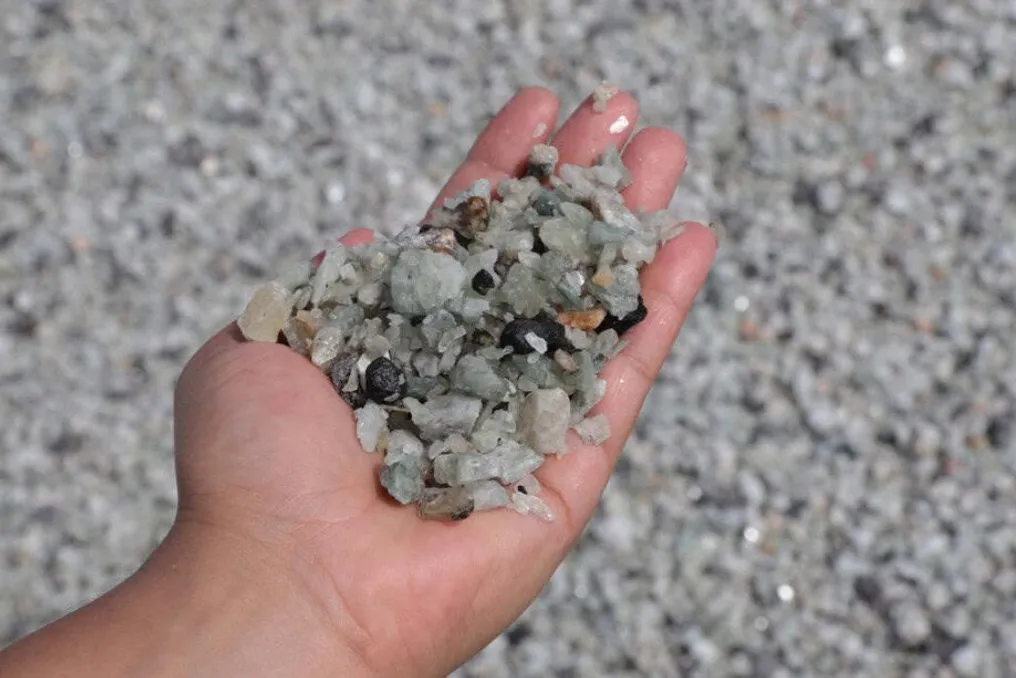
Brazil institutes national policy to promote the exploration of critical minerals for technology and electric vehicles
Read more
olhardigital.com.br

Brazil institutes national policy to promote the exploration of critical minerals for technology and electric vehicles

Brazil has implemented a national policy dedicated to boosting the research, extraction, processing, and transformation of minerals considered critical and strategic. This initiative was formalized this Wednesday, the 16th, and includes up to R$ 7 billion in incentives for businesses linked to this sector.

The new legislation aims to create structures that allow the country to expand its capacity to identify its reserves and process these materials domestically, in addition to establishing tools for financing, innovation, and research.

Increase in Resources for the Brazilian Geological Survey

An immediate impact of this measure will be the increase in funds allocated to the Brazilian Geological Survey (SGB). As stated by the Minister of Mines and Energy, Alexandre Silveira, the budget dedicated to soil research will rise from R$ 8 million to R$ 300 million. The objective is to intensify the survey of mineral wealth present in Brazilian territory.

This action is relevant because a considerable portion of the national territory still lacks mapping. Data from Agência Brasil indicates that only about 25% of Brazilian territory has been mapped for this type of survey. The country holds approximately 21 million tons of rare earth reserves, representing the second largest amount mapped globally, behind China, which has about 44 million tons.

Creation of the Mineral Activity Guarantee Fund (FGAM)

The policy establishes the creation of the Mineral Activity Guarantee Fund (FGAM). The Federal Government will initially contribute R$ 2 billion, with the fund's total assets potentially reaching R$ 5 billion. These resources will be used to provide guarantees for priority projects focused on the production of strategic and critical minerals.

Additionally, there is a provision for a federal program for the processing and transformation of these minerals, offering R$ 5 billion in tax credits between 2030 and 2034. This benefit can cover up to 20% of the costs of selected projects.

Thus, the total R$ 7 billion associated with the new policy is composed of the R$ 5 billion in tax credits and up to R$ 2 billion in contribution from the Federal Government to the guarantee fund, although each amount has distinct purposes within the policy.

The legislation also mandates that companies involved in the research, mining, processing, and transformation of critical and strategic minerals must allocate part of their revenue to both the fund and to research, development, and innovation activities.

In the first six years, 0.2% of gross operating revenue must be allocated to the guarantee fund, and 0.3% to R&D projects. After this initial period, the percentage allocated to research projects may rise to 0.5%.

Mineral research and prospecting have also been included among the eligible projects for issuing incentive debentures, which expands opportunities for private capital raising for the sector's activities.

Governance Structure and Support Mechanisms

The new law also institutes the National Council for the Industrialization of Critical and Strategic Minerals, an body responsible for coordinating, planning, and monitoring the national policy. Among its responsibilities is suggesting governmental policies and actions to develop the productive chains related to critical and strategic minerals. The first meeting of this collegiate body should take place approximately ten days after its constitution, according to the Minister of the Civil House, Miriam Belchior.

Another foreseen instrument is the creation of a national project registry. According to the text approved by Congress, the benefits of the policy can only be accessed by projects duly registered and authorized by the council. This system should consolidate data from federal, state, municipal, and district spheres involved in mineral activity.

The legislation also introduces the Low Carbon Mineral Certificate, which is optional, and requires that areas with potential for critical and strategic minerals receive priority in auctions conducted by the National Mining Agency (ANM).

In addition to aiding in the discovery of new reserves, geological surveying is crucial for determining which resources are available and where they can be exploited. Silveira emphasized that increased funding for the SGB will enable deeper knowledge of the Brazilian subsurface, given that the unmapped area suggests the possibility of discovering unknown resources.

The policy also aims for Brazil to evolve beyond mere extraction. The legislation offers incentives for the processing and transformation of minerals to occur within the national territory, stages that allow for the incorporation of technology and the addition of greater value to the productive chain.

With this new policy, the government acquires specific means to finance mineral research, support production and processing projects, and stimulate technology investments related to minerals vital for sectors such as electronics, automotive, energy, and defense.

Popular