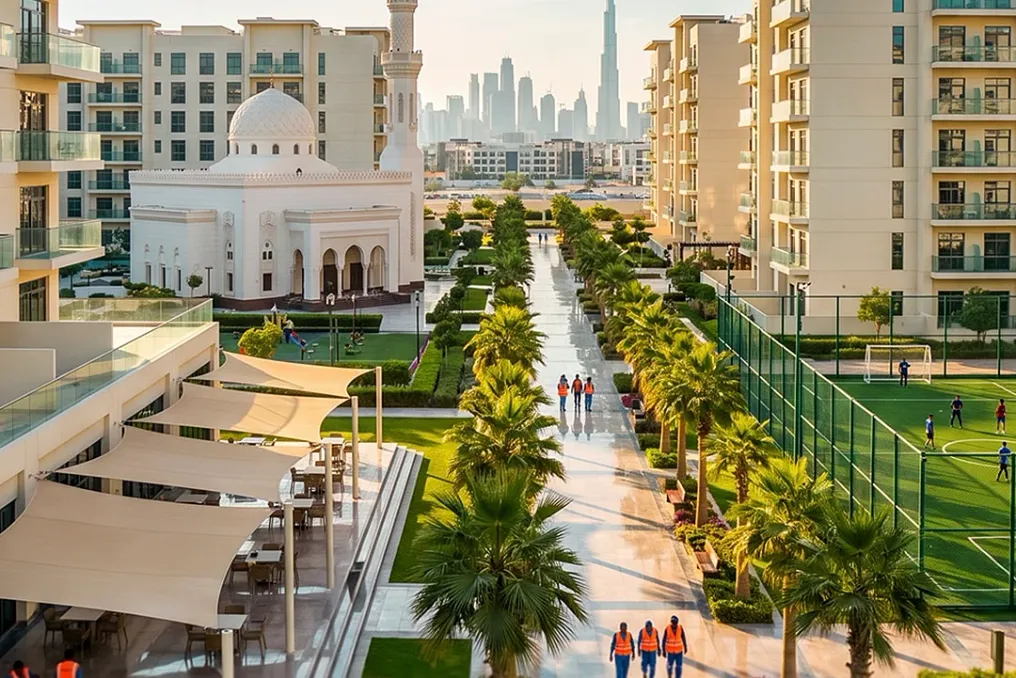
Dubai Municipality sets minimum living space standards for workers
Read more
Khaleej Times
www.khaleejtimes.com

Dubai Municipality sets minimum living space standards for workers

The Dubai Municipality has introduced updated planning and design standards, stipulating that housing for workers in Dubai must provide a minimum sleeping area of 3.7 square meters per person.

Furthermore, the new regulations specify a total floor area ranging from 8.9 to 10.3 square meters per person to accommodate auxiliary services in workers' residential areas. For recreational zones and open spaces, a standard of 0.75 to 1.5 square meters per person is provided.

These changes were presented on September 18 as part of the municipality's announcement regarding the completion of a complex of projects and initiatives aimed at improving living conditions in workers' residential areas, carried out in cooperation with government partners.

Under the Workers' Housing Policy program, the scope included infrastructure modernization, building upgrades, as well as the provision of public and recreational facilities.

Inspection of 1417 Buildings

The Municipality launched a unified intelligent classification system for workers' housing and inspected 1417 buildings to assess their structural condition and compliance with public hygiene and safety standards. Under the 'Workers' Housing Model' initiative, 19 properties were recognized as exemplary: three received Platinum classification, nine received Gold, and seven received Silver.

A centralized government database was also created, which assists authorities in planning projects and identifying areas most in need of improvement. This database integrates statistics and performance indicators to guide decisions and future investments in these communities.

Pedestrian Routes and Parking

Field studies in several workers' residential areas allowed for an assessment of existing infrastructure and the identification of needs for pedestrian paths, bridges, sidewalks, and other facilities. The Municipality stated that it is addressing these issues based on priority, while simultaneously developing solutions for parking spaces in workers' residential zones.

Broader efforts include providing retail outlets, public amenities, and sports facilities, giving workers access to shops, leisure, and opportunities for physical activity.

Focus on Safety and Services

Dr. Nasim Mohammed Rafi, the current CEO of the Environmental, Health, and Safety Agency at the Dubai Municipality, noted that the policy implementation plan places particular emphasis on updating the legislative and regulatory framework. This includes reviewing relevant laws and rules to align them with best practices, enhancing compliance levels, and accelerating construction projects.

She emphasized: 'Our goal is to develop infrastructure and public facilities in workers' residential areas and modernize buildings according to the highest engineering, technical, sanitary, and safety standards.'

Additionally, the municipality is expanding the provision of vital service projects that meet the specific needs of each community. This strengthens the integration between service sectors and maximizes the benefits of these projects.

The Municipality also reported that these initiatives support the Dubai Urban Master Plan 2040 and the Dubai Quality of Life Strategy 2033.

Similar stories

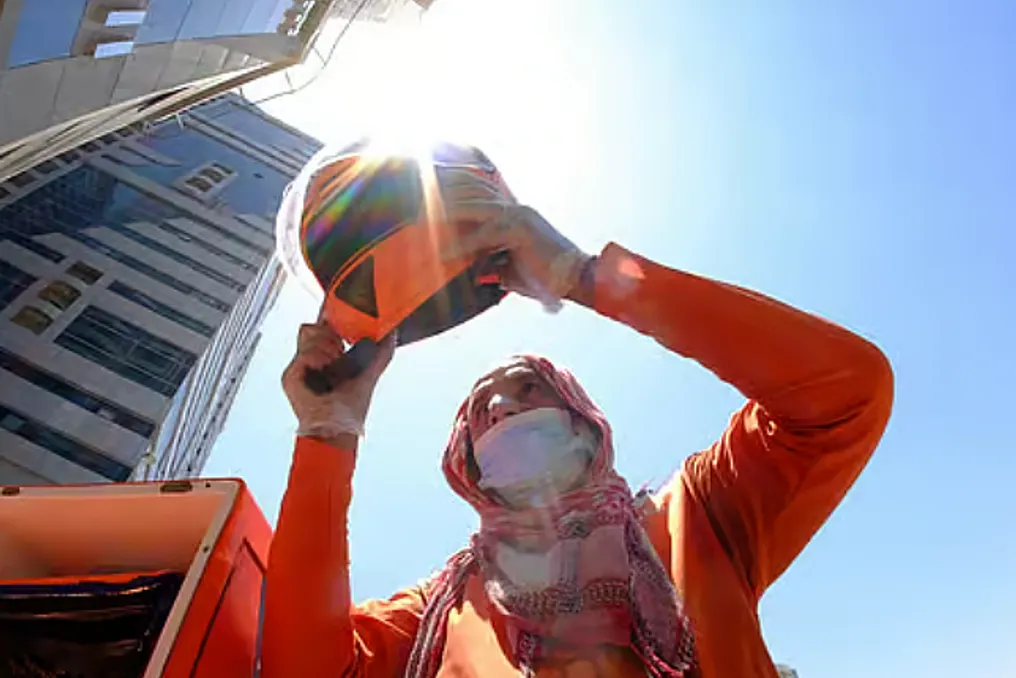
Annual mid-day break in UAE concludes; over 12,000 rest areas provided for workers
Read more
www.khaleejtimes.com

Annual mid-day break in UAE concludes; over 12,000 rest areas provided for workers

The annual policy in the UAE regarding mid-day breaks concludes on September 15th. Authorities note increased awareness, enhanced worker protection, and compliance from the private sector.

As part of the heat stress prevention campaign this summer, over 12,000 rest areas were organized across the UAE for delivery workers. This was announced by the Ministry of Human Resources and Emiratisation (MoHRE) upon the conclusion of the annual Policy to Prevent Occupational Heat Stress.

This policy is in effect annually from June 15th to September 15th and prohibits working under direct sunlight and in open areas between 12:30 PM and 3:00 PM, thereby protecting outdoor workers during the hottest hours of the day.

Dalal Al Shehhi, Assistant Deputy Minister for Labour Protection at MoHRE, reported that this year's implementation results indicate a high level of awareness and cooperation from companies.

She emphasized that 'this year's implementation results confirm the high level of awareness, partnership, and social responsibility demonstrated by private sector companies, as well as the recognition and respect shown to the workforce.'

This policy is part of the UAE's broader efforts to strengthen occupational health and safety, as well as improve employee well-being. The Ministry also utilizes digital solutions and data to monitor compliance with regulations.

Indian woman shares real salary and expenses while working in Dubai
Read more
www.aajtak.in

Indian woman shares real salary and expenses while working in Dubai

Many Indians dream of working abroad, and cities like Dubai attract them with their luxury and tall buildings, creating the impression that working there can change one's life. However, an Indian woman living in Dubai provided important information for those preparing to move to the UAE for work.

Shreya Shukla shared a video on social media, warning that the decision to move to Dubai should not be based solely on the salary amount in Indian rupees. It is also necessary to consider the costs of accommodation, food, and transportation.

Shreya noted that someone earning 3000 dirhams per month should not simply convert this amount into Indian rupees. Although this sum may seem significant in India, in Dubai it must be used to pay for rent, food, travel, and daily necessities. According to her, she has seen people earning between 2000 and 3000 dirhams who have very little money left by the end of the month.

In her video, Shreya advised considering a move only upon receiving a monthly salary of around 5000–6000 dirhams. Nevertheless, she emphasized that the situation is individual and depends on the place of residence and lifestyle. Opinions in social media are divided: some believe that 5000–6000 dirhams is insufficient today, while others think that a salary of 8000–10000 dirhams would be preferable for someone moving to Dubai.

The most important point in this discussion is that when receiving a job offer abroad, one should not make a decision based only on the salary. One must also find out whether the company provides housing, covers transportation costs, includes medical care, visa, and other benefits in the employment package. For example, an offer with a salary of 4000 dirhams that includes housing and transport might be better than an offer of 5000 dirhams where all expenses must be paid independently.

Often, when people receive an offer abroad, they first convert the local currency into Indian rupees, and the amount looks impressive, creating the illusion of good savings. However, the key question is the cost of living in that country. If a large part of the income goes towards rent, food, and transport, the benefit of a high salary can decrease.

Photos of Dubai look very attractive on social media: large buildings, expensive cars, and magnificent places create the impression of an easy life. But the cost of living there can be just as high. Therefore, if you plan to work in Dubai or any other country, you need to conduct a full calculation: how much you will earn, how much you will have to pay for rent, what food and transport will cost, and what net amount will remain at the end of the month.

Popular