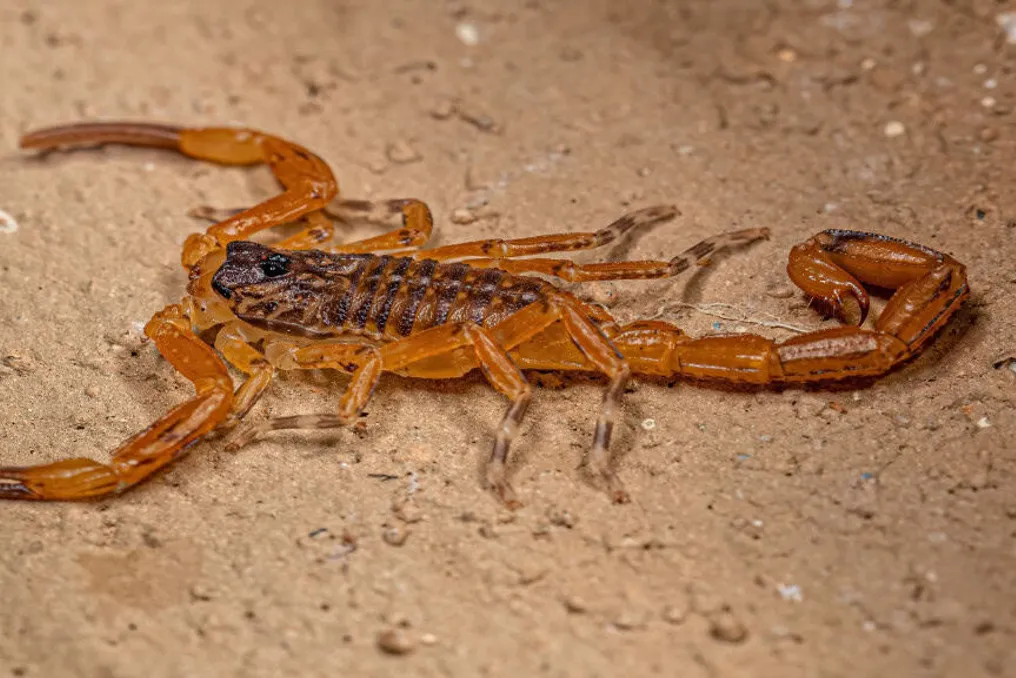
With rising temperatures, the appearance of scorpions is becoming more frequent in urban areas. Inside buildings, these animals find refuge, water sources, and food in places such as drains, cracks, piping, and wiring boxes.
According to guidelines provided by the Butantan Institute and the State Health Secretariat of São Paulo, there are three main measures to reduce the danger: sealing possible entry points, monitoring for cockroaches, and inspecting clothes and shoes before use.
It is observed that between September and February, the incidence of scorpions is higher in the South, Southeast, and Central-West regions. In the North and Northeast, occurrences can be recorded throughout the year. The rapid reproductive capacity of certain species also contributes to their spread.
Females of the yellow scorpion and the northeastern yellow scorpion species have the ability to reproduce through parthenogenesis, without the presence of a male. A female yellow scorpion can produce approximately two annual litters, with 20 to 25 offspring in each. These animals, which are mostly nocturnal, tend to remain hidden in protected and dark places during the day.
In apartments and houses, scorpions can shelter in grease traps, electrical outlets, wall fissures, loose baseboards, clothes left on the floor, and accumulated materials. Furthermore, they gain access to residences through sewage systems and rainwater runoff.
Even when living on upper floors, the risk persists, as the animal can climb irregular surfaces and use pipes and wiring boxes as routes of movement.
Physical barriers that hinder entry
Scorpion diet includes cockroaches, spiders, crickets, and other small living beings. For this reason, improper waste disposal, the presence of food scraps, and a large number of insects create ideal conditions for these animals to remain.
It is essential to keep yards and gardens clean, avoiding the accumulation of dry leaves, wood, bricks, debris, or any construction materials. Dense foliage should also not be allowed to lean against walls and fences.
The material released by Butantan clarifies that there is no scientific evidence proving the effectiveness of plants such as citronella, rosemary, sage, or lavender as scorpion repellents. Similarly, the use of insecticides, vinegar, bleach, and other chemicals is not recommended, as these substances can force the animal out of its hiding place and migrate to another area of the property.
Symptoms of the sting usually appear a few minutes after contact. They can include redness, tingling sensation, sweating, nausea, vomiting, agitation, and increased heart rate. Children are more vulnerable to developing serious complications, which include changes in blood pressure, arrhythmia, pulmonary edema, heart failure, and shock.
Post-sting guidelines
After being stung, the area must be washed with soap and water, and a warm compress should be applied, seeking immediate medical assistance. It is strictly forbidden to apply ice, make tourniquets, cut or puncture the affected area, or try to suck out the venom. Alcohol, kerosene, tobacco, or coffee powder should also not be used.
The decision regarding the need to administer antiscorpionic or antiarachnid serum belongs exclusively to the medical team, based on the symptoms presented and the severity of the clinical condition.