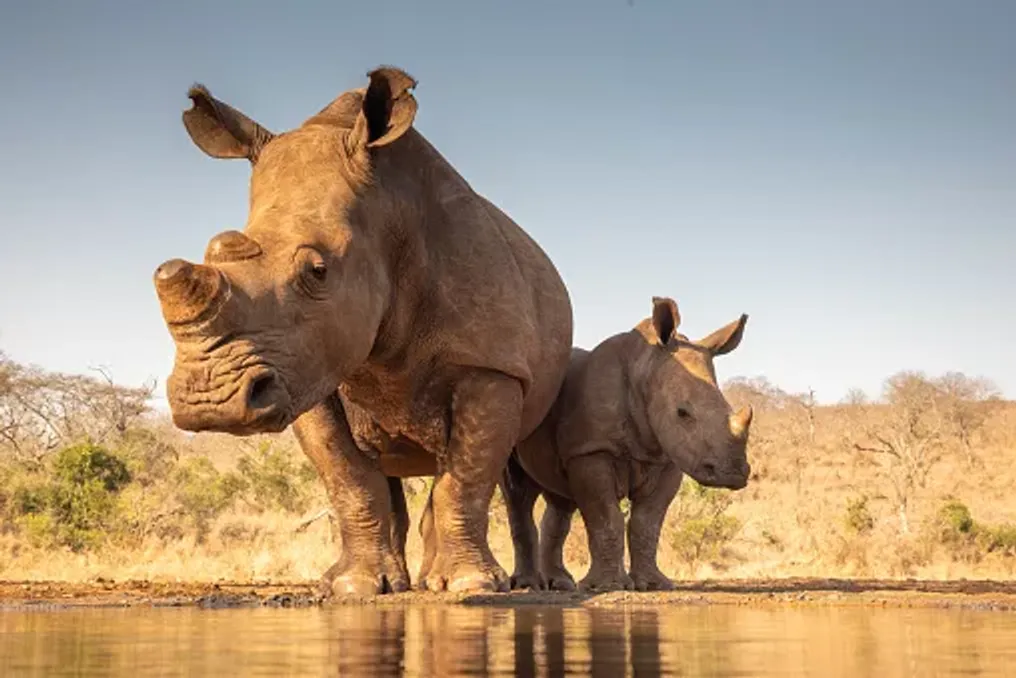
Five South African locations where rhino conservation is changing the species' future
Read more
Getaway
getaway.co.za

Five South African locations where rhino conservation is changing the species' future

South Africa has long been a center for the global fight to protect rhinos. However, today conservation efforts extend beyond simply ensuring the safety of animals in reserves. Wildlife specialists across the country are relocating rhinos to new habitats, strengthening existing populations, increasing genetic diversity, and creating safer landscapes for population growth. Some of these animals are eventually sent outside South Africa's borders to help restore rhino populations in countries where they have disappeared.

This approach gains particular significance amid ongoing poaching pressure. In 2025, 352 rhinos were illegally killed in the country, which is 16% fewer than in 2024. While this decline is encouraging, conservationists are looking at long-term strategies to increase the resilience of rhino populations.

Ahead of World Rhino Day on September 22, the five mentioned locations demonstrate how conservationists are looking beyond protecting current rhinos, striving to create new populations and secure the future of the species.

The Historical Role of Hluhluwe-iMfolozi Park

Several areas have played a crucial role in rhino conservation, including Hluhluwe-iMfolozi Park. In the late 19th century, white rhinos in South Africa were considered near extinction, until a small group was discovered in what is now the iMfolozi sector of the park. Their protection led to the creation of Operation Rhino—an innovative conservation program that began moving white rhinos to other areas to form new populations.

The results have been outstanding: descendants of these rhinos have formed populations across South Africa and other African countries, making the park a source of one of the greatest successes in wildlife conservation history. Today, Hluhluwe-iMfolozi continues to contribute to rhino conservation while protecting its own populations.

The park is home to both black and white rhinos, with black rhinos under particularly close observation. Conservation teams use foot patrols, aerial surveys, and strategically placed camera traps to identify individual animals, monitor their health, and understand population changes. This data is vital because individual black rhinos can be tracked throughout their lives, helping specialists understand breeding success, population structure, and where intervention may be needed.

The park's success with black rhinos also allows surplus animals to be moved to other suitable areas, expanding habitat range for the critically endangered species. Thus, Hluhluwe-iMfolozi represents more than just a historical conservation success; it remains part of the process of creating future rhino populations.

Expanding the Range Around Kruger National Park

Along the borders of Kruger National Park, a network of private and other protected areas is becoming an important part of the future of South African rhinos. As part of the Rhino Rewild initiative by African Parks, white rhinos from South Africa, rescued from former captive breeding operations, are being moved to carefully selected protected zones. Destinations are assessed based on habitat, security, management capacity, and the ability to support viable populations.

Member reserves of the Greater Kruger Environmental Protection Fund have already taken in a significant number of these animals. In 2024, 120 South African white rhinos were relocated into the Greater Kruger landscape, and another 160 individuals were translocated in 2025. The animals are placed under veterinary supervision and de-roganzed to reduce vulnerability to poaching.

The essence is not just about adding more rhinos to the savanna. By strengthening populations across multiple protected areas, conservationists can distribute risks and create additional populations outside the country's largest national park. This is part of a much larger initiative: in 2023, African Parks took responsibility for about 2,000 white rhinos raised in captivity with the goal of rewilding them in safe protected areas across Africa over a decade.

Thus, the transfers to Greater Kruger are only part of an ambitious attempt to turn animals previously dependent on intensive management into wild rhinos contributing to functioning ecosystems.

The Conservation History of Munhwana

Munhwana Conservancy is of particular interest because its conservation history is closely linked to land return and community ownership. This 29,866-hectare conservancy includes land owned by the Makhasa and Mnkobokazi communities, as well as private conservation partners, including &Beyond Phinda and ZUKA Private Game Reserves. The communities decided to keep their restored lands protected.

In May 2024, Munhwana became the first destination under the African Parks Rhino Rewild initiative, accepting 40 South African white rhinos. The animals were moved there to strengthen the existing population, improve genetic diversity, and create opportunities for future translocations. Conservation also supports tourism, which is a vital part of the local economy.

Munhwana's role has since gone beyond simply receiving rhinos. The conservancy functions as an adaptation and staging ground for animals destined for other parts of Africa. Rhinos spend time there acclimatizing to natural conditions before long journeys to new habitats. In 2025, 70 South African white rhinos that passed through Munhwana were transferred to Akagera National Park in Rwanda. Other rhinos from the conservancy also contributed to the restoration of white rhinos in Garamba National Park in the Democratic Republic of Congo.

This makes Munhwana an unusual example of conservation action: communal and private lands in KwaZulu-Natal are helping sustain rhino recovery thousands of kilometers away.

Black Rhino Conservation

The future of rhino conservation does not only concern white rhinos. Black rhinos remain far rarer, and establishing additional populations is a crucial part of reducing the species' vulnerability. The Itala Reserve in KwaZulu-Natal has become part of these efforts under the Black Rhino Range Expansion Project. The principle is simple: create viable black rhino populations in suitable habitats outside their existing strong refuges.

A recent example shows why this work matters beyond South Africa. In June 2025, 10 critically endangered black rhinos were moved from South Africa to Zinave National Park in Mozambique. The animals were sourced from the Itala Reserve and under the Ezemvelo KZN Wildlife Black Rhino Range Expansion Project, and then transported to Hluhluwe-iMfolozi Park for preparation for travel. This move was part of a larger project to restore black rhinos in Zinave, where they disappeared decades ago.

These 10 animals increased the total number of rhinos transferred to Zinave to 47. Conservationists hope that the growing population will eventually become a viable breeding population, and genetic diversity will be strengthened by introducing animals from different sources.

This serves as a useful reminder that South Africa's role in rhino conservation extends beyond its borders. Where successful populations can safely release animals for carefully planned translocations, these rhinos can become the foundation for new populations in other parts of Africa.

The Contribution of Greater Makalali

Greater Makalali offers another example of how private conservation areas can contribute to the future of rhinos. This reserve actively participates in the WWF-led Black Rhino Range Expansion Project, supporting rhino translocations, as well as field ranger teams and working dogs dedicated to animal protection. The approach combines habitat, protection, and biological management, rather than relying on a single intervention.

The Greater Makalali conservation model demonstrates the role private reserves can play in providing additional habitat for threatened species. The reserve's work has included the reintroduction of black rhinos, as well as continuous protection of white rhinos and other threatened wildlife. The reserve's security program includes specialized field rangers and canine units. For black rhinos, in particular, every suitable and well-protected landscape is important. Expanding their range can help create additional populations and reduce the risks associated with concentrating too many animals in a small number of areas.

The history of South African rhino conservation began with a small population of white rhinos in what is now Hluhluwe-iMfolozi Park. More than a century later, the descendants of these animals are helping conservation specialists create populations across the continent. Rhinos are moved between reserves to strengthen genetic diversity. Animals raised in captivity are returned to the wild. Community-owned lands become part of large-scale conservation initiatives, and South African black rhinos help restore populations in neighboring countries.

African Parks reported that by 2025, over 300 rhinos had been transferred through its Rhino Rewild initiative, with 33 calves already born in the wild. These projects do not eliminate threats. Poaching remains a serious problem, and rhino relocation is justified only when there is suitable habitat, reliable protection, and long-term management in the destination area.
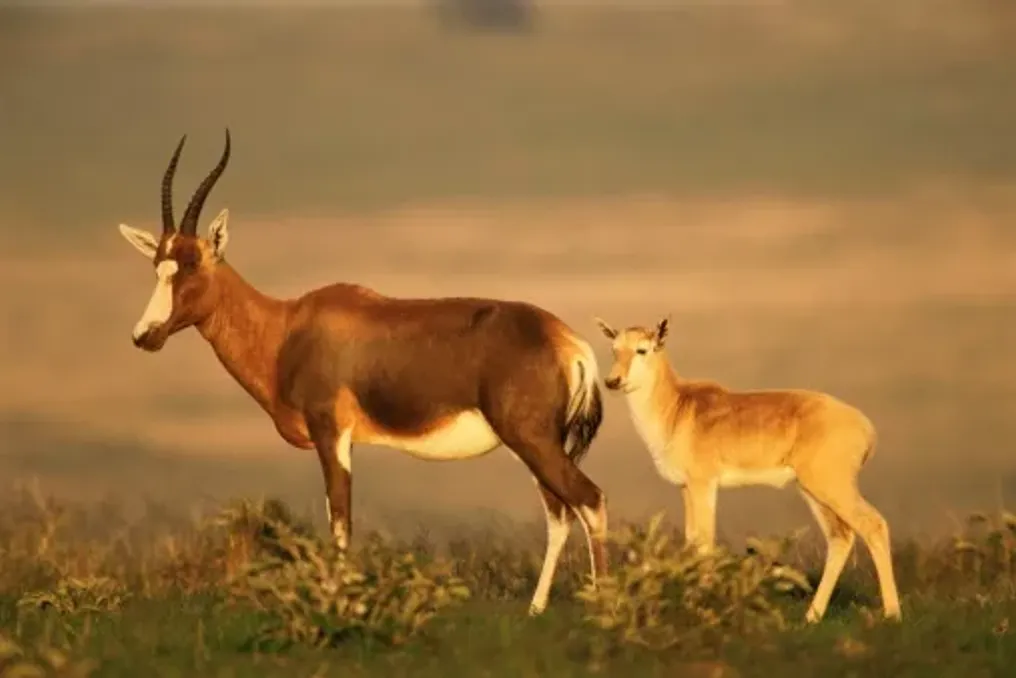

Similar stories

Five South African Animal Species That Have Demonstrated Unexpected Population Recovery
Read more
getaway.co.za

Five South African Animal Species That Have Demonstrated Unexpected Population Recovery

Wildlife stories from South Africa often focus on endangered species, but there are also species with a completely different history. Thanks to the creation of protected areas, private conservation initiatives, animal relocation, habitat protection, and land-use changes, many South African species have managed to achieve significant population recovery.

These five species demonstrate population growth, although further conservation remains a critically important task.

The Cape Mountain Zebra Came Remarkably Close to Disappearing

The subspecies, once widespread in the Western and Eastern Cape, was reduced to fewer than 80 individuals in the 1950s due to poaching and habitat loss. At its lowest point, the population was estimated at around 30 animals distributed across three small groups.

Thanks to protection and careful management, the situation began to change. The Mountain Zebra National Park became particularly important as animals from there were used to establish new populations elsewhere. The recovery subsequently spread beyond national parks, as private landowners also began protecting Cape Mountain Zebras, forming additional populations and providing the subspecies access to more suitable habitats.

By 2014/15, surveys recorded over 4790 Cape Mountain Zebras across 75 populations in the Western and Eastern Cape, including animals on both formally protected and private lands. This recovery was significant enough for the Cape Mountain Zebra to be listed as 'Least Concern' on the national Red List of South Africa. Nevertheless, challenges remain related to small populations, limited genetic diversity, and hybridization.

The conclusion is that wildlife protection does not always mean keeping it within one fence; private conservation areas and associated populations also play an important role.

The Bontebok Is One of South Africa's Most Striking Antelopes, But Its Survival Once Depended on a Very Small Number of Animals

Overhunting pushed this species to the brink of extinction. The remaining population was protected by Cape farming families, and when the Bontebok National Park was established near Bredasdorp in 1931, there were only 22 animals left. These early conservation efforts gave the bontebok a chance to recover. Animals from this protected population were later relocated to other reserves, contributing to the formation of new groups.

Today, bonteboks are found in both protected areas and on private land, and they have also been introduced into areas outside their original range. Their story serves as a reminder that some successes in South African wildlife conservation began not in large national parks, but on farms where landowners decided to protect the vanishing animals.

Recovery still faces difficulties. The bontebok remains vulnerable nationally, and among the issues addressed by conservation specialists are habitat loss, population fragmentation, and concerns about hybridization.

Blesbok's Recovery Is Particularly Striking Because It Shows How Dramatically Wildlife Numbers Can Change When Land Use Changes

Historically, blesbok were widely distributed across the Highveld grasslands and parts of the Karoo. Intensive hunting for meat led to a sharp decline, and by the end of the 19th century, only about 2000 animals remained in South Africa. Since then, the species has achieved remarkable recovery, especially on private land.

Blesboks have been translocated to ranches and protected areas across the country, including areas both inside and outside their historical range. According to SANBI estimates, the minimum mature population exceeds 54,000 animals in protected areas and ranches, based on 2010s counts. This makes the blesbok an interesting example of how the growth of private conservation areas has changed the fate of some South African species. It is also a reminder that a species can become relatively common again without returning exactly to its original distribution. Translocations for species conservation helped create populations in places where blesbok historically did not exist.

Conclusion: Land-use change can sometimes benefit wildlife, especially when agricultural or ranching land is converted into managed habitat for wild animals.

The Black Rhino's Story Is More Complicated, But Its Recovery Is Still Remarkable

Across Africa, the black rhino population declined by an estimated 97% between 1960 and the mid-1990s, mainly due to poaching. The continental population reached a minimum of about 2410 animals in 1995. Since then, the numbers have increased thanks to intensive protection, translocations, and efforts to expand the species' range. South Africa remains an important conservation hub. More recent SANBI data shows that the black rhino population in the country is approximately 2065 animals, while the continental population reached an estimated 6448 individuals by 2023. Some conservation measures also included reintroducing black rhinos to areas where populations had disappeared. Moving animals between protected areas helps expand the species' range and improve genetic diversity. However, this recovery comes with a serious caveat: black rhinos remain threatened. Poaching continues to pose a major problem, meaning their recovery depends on constant protection and management.

Conclusion: Population recovery can be real, yet fragile. For some species, conservation is an ongoing process, not an endpoint.

The Cape Vulture Is Perhaps the Least Obvious Comeback on This List

These large birds are often associated with dramatic cliffs and open landscapes where they feed on carrion. Like other vultures, they face threats such as poisoning, habitat changes, and collisions with infrastructure. However, there is encouraging news. The latest regional assessment of South African birds notes that the Cape Vulture has been downgraded from 'Endangered' to 'Vulnerable,' a result of conservation efforts promoting population recovery.

Protecting nesting sites was an important part of the work, alongside efforts to reduce poisoning and other human-related threats. BirdLife South Africa still classifies the Cape Vulture as 'Vulnerable' and emphasizes that vultures across the country are under significant pressure. Poisoning is particularly dangerous, as several birds can die after consuming the same contaminated carcass. Thus, the Cape Vulture represents a slightly different kind of recovery: it hasn't just moved from the 'Endangered' category to safe, but conservation actions have improved its prospects to the extent that its official threat category has changed.

Conclusion: Success in conservation can sometimes mean slowing the decline, recovering colonies, or reducing the risk of extinction, rather than just a significant population increase.

These five animals have very different stories, but they share a common thread: conservation efforts yield results when people change the situation on the ground. For the Cape Mountain Zebra and the Bontebok, population recovery was achieved through protection and animal relocation. The Blesbok benefited from the expansion of conservation areas and private conservation. The Black Rhino's recovery depended on intensive protection and relocation to suitable habitats. And in the case of the Cape Vulture, the focus was on protecting colonies and reducing threats like poisoning. None of these stories mean the work is finished; many of these animals remain at risk from habitat loss, genetic problems, poaching, or other anthropogenic pressures. However, their recovery demonstrates that nature conservation truly works.

Five Cape Town Museums Worth Visiting During Heritage Month
Read more
getaway.co.za

Five Cape Town Museums Worth Visiting During Heritage Month

Heritage Month offers an opportunity to look deeper than just the beaches, mountains, and culinary scene of Cape Town by immersing oneself in the histories that have shaped this city. Cape Town's museums showcase the most diverse facets of the city: from fictional to unexpectedly fascinating, and some are suitable for family outings.

If you plan to explore the history and culture of Cape Town in September, these museums should be included in your list of visits.

Iziko South African Museum

Visiting the Iziko South African Museum gives you a chance to journey through millions of years of South African history without leaving the Company Gardens. The museum's collections cover the natural world, archaeology, and human history, including exhibits ranging from fossils and ancient artifacts to marine specimens and displays of human evolution.

The museum's location allows for easy combination with other attractions in central Cape Town. You can spend the morning at the museum and then head to the Company Gardens or continue exploring other cultural sites in the city.

Address: 25 Queen Victoria Street, Gardens.

Zeitz MOCAA

The Zeitz MOCAA focuses on contemporary African creativity and the discussions taking place on the continent and among its diaspora. The museum occupies a historic grain silo complex at the V&A Waterfront, making the building itself part of the exhibition. Inside the gallery, modern works from various countries, artists, and perspectives are presented.

This is a good choice if you want your Heritage Month outing to consider Africa's present and future alongside its past.

Address: Silo District, V&A Waterfront.

District Six Museum

To understand the more recent history of Cape Town, one can start with the District Six Museum, which offers an intimate space. The museum focuses on the experiences of people who lived in District Six before forced removals during the apartheid era changed the area. Personal stories and historical materials help visitors grasp the community that existed there and the consequences of its destruction.

This museum is more focused on listening to memories associated with a place that remains an important part of Cape Town's identity, rather than simply viewing exhibits.

Address: 25A Buitenkant Street, Cape Town CBD.

Heart of Cape Town Museum

Cape Town made a medical breakthrough in December 1967 when Dr. Christian Barnard and his team performed the world's first successful human heart transplant at Groote Schuur Hospital. The Heart of Cape Town Museum preserves the story of this remarkable moment, giving visitors insight into the medical team, the operation itself, and the hospital setting where it took place.

For those interested in science, medicine, or unusual chapters of Cape Town's history, this museum offers a completely different experience compared to the city's artistic and historical collections.

Address: Groote Schuur Hospital, Observatory.

Cape Town Diamond Museum

The history and economy of South Africa have long been closely linked to diamonds, and the Cape Town Diamond Museum provides a brief introduction to this topic. Located at the V&A Waterfront, the museum traces the diamond's journey from its underground origin through mining and the processes of transforming rough stones into polished gems. Exhibitions also include replicas of some of the world's most famous diamonds, including Cullinan.

This is a light addition to a Waterfront route if you want to fit in some history during a day of sightseeing.

Address: The Clock Tower, V&A Waterfront.

Cape Town's museums vividly demonstrate the city's multilayered nature. One visit can take you from prehistoric fossils to contemporary African art, while another can introduce you to personal stories related to apartheid-era displacement or a medical breakthrough that garnered international attention. This Heritage Month, replace your usual trip through Cape Town with a museum visit—perhaps you will leave with an understanding of a completely different side of the Mother City.

Nine South African Places with Unusual Names and the History of Their Origin
Read more
getaway.co.za

Nine South African Places with Unusual Names and the History of Their Origin

South Africa has many beautiful place names, but among them are those that make drivers stop, reread a road sign, and ponder the origin of the location. The strange toponyms of South Africa often reveal information about the landscape, population, and history preceding modernity. Below are nine of the most notable examples.

One of the most obvious is the farm Tweebuffelsmeteenskootmorsdoodgeskietfontein in the North West province, located about 20 kilometers east of Lichtenburg. With its 44-character name, which translates from Afrikaans as 'spring where two buffaloes were shot by one shot,' it is recognized as the longest name in South Africa. Although this is a very detailed designation for a place that could simply be called 'Two Buffaloes,' it gives the place a special character.

The name Tietiesbaai, located on the West Coast near Paternoester, always causes a pause in conversations. It is said that this memorable name arose because the rocks in this bay resemble a chest. Another version links the name to the trader Jacques Titius, who was associated with the West Coast. In any case, Tietiesbaai has become one of those South African names whose pronunciation brings a smile.

The name Hotazel sounds more like the name of an aggressive air conditioning company than a city in the North Cape. It originated on the farm where the town was founded and is a play on words from the phrase 'hot as hell,' reflecting the extreme conditions observed during land surveying. Notably, Hotazel can also experience very cold winter conditions, prompting thought about a possible name change depending on the season.

The town of Pofadder literally means 'fluffy viper' in Afrikaans, which might suggest that someone saw a snake and recorded it on a map. However, a more widely accepted explanation is historical: the settlement was named after the leader Cornan Klaas Pofadder. Although the settlement was briefly renamed Theronsville in 1918, the name Pofadder eventually returned. Today, this name is also used in everyday speech in South Africa to denote a very remote place.

Kakamas is another unusual name whose history is surprising. It was originally related to a channel on the Orange River and has several proposed origins. One theory links it to a Khoisan word meaning 'poor pasture,' while another version ties it to a buffalo incident. The irony is that modern Kakamas is located in a surprisingly fertile part of the Lower Orange River valley, where irrigation supports the cultivation of grapes, fruits, and other crops.

In the case of Twee Riviere, the translation from Afrikaans simply means 'two rivers,' and the name comes from the Deep and Dwars rivers flowing through the settlement in Langkloof. Although this may seem quite ordinary compared to Tweebuffelsmeteenskootmorsdoodgeskietfontein, it has a charming literalness: there are two rivers here, and that was mapped.

In the Mpumalanga province, there is a South African analogue to Amsterdam. This town was originally called Roburnia in honor of the Scottish poet Robert Burns. In 1882, it was renamed Amsterdam in honor of the Dutch city where Secretary of State Eduard Boek was born, and partly as a token of gratitude for the support of the Dutch side during the First Anglo-Boer War.

Dullstroom sounds like it urgently needs a marketing department, but the scenery is much more picturesque. The town in Mpumalanga received its name in honor of the Dutch settler Wolterus Dalla, and the word 'stroom' in Afrikaans means stream, referring to the region's water arteries. Today, Dullstroom is known for its cool climate, misty landscapes, fishing, and mountain views.

Nieu-Bethesda seems mysterious, but its history is connected to water. This village in the Eastern Cape was founded in the 19th century near a strong water source and was named after the biblical city of Bethany, which is associated with a body of water. There is even a linguistic peculiarity in the spelling: the original name was 'nu Bethesda,' but it was mistakenly recorded as 'Nieu Bethesda,' and this error became established.

Thus, the names of places in South Africa demonstrate that combining history, geography, humor, and a typo is enough to create an unforgettable place name.

Popular