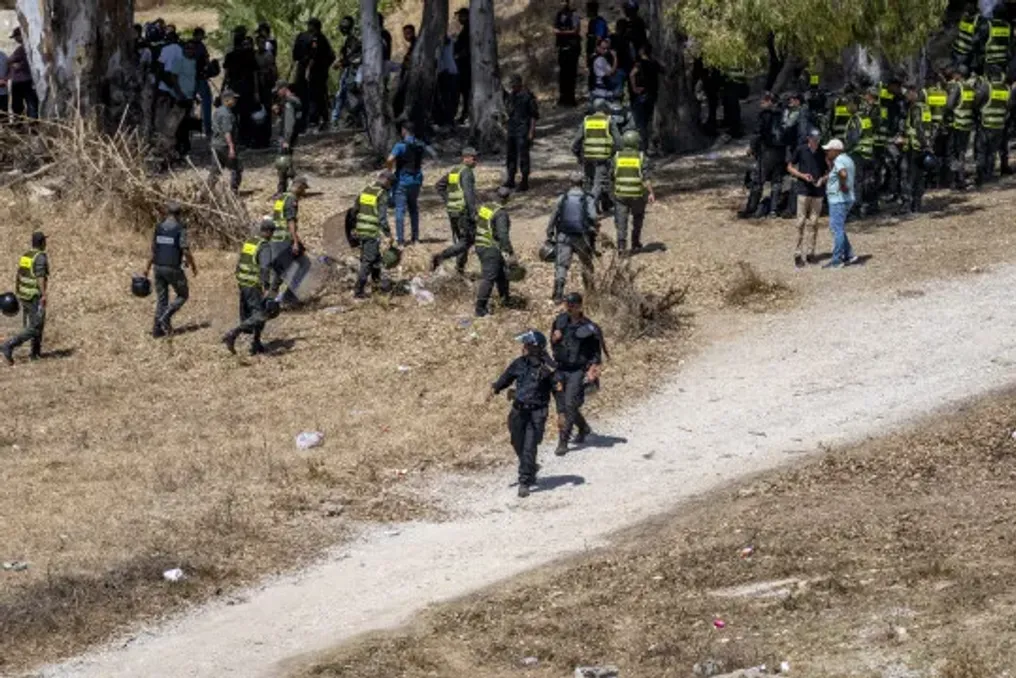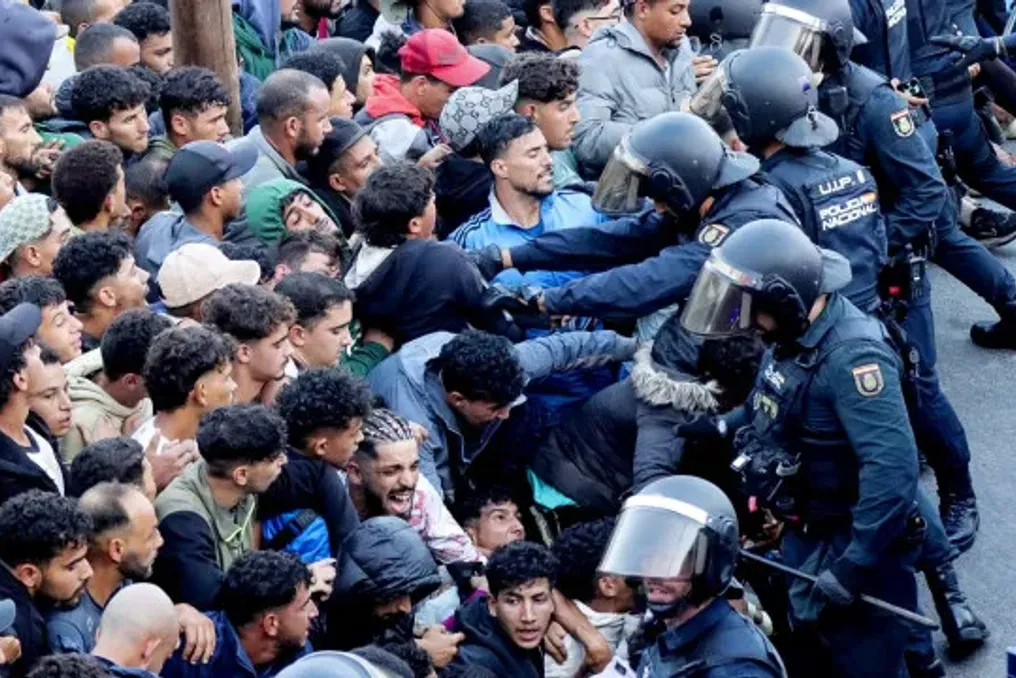
It is estimated that between 9,000 and 10,000 migrants who illegally entered Ceuta at the end of July are still residing in the city. This figure is based on data provided by local security forces, although the Spanish Government admits the difficulty in determining the exact number of people who remained after the large arrival.
A temporary reception center, established on port land in Ceuta, has the capacity to shelter 1,700 adults in campaign tents, in addition to having sanitary infrastructure. These individuals join 4,160 people accommodated by the Spanish government in similar locations over the last month and a half, spread across Ceuta, a Spanish enclave located in North Africa bordering Morocco.
Additionally, official data indicates that there are 2,140 unaccompanied minors registered and housed in facilities of the autonomous city council.
The Spanish executive emphasizes that only through temporary accommodation in reception centers is it possible to complete the registration of all migrants and initiate the necessary procedures for their repatriation or granting of asylum, as required by European and national legislation.
Despite the estimate of 9,000 to 10,000 people, authorities point out that they still need another 3,000 to 4,000 accommodation spots for adults who remain on the streets, in mountainous areas, or in refugee buildings.
There are discrepancies in the figures presented: while the Spanish Government provides an estimate, the autonomous city executive had calculated the week before that 13,000 people had remained in Ceuta after the massive influx in July.
Pedro Sánchez, Prime Minister of Spain, stated last week that the Government expects to stabilize the situation in Ceuta by the end of the year, reiterating that registration and temporary accommodation are crucial for carrying out repatriations, in accordance with current laws.
The Spanish right-wing opposition has pressured the Government for an immediate return of all migrants who illegally entered in July. The executive has faced criticism over the slowness of the response to the crisis, which has been marked by mutual accusations between the central government, led by the socialists, and the local government, composed of the People's Party (PP).
The Spanish Government complains that the municipal executive imposes obstacles to providing accommodation spaces or transferring unaccompanied minors to other Spanish regions, accusing the PP of wanting to 'make the crisis chronic'. On the other hand, the PP and the local government refute these allegations, claiming that Sánchez's executive refuses to assume its responsibilities and insisting on immediate return to Morocco, classifying the July event not as a migration crisis, but as an act of defense and security, describing what happened as 'an invasion' against the Spanish border and territorial integrity.