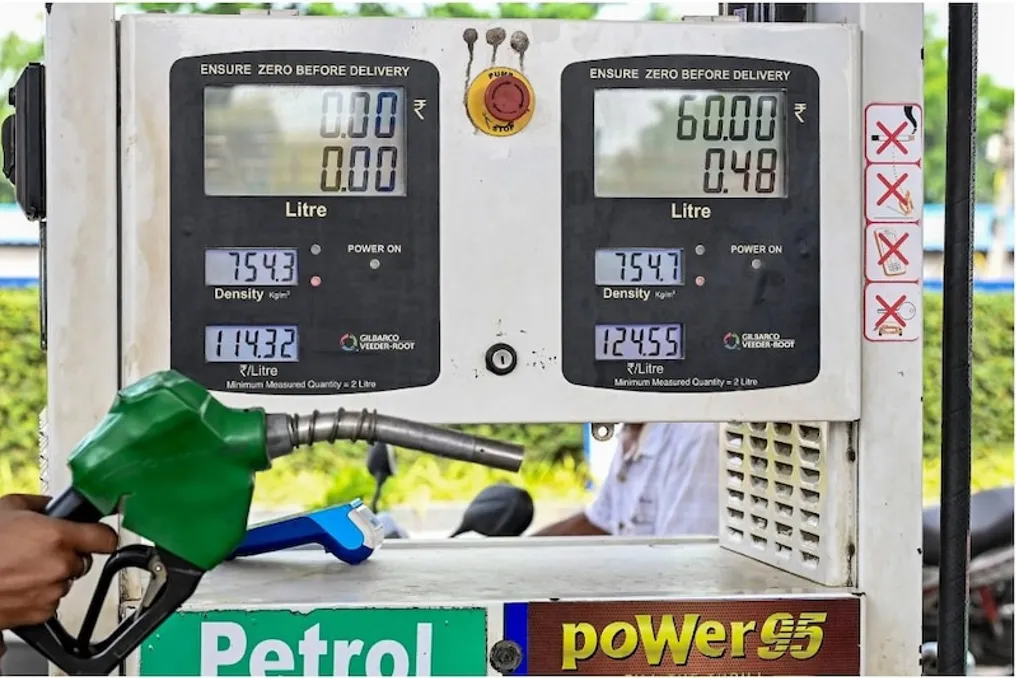
When a gas pump displays that 10 liters have been dispensed, and the display shows exactly 10 liters, consumers usually assume they have received the full volume of gasoline or diesel fuel. However, an inspection conducted in the state of Karnataka called this system into question.
As a result of the check conducted by the Karnataka government, it was determined whether the amount of fuel sold to customers matched the amount they paid for. The discovered truth was quite unexpected: out of 805 checked stations, 768 machines were found to be faulty, meaning the actual amount of fuel in the customer's tank did not correspond to the display readings.
More serious violations were identified at some stations, leading to action against 101 stations and the imposition of a total fine of 6.66 lakh rupees on them. The main problem at fuel stations is related to calibration, due to which the volume of fuel displayed on the screen differs significantly from the actually dispensed amount.
Calibration means whether the actual fuel consumption matches the quantity shown by the machine. That is, if the display shows 10 liters, the machine must dispense exactly 10 liters. Problems with calibration are observed at many stations. Because of this, the government periodically conducts inspections to ensure the proper functioning of equipment at fuel stations. For this purpose, employees conduct calibration checks using standard measuring instruments.
It is important to understand the essence of the situation: any minor discrepancy on its own is not grounds for a fine or legal proceedings. According to the minister's data, during recent actions in Karnataka, a deviation of up to 50 milliliters per 10 liters was considered acceptable. Measures are taken if this limit is exceeded. For example, if the display indicates 10 liters, but the check reveals dispensing about 9.95 liters, it may remain within the acceptable tolerance, but a more significant reduction is classified as a serious violation.
The fuel dispenser does not just report how much fuel came out of the nozzle; the entire system, including the flow meter and the dispensing mechanism, jointly measures and displays the volume. If there is an inaccuracy in the accuracy of the dispensing unit, a discrepancy may arise between the display readings and the actual delivery. This is why the customer cannot be sure of the actual volume based only on the data displayed on the screen.
Nevertheless, these discrepancies do not always occur intentionally on the part of the station staff. Sometimes such differences arise due to malfunctions in the machine itself. Therefore, regular checks are extremely important.
If a consumer has doubts about the volume of fuel, they have the right to request an inspection at the station using measuring containers of 5 or 10 liters. Thus, instead of being satisfied only with the sum and quantity displayed on the meter, one should pay attention to whether the machine's calibration at the fuel station is valid. Although the government conducts such checks from time to time, they should be carried out at shorter intervals.