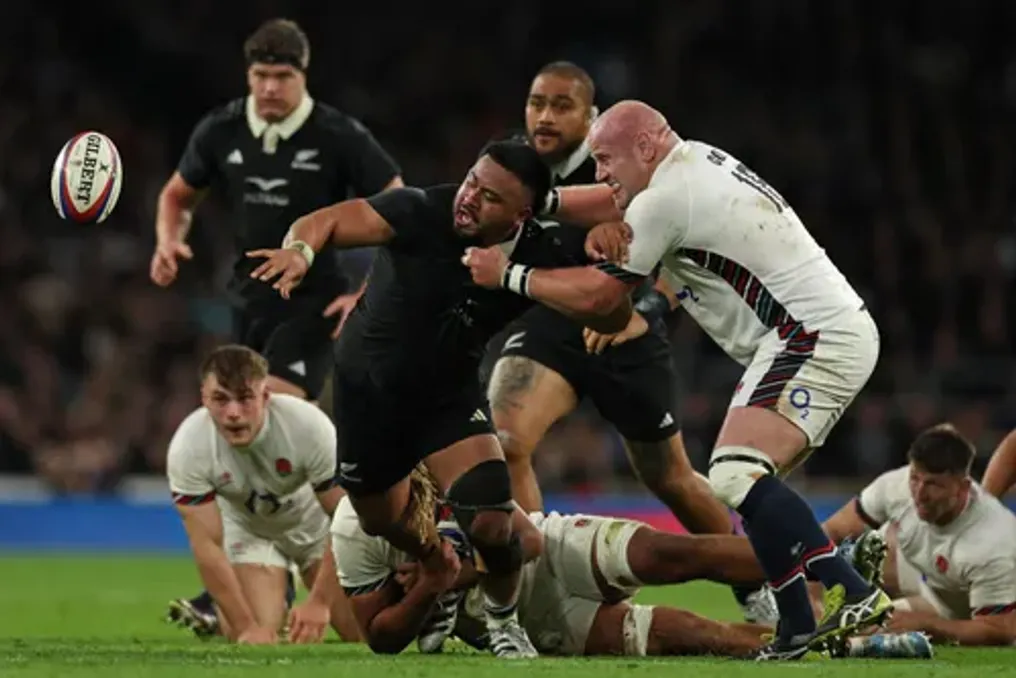
John Plamtree believes the All Blacks team was physically weaker than the Springboks
Read more
IOL
iol.co.za

John Plamtree believes the All Blacks team was physically weaker than the Springboks

John Plamtree, who is now leading a quieter life in Durban after a global coaching career, has once again addressed a familiar topic while observing how his former team appeared physically overwhelmed by the Springboks.

Plamtree concluded his second stint with the Sharks last year and is enjoying life without the pressure of professional coaching with his wife Lara. One of his new hobbies is hosting a radio show on the online station PlayZN, located in Umhlanga Rocks, alongside his good friend and former Sharks assistant coach, Grant Bashford.

It was on PlayZN that Plamtree gave an candid assessment of the All Blacks' performance in the recent series of matches during the 'Greatest Rugby Rivalry'. Having three years of experience working in the All Blacks camp from 2020 to 2022, particularly focusing on forward training, Plamtree naturally concentrated on the aspects that determined the outcome of this series.

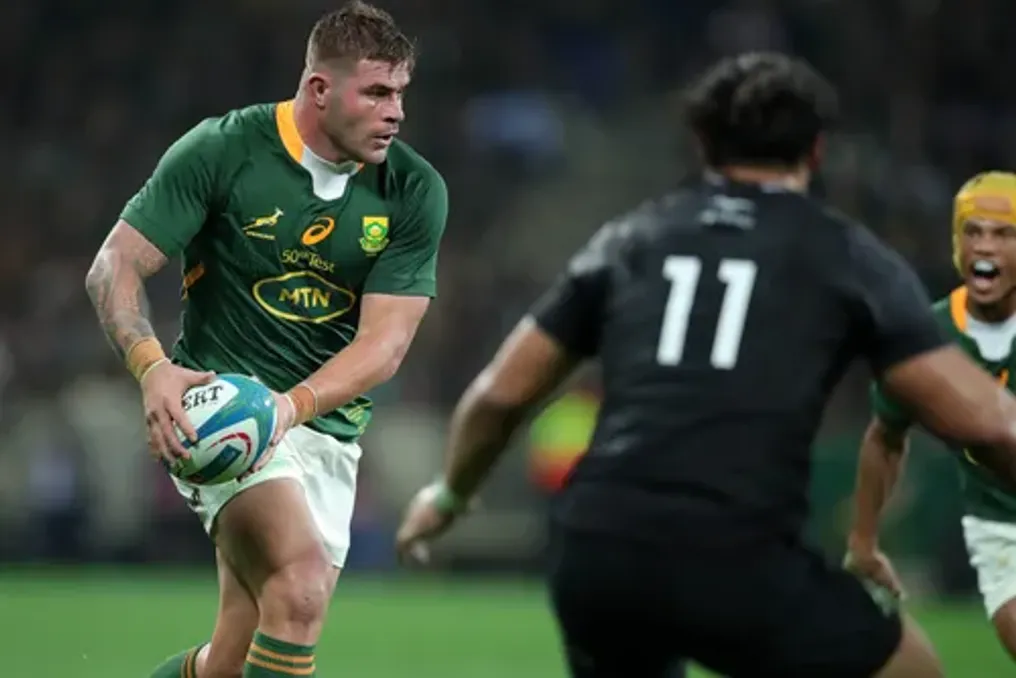
His conclusion was not the most flattering: he stated that the All Blacks were physically overpowered and inferior to the Springboks. Plamtree noted that when facing the Boks, who play straightforwardly and utilize strong runners such as Jasper Wiese, Eben Etzebeth, and Malcolm Marx, precise tackling tactics are necessary.

He added: 'Overall, you need to put two bodies into every tackle. For me, the All Blacks looked a bit passive, especially in the 22-meter area. Against the Boks, you need two people in every instance to stop the momentum.'

Plamtree believes the problem might run deeper than just technique. He thinks it needs to be determined whether this is related to the Boks' excessive physical strength or technical shortcomings. He stressed that the All Blacks should consider this issue because if the problem lies in the opponents' physical superiority, they should start recruiting larger players. He concluded that there is no point in taking the field with a team that cannot compete, regardless of how good the attack is.

For Plamtree, the concern is that New Zealand has stopped demonstrating physical dominance in areas that traditionally formed the foundation of the All Blacks' game. He expressed hope that they would not discuss physical superiority, as that is in the past, whereas now they simply do not compete. Although scores and statistics may be competitive, the Boks dominated in certain key elements of the game, such as scrums, lineouts, and aerial contests.

In terms of aerial battles, Plamtree also felt that the All Blacks incorrectly applied their tactics, agreeing with criticism coming from New Zealand. He noted that the All Blacks' strategy involved the center or wing running backward and catching the ball over the shoulder, but this did not work against the Boks, who actively engaged and were ready to receive the ball. The Boks were unconcerned about where the ball went—if it went back, they would gather the remnants, and if it went forward and the All Blacks didn't catch it, it would return for a ruck.

The situation with set pieces was particularly disappointing for Plamtree, as the All Blacks knew what to expect. He emphasized that they understood that the scrum would be an important part of the game. He also noted that Trello Lomax and Ethan de Groot, who played against the Boks previously, as well as Cody Taylor, had not shown progress in their performances despite previous experience against these players, which disappointed him.

Plamtree possesses extensive experience that allows him to make such judgments. Since the beginning of his coaching career in 1997, he has worked in Swansea, Wellington, with the Sharks on two different occasions, in Ireland, the Hurricanes, Japan, and with the All Blacks.
Similar stories

Springboks demonstrate growing superiority over All Blacks in series of matches
Read more
iol.co.za

Springboks demonstrate growing superiority over All Blacks in series of matches

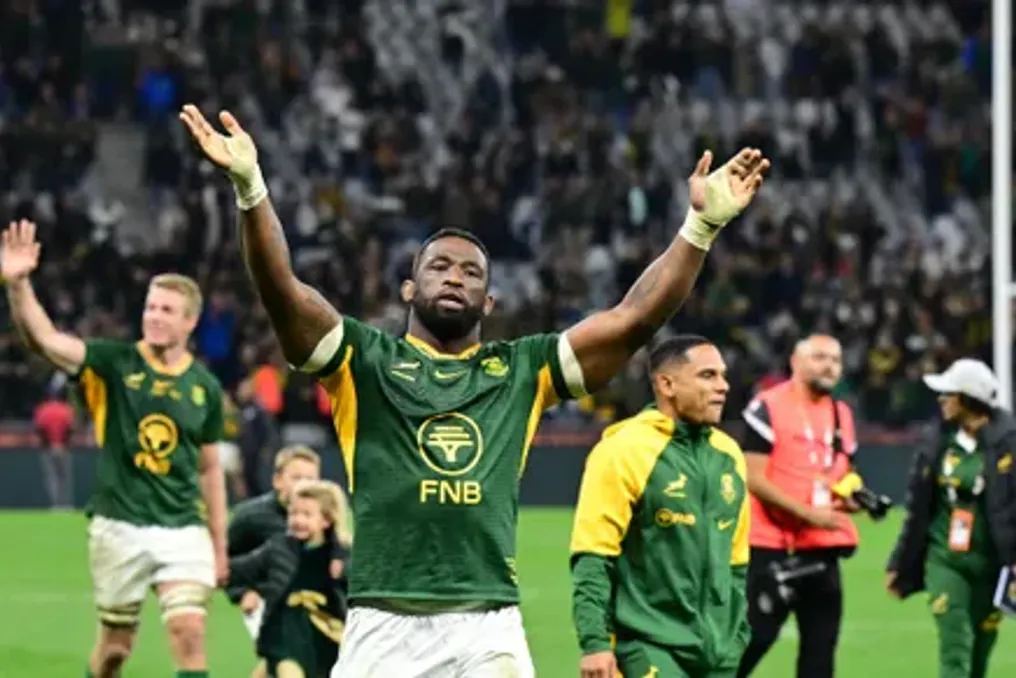
Springboks captain Siya Kolisi and his teammates achieved an impressive result against the All Blacks led by Russell Erasmus, further solidifying the team's dominance over their arch-rival.

The triumphant series for the Springboks, with a score of 3:1 against the All Blacks, revealed a significant gap between these two Southern Hemisphere giants. After the fourth test in the greatest rugby rivalry in Baltimore, where the world champions won 43:28 and secured their first trophy, it is becoming increasingly difficult to claim that these two teams are evenly matched.

The Boks are now operating at a different level, and even the mighty representatives of New Zealand are struggling to keep up. To win three consecutive matches against the All Blacks requires a special team, and this is exactly what the Boks did, concluding the series after a loss in the first match at Ellis Park in August. However, three dominant performances, backed by immense squad depth, allowed them to defeat their bitter rivals.

Squad depth is the defining advantage of the Springboks

What makes the defeat of the world's second-ranked team even more significant is that in the last 10 encounters, the Springboks have won eight times, while the All Blacks have managed only two victories—one in Auckland and one in Ellis Park.

Meanwhile, the Boks have dominated them, especially in the match where they crushed the team 35:7 in Twickenham, the 43:10 victory in Wellington, and the latest win in Baltimore. This indicates that the evolution of the Springboks machine has surpassed the development of the mighty black team, and they are currently dominating their competitors. It is almost unheard of for the New Zealanders to lose three consecutive matches to the same team, let alone eight out of the last ten meetings against them.

However, this is the current situation between the two sides. And the most worrying thing is that in none of the Greatest Rivalry matches were the Boks playing at their best level. Issues such as lineup changes due to injuries, uncharacteristic errors, inability to convert numerous attacks in the 22-meter zone into points, and a high number of penalties slowed down the Springboks at various times. Nevertheless, even making these mistakes, the world champions find a way to win.

This is what currently distinguishes the teams: the depth of the Boks' squad, the ability of all players to fulfill any role, and the quality of that depth. New Zealand has failed to catch up over four tests, and injuries have severely undermined them, with the loss of captain Ardie Savea in the third match likely being the most significant. South Africa has shown them how to cope and win despite various changes, and this kind of depth is currently unprecedented in world rugby. The task now is to continue moving in this direction. Erasmus has demonstrated that they can change tactics and still beat the best in the world.

A warning for the 2027 World Cup

Before the matches against the Wallabies and Italy, before they meet France and Ireland in the Nations Cup, opportunities open up for further squad experimentation from Erasmus and his management. If they manage to include players such as Paul de Villiers, Cameron Hanekom, Johan Grobbelaar, Jan-Hendrik Vessels, Morne van den Berg, Ntutuku Mchunu, Zack Porten, Ben-Jason Dixon, Ethan Hooker, and Edwill van der Merwe, it will put the Boks in an even stronger position ahead of the 2027 Rugby World Cup.

The Boks have already won the World Cup, defeated the All Blacks on home soil, dominated them in South Africa, and crushed them on neutral ground. More importantly, they did this with different combinations, different players, and under different circumstances. Perhaps this is the biggest wake-up call for the rest of the world: this Springboks team is not just beating the All Blacks—it is building sustainable dominance over them, making it a dangerous contender. Currently, the New Zealanders are chasing the world champions, and Erasmus and his management will want to maintain this state for many years to come.

The rivalry between the Springboks and All Blacks remains the greatest in rugby due to mutual respect
Read more
iol.co.za

The rivalry between the Springboks and All Blacks remains the greatest in rugby due to mutual respect

Despite the rivalry between the Springboks and the All Blacks being arguably the greatest in world rugby, respect between the players and teams is maintained even after the match concludes.

Unlike many other sporting confrontations where players might avoid interacting after the game, the opposite occurs in this rivalry. Although players fight fiercely during the 80 minutes of play, and coaches sometimes exchange sharp remarks at press conferences, the atmosphere quickly normalizes after the match ends, and both teams demonstrate mutual respect.

Erasmus and ReNNy shared a beer

This rivalry between South Africa and New Zealand illustrates the essence of the sport. The Springboks coach Rassie Erasmus and his colleague from the All Blacks, Dave Rennie, although they may have tactical disagreements, set these differences aside after the final whistle and media duties.

These two coaches have repeatedly met over a pint before and after various series matches, serving as a reminder that their confrontation is based on respect, not hatred. Erasmus mentioned that they drank beer after the match and planned to meet in Cape Town.

Dave Rennie confirmed that they shared a beer immediately after the game, despite verbal sparring over the score.

This friendly relationship extends to the players. Springboks captain Siya Kolisi and All Blacks captain Ardie Savea have developed a deep friendship that goes beyond rugby. They have attended church together, and Savea's children show particular affection for the Springboks captain, calling him 'Uncle Siya.'

Kolisi emphasized that when he plays against a friend, he shows respect by giving everything he can on the field, which he believes is very important. This says a lot about what lies beneath what could be considered the most intense rivalry in international rugby.

For 80 minutes, Kolisi and Savea lead their teams into battle, ready to risk their bodies for victory. Although Kolisi delivered a strong hit to Savea in Cape Town, Savea admitted feeling it, but after the battle, respect remains.

Springboks and All Blacks share a flight

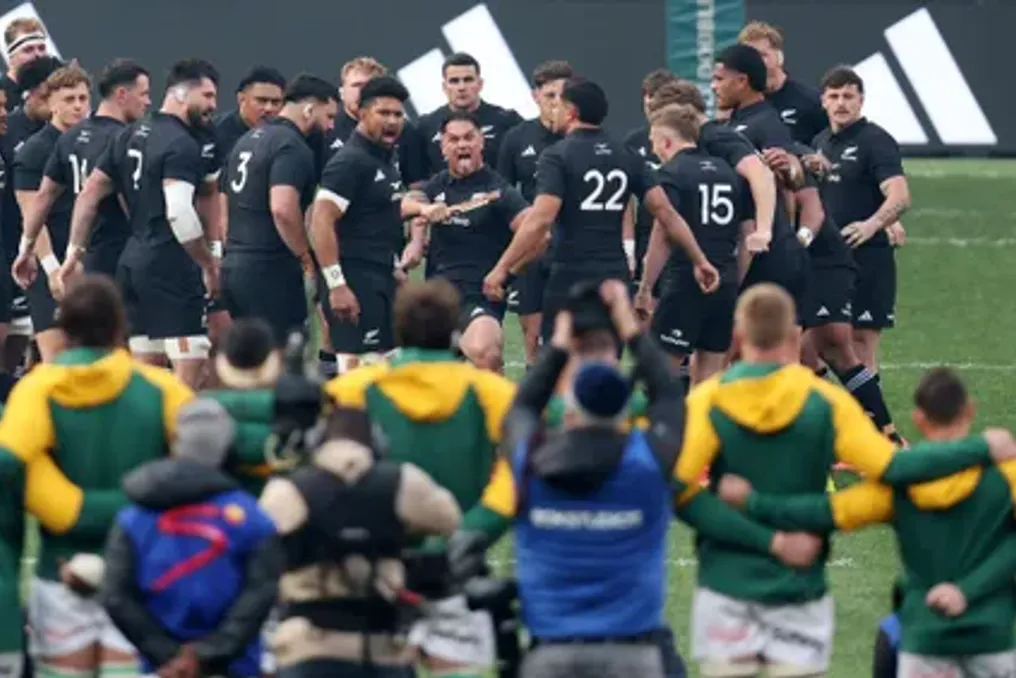
The rivalry does not need to become personal. On the contrary, the mutual respect between the players makes this spectacle special. This was demonstrated in an unusual way before the fourth and final match in Baltimore, when the Springboks and All Blacks traveled together on a charter flight from Johannesburg to Washington.

Most of the journey passed in silence, according to eighth player Jasper Wiese, but the mere fact of the joint long journey was symbolic. The silence was understandable, as one team had won while the other had lost. Despite harsh words, powerful hits, tactical battles, and continuous competition, it is still rugby, and that is why the Springboks and All Blacks rivalry will go down in history as perhaps the greatest contest on the planet outside the Rugby World Cup. Because the Boks and the All Blacks might want to destroy each other for 80 minutes, running the oval ball across the field, but when it is over, they can still share a beer, eat together, attend church, and call each other friends.

All Blacks prepare for match against Springboks, betting on fast and dynamic style of play
Read more
iol.co.za

All Blacks prepare for match against Springboks, betting on fast and dynamic style of play

The All Blacks intend to use a high tempo and expansive running style to defeat the Springboks at FNB Stadium in the third test. The squad selection made by Dave Rennie clearly demonstrates the team's desire for greater dynamism and mobility in the attacking line.

Key Rugby Rivalry

The inclusion of explosive hooker Asaph Aumua instead of experienced Cody Taylor is a telling move. While Taylor provides traditional stability in goal-line play, Aumua brings a rare and destructive threat of carrying the ball in open space.

Aumua, who is a forward from the Hurricanes, possesses a powerful physique and is capable of being an explosive ball carrier, while also demonstrating outstanding work rate in gaining ground. His presence indicates that the Kiwis aim to shift the ball away from the large Boks forwards by increasing the number of passes and offloads from deep in the field.

In the backline, the tactical shift is highlighted by the selection of 23-year-old Peter Lakai at the blindside flanker position. Unlike a traditional player in this position, who spends most of his time contesting rucks, Lakai has excellent ball-handling skills, allowing him to act as an additional link player. His speed, work rate, and ability to pass under contact allow him to maintain breakthroughs in wide areas of the field.

Together with the open-side Luke Jacobson and ever-present Ardie Savea, the All Blacks have formed an exceptionally mobile trio. The team looked very dangerous when possessing the ball in counterattacks and in moments when the game became more chaotic. Flyhalf Ruben Law and fullback Damian McKenzie operate effectively as space playmakers, and they now also possess the tools to break down defensive lines and distribute the ball.

By utilizing Lakai, Aumua, and Savea as mobile ball distributors in the central channels, the All Blacks hope to stretch the South African defense, which has struggled to cope with the Kiwis when they moved the ball into the wide zones. Furthermore, the inclusion of 2.03m tall Loa Sam Darii gives New Zealand an athletic and agile jumper capable of covering distance quickly, creating a different scenario for the Springboks during the lineout after three crucial turnovers by the South Africans in Cape Town.

However, by choosing a lighter and faster forward pack to unsettle the Springboks at the altitude of Highveld, New Zealand risks losing brute strength in the scrum battle against players like Ox Nche and Vilko Lowe. To execute their plan, the All Blacks need quick ball upon initial contact, which is not an easy task against an aggressively set-up Springboks side. Nevertheless, if the Kiwis can generate quick ball in collisions and outmaneuver the speed of the South African defense, they believe they possess enough firepower to replicate their attacking play from the first test in Ellis Park.

Popular