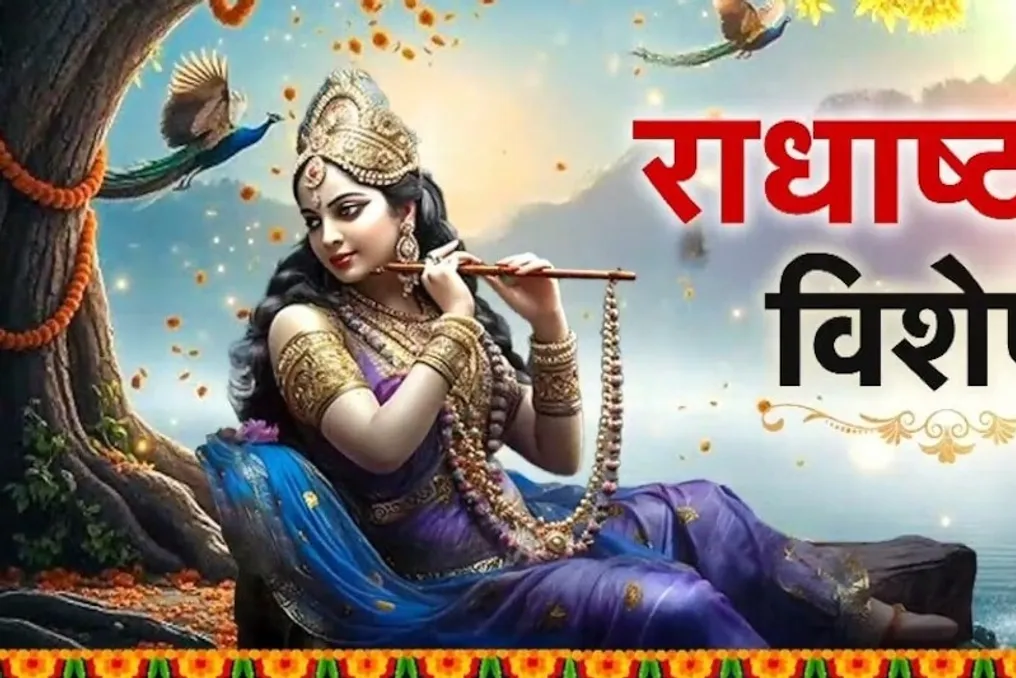
According to Legends: How Radha Died and the Story of Her Last Meeting with Krishna
Read more
Aaj Tak
www.aajtak.in

According to Legends: How Radha Died and the Story of Her Last Meeting with Krishna

There are numerous stories about how Radha passed away, as various religious traditions and folk tales describe the final moments of Radha's life differently. However, this review examines the version found in the Puranas and Vaishnava traditions.

The love between Lord Krishna and Radha is considered a symbol of love, selflessness, and devotion in Indian tradition. Both were born on the same day—Ashthami—but their birthdays fell on different lunar cycles.

According to religious beliefs, Lord Krishna was born on the eighth day of the dark fortnight (Krishna Paksha) of the Bhadrapada month. Radha's birth, on the other hand, is believed to have occurred on the eighth day of the bright fortnight (Shukla Paksha) of the same month. Thus, Radhashtami is celebrated approximately 15 days after Krishna's birth.

Vrishabhanu is considered Radha's father, and Kirti is her mother. Barsana is considered Radha's birthplace, where she was raised, and she also had a deep connection with Vrindavan.

How the Gopis Came to the Sound of the Flute

The love between Radha and Krishna is perceived not as ordinary earthly passion, but as divine and spiritual love. According to beliefs, when Lord Krishna played his flute in Vrindavan, the gopis forgot everything and yearned for him, following the melody.

Poetic works also contain a beautiful description of the influence of Krishna's flute. As soon as the melody reached their ears, the gopis forgot social restrictions and worldly bonds, heading towards Krishna. Among these gopis, Radha held a special place. Their love in the tradition of devotion symbolizes the union of the soul and God.

Did Radha and Krishna Marry?

Different religious traditions hold varying opinions regarding the marriage of Radha and Krishna. According to legends associated with the Brahmavaivarta Purana, the marriage of Radha and Krishna took place in the Bhandir forest at Brahma's initiative. It is believed that many deities witnessed this wedding.

The Bhandir forest, located near Vrindavan, remains an important religious site today connected to this story of Radha and Krishna's marriage, where one can see places and traditions related to this event.

What Happened After Krishna Left Vrindavan?

Over time, Lord Krishna left Vrindavan and went to Mathura, and then to Dwarka. Meanwhile, Radha's life remained connected to Barsana and Vrindavan. After Krishna moved to Mathura and then to Dwarka, meetings between Radha and Krishna became extremely rare.

It is recounted that they met once in Kurukshetra. At that time, Lord Krishna arrived from Dwarka to Kurukshetra during a solar eclipse. Nanda Baba and many gopis and gopas from Vrindavan were present there, and it was at that moment that Radha and Lord Krishna met.

Radha and Krishna's Last Meeting in Dwarka

There is a well-known mythological story concerning Radha and Krishna's last meeting in Dwarka. According to legend, having freed herself from her primary duties, Radha went to Dwarka to meet Lord Krishna. She visited his palace and met him there.

It is said that Krishna was overjoyed to see Radha. At Radha's request, Krishna assigned her one duty in the palace. After this, Radha lived in Dwarka for some time, helping with palace affairs, and visited Lord Krishna whenever she had the opportunity. However, the royal atmosphere of Dwarka could not bring her the divine happiness and closeness she felt next to Krishna in Vrindavan.

Why Did Radha Leave the Palace in Dwarka?

Radha's life in Vrindavan was tied to the love and devotion to Krishna. After living in Dwarka, she realized that she no longer felt the divine love and attachment she once did. Gradually, she began to sink into sadness. Eventually, she left the palace in Dwarka and secluded herself in a quiet place.

Time passed. Radha grew weaker, and memories of Lord Krishna became deeper in her heart.

Krishna Appeared to Radha in Her Final Moments

According to the narrative, when Radha remembered Lord Krishna in the last hours of her life, He appeared to her. Lord Krishna asked Radha what she wished for. But Radha did not ask for anything for herself.

When Krishna asked her again to state her desire, Radha only said that she wanted to hear Krishna's flute. She wished to hear that very melody she heard in Vrindavan.

Radha lost her body while listening to the tune of Krishna's flute. According to tradition, Lord Krishna took up his flute and began to play just as he did in Vrindavan. Krishna continued to play, and Radha listened to that sweet melody. Immersed in the music of the flute, Radha gradually left her body. Mythology further asserts that Radha's divine soul merged with Lord Krishna.
Similar stories

The song 'Jai Jai Ram' depicts the image of Bharat from the Ramayana; the story of this character is revealed
Read more
www.aajtak.in

The song 'Jai Jai Ram' depicts the image of Bharat from the Ramayana; the story of this character is revealed

The first track from the film 'Ramayana,' directed by Nitish Tiwari, titled 'Jai Jai Ram,' has recently been released. This composition, written by A.R. Rahman, with lyrics by Kumar Vishwas and melodious vocals by Arijit Singh and Shreya Ghoshal, is gaining great popularity among viewers. The song features majestic scenes of the wedding of Shri Rama (Ranbir Kapoor) and Mata Sita (Sai Palvi), as well as the welcome of the residents of Ayodhya with a shower of flowers and emotional moments with King Dasharatha (Arun Govil).

However, the most touching scene in this song is the moment when Shri Rama embraces his younger brother Bharat. Through this song, the filmmakers presented the first opportunity to see actor Adinant Kotare, who plays the role of Bharat. Subsequently, the narrative explores the importance of the character Bharat in the Ramayana and the true essence of the role he portrays on screen.

According to the Ramayana and Ramcharitmanas, Bharat was not merely the younger brother of Shri Rama, but also the supreme embodiment of selfless love, dharma, and sacrifice. He was the son of King Dasharatha of the Suryavanshi dynasty and his beloved queen Kaikeyi. From childhood, Bharat felt deep affection and respect for his elder brother Shri Rama. Bharat married Mandavi, the daughter of Kushadhwaja, the brother of King Janaka.

According to the narration of the Ramayana, when Bharat returned to Ayodhya from his native home (Kaikei Desh) and learned that his mother Kaikeyi had secured two boons from King Dasharatha—to send Shri Rama into fourteen years of exile and to gain the royal throne for herself—he experienced extreme sorrow and shame. Bharat unequivocally opposed this wrongful act by his mother. He clearly stated that the throne of Ayodhya belonged exclusively to his elder brother Shri Rama, and he would not accept any dishonest happiness. He also sharply criticized his mother Kaikeyi's actions.

Following this, Bharat did not remain merely sad; he, along with all of Ayodhya, the mothers, and the teacher Vashishta, went to the forests of Chitrakoot to bring Shri Rama back. The meeting between Shri Rama and Bharat in Chitrakoot was so emotional that the eyes of all present became moist. Bharat fell at Shri Rama's feet and pleaded with him to return to Ayodhya. However, Shri Rama refused to return, upholding his father's promise.

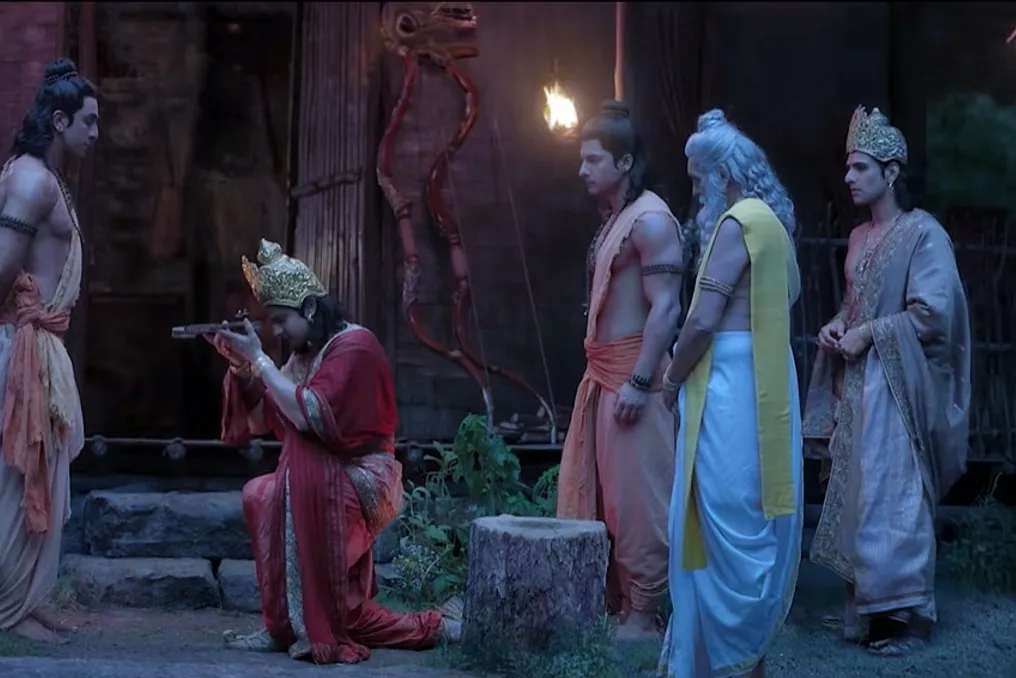
When Shri Rama refused to return, Bharat requested Shri Rama's 'Paduka' (sandals). He vowed never to sit on the royal throne of Ayodhya. Bharat placed Shri Rama's paduka on the throne and governed the state, considering himself only his 'representative' (servant).

Bharat was not just a title of renunciation; he proved it through his lifestyle. He gave up all the wealth and luxury of the palace. Leaving behind the grandeur and comforts of the palace, Bharat built a simple hut outside Ayodhya in Nandigram. There, he spent 14 years leading an ascetic life similar to his brother Shri Rama: keeping his hair long, wearing coarse cloth, eating wild roots, and sleeping on the ground. He believed that if his brother Shri Rama suffered in the forests, he had no right to enjoy the comfort of the palace.

Bharat's message to modern society is that relationships, values, and fraternal love are worth more than any material possessions or positions. He proved that true right is based on dharma and justice, not on violent appropriation.

Dhirendra Shastri comments on Durga Puja in Bengal: expresses dissatisfaction with the preparation of non-vegetarian food at pandals
Read more
www.aajtak.in

Dhirendra Shastri comments on Durga Puja in Bengal: expresses dissatisfaction with the preparation of non-vegetarian food at pandals

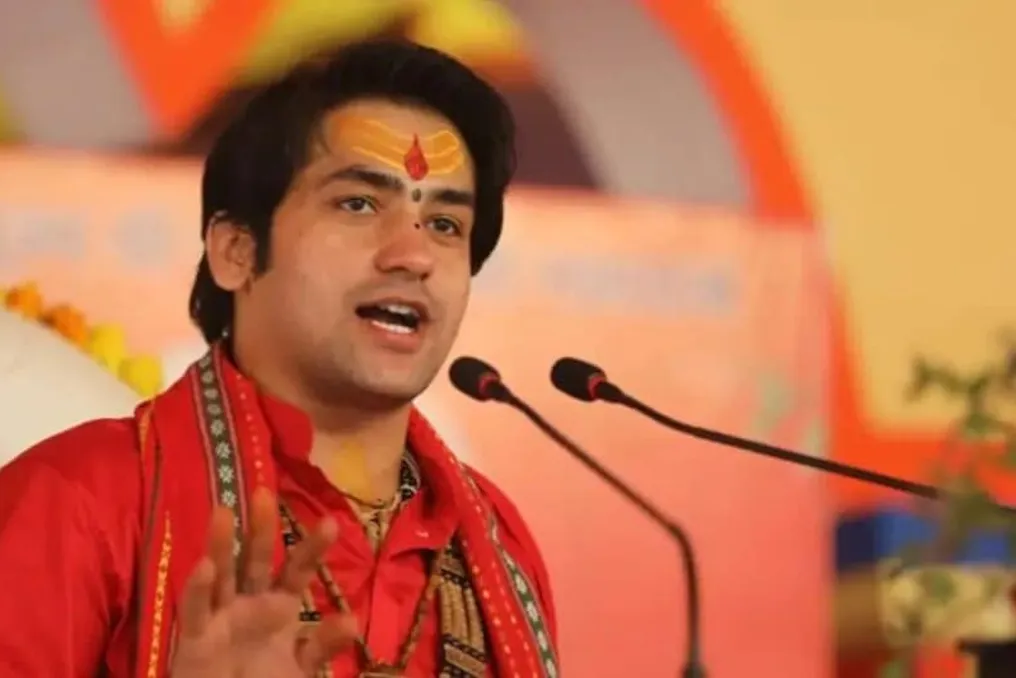
Dhirendra Shastri from Bagneshwar Dham made a statement regarding the celebration of Durga Puja in West Bengal. During a Hindu history program in Havare on Saturday, he stated that one thing in Bengal causes him strong aversion and hurts his feelings.

He expressed his disagreement with the preparation of non-vegetarian food at Durga Puja pandals. Dhirendra Shastri noted that during Navratri, when pandals are set up for Durga Puja, some places prepare non-vegetarian dishes and other types of food at or under the pandals, and he dislikes this.

In this regard, he called on the residents of Bengal to boycott such people during this Navratri. Shastri stated that he would not consider religious those who claim religiosity but prepare such food at Durga Puja pandals; he would call them not religious, but hypocritical.

Addressing the residents of Bengal, he urged Hindus to awaken during Navratri and condemn such people. His statement caused a wide resonance. He emphasized that Durga Puja is widely celebrated in West Bengal, and magnificent pandals are set up everywhere during this time. It was in the context of this religious event that he expressed his dissatisfaction with the preparation of non-vegetarian food at the pandals.

Popular