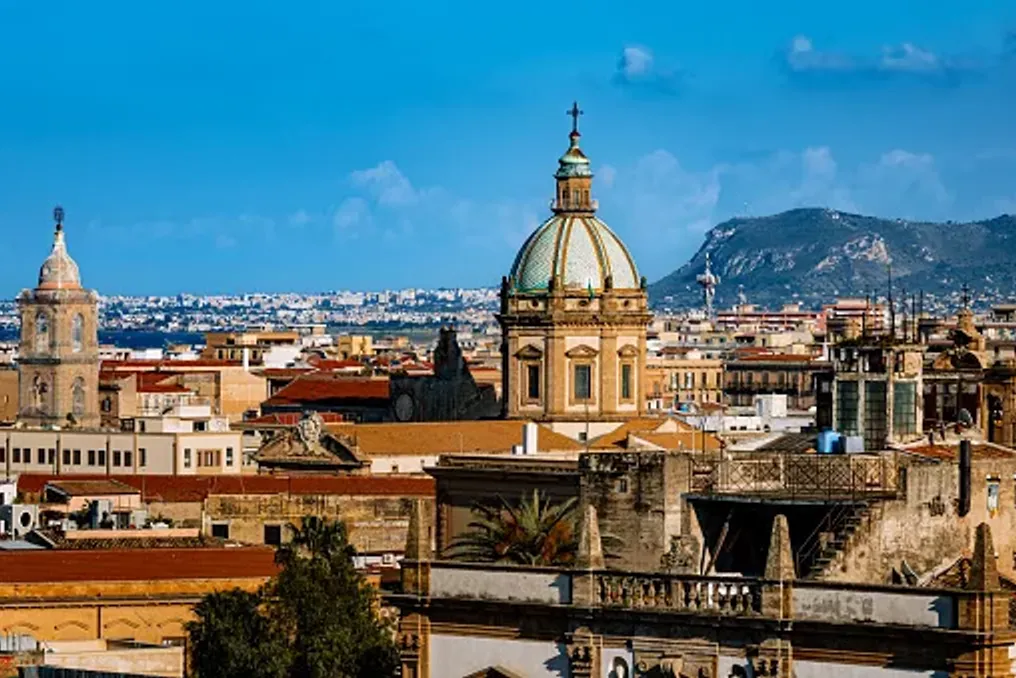
Palermo is often romanticized due to its majestic churches, richly decorated palaces, Mediterranean light, and narrow streets filled with food aromas. However, the capital of Sicily is far more complex than postcards suggest.
In three days, you can move from bustling historical markets and street stalls to Byzantine mosaics, Arab-Norman architecture, modern art spaces, and neighborhoods where different eras of Palermo coexist. Arabic, Norman, Byzantine, Spanish, and Italian influences are visible in the buildings, markets, and food. The UNESCO list 'Arab-Norman Palermo' recognizes this unique combination of Western, Islamic, and Byzantine traditions, represented by monuments such as the Royal Palace and the Palatine Chapel, the Cathedral of Palermo, San Giovanni degli Eremiti, and Santa Maria dell'Ammiraglio.
How to spend 72 hours outside the postcard view of Sicily
Start in the morning at Ballarò, Palermo's oldest and largest historical market. This market stretches through the Albergheria district, where colorful stalls, narrow passages, churches, and old buildings create one of the city's most atmospheric walks. The Ballarò market has roots dating back to the Arab rule and remains a place where food and daily life intersect. Here, you can hear the characteristic calls of vendors attracting buyers while browsing stalls laden with fruits, vegetables, spices, and other ingredients. It is also an ideal place to sample Palermo's famous street food.
Try panelle, chickpea fritters usually served in a bun, or crocchè, potato croquettes. More adventurous gourmands can order pani câ meusa—a traditional sandwich filled with spleen, while stigghiola, grilled offal skewers, is another local delicacy. Palermo's historic markets, including Ballarò, Capo, Vucciria, and Borgo Vecchio, are closely linked to the city's street food culture.
After dining, slow down and walk through Albergheria. The area around Ballarò is abundant with Baroque churches, small courtyards, ancient palazzi, and streets that reveal a more vibrant side of Palermo. The Jesuit Church, also known as Casa Professa, is one of the outstanding examples of the city's intricate Baroque style. It is important not to rush from one place to another; part of Palermo's charm lies simply in looking up while walking. Balconies, faded facades, carved doorways, and unexpected splashes of color often bring as much interest as the main attractions.
Next, head towards the center of the historic district, where Quattro Canti marks the intersection of two main Palermo streets. From here, you can proceed to Piazza Pretoria, dominated by its intricate 16th-century fountain, and then head to the Cathedral of Palermo. The Cathedral is part of Palermo's UNESCO heritage, Arab-Norman culture, and reflects the layers of history that define the city.
As evening arrives, head to Vucciria. The historic market around Piazza Caracciolo has changed significantly over time, but it remains one of Palermo's most famous meeting spots. During the day, it functions as a traditional market, and in the evening, this area transforms into a lively nightlife district with food, drinks, and music. This is a fitting end to the first day in Palermo: noisy, social, and distinctly different from the polished version of Sicily seen on postcards.
Exploring Palermo's Arab-Norman Heritage in the Afternoon
On the second morning, explore Palermo's Arab-Norman heritage. Start at Palazzo dei Normanni, or the Norman Palace, and its extraordinary Palatine Chapel. This complex is part of the UNESCO heritage 'Arab-Norman Palermo'—a collection of monuments demonstrating cultural exchange between Western, Islamic, and Byzantine traditions in medieval Sicily. Inside the chapel, carefully examine the mosaics and decorative details. The gold mosaics, geometric patterns, and architectural elements from different traditions make the building a useful introduction to Palermo's history. The point is not just that Palermo was ruled by different peoples; its architecture shows how these cultures influenced and absorbed elements from each other.
Continue to San Giovanni degli Eremiti, recognizable by its characteristic red domes. This church is also a component of Palermo's UNESCO heritage. Its quiet garden offers a pleasant contrast to the noisy streets outside and is worth visiting, even if you are traveling slowly.
Palermo is not a city to rush through during a lunch break. Find a traditional trattoria and try dishes beyond famous street food. Pasta with sardines, caponata, eggplant dishes, fresh seafood, and local cheeses offer a different perspective on Sicilian cuisine. Be sure to leave room for dessert. Cannoli and cassata are two of Sicily's most famous desserts, while small pastries and granita offer many alternatives.
In the afternoon, go to Kalsa, one of Palermo's most atmospheric districts. This area possesses a particularly strong sense of the city's cultural layering. Historic buildings, churches, galleries, and modern creative spaces are located on streets shaped by centuries of change. One of the most interesting places is Palazzo Butera, an 18th-century palazzo restored as a cultural and exhibition space. Its collection combines contemporary art, applied arts, Old Masters, and antiques, with parts of the building itself becoming part of the experience. The restored rooms of the palace feature modern installations alongside historical architectural details, making it a natural addition to a Palermo itinerary that goes beyond the city's usual sights. Continue through Kalsa to Santa Maria del Gesù, a covered former temple that has become one of Palermo's atmospheric cultural spaces. Its open interior, framed by old stone walls and the sky above, offers a different architectural experience than the city's grand cathedrals. End the day with coffee or an aperitif before dinner.
The Last Morning in Palermo
Start your last morning at Capo, another historic Palermo market. This market runs through the old Serallo district and is another place to experience the city's food culture away from formal restaurants. The municipality includes Capo among Palermo's historic markets alongside Ballarò, Vucciria, and Borgo Vecchio. Come hungry and enjoy wandering. A few pieces of street food, fresh fruit, pastries, and coffee can easily make for breakfast. The appeal of this place lies not so much in finding one specific stall, but in observing how the city lives its life.
From Capo, walk to the Teatro Massimo, Palermo's monumental opera house. Even if you don't have time for a performance, it is worth seeing Piazza Verdi and the immense scale of the building. The theater remains an important part of Palermo's cultural life, hosting concerts, operas, dances, and public events. For example, its 2026 summer program included performances both inside the theater and in various parts of the city. From there, stroll down Via Maqueda and do not rush to explore the surrounding streets. Here, it is worth letting the itinerary be a bit free. Pop into small churches. Browse independent shops. Stop at a bakery. Sit in the square and watch the passersby. Palermo rewards curiosity, as the most interesting details are often found between the main attractions. A seemingly inconspicuous street might suddenly open onto a Baroque courtyard. A dilapidated building might stand opposite a modern gallery space. A street vendor might tell you about the city's history more effectively than a museum plaque. This constant collision of old and new is what makes Palermo unique.
Return to Vucciria for the last evening. By this time, the market should feel familiar, but the atmosphere will have changed again. After dark, this area becomes a social hub where people gather for drinks, food, and music. Order a final Sicilian dinner, find a table, or simply join the evening crowd and let the city unfold around you.
After three days, the postcard image of Palermo may remain the same: churches shining in the afternoon sun, richly decorated palaces, and Mediterranean streets. But you will also see the city hidden beneath that picture. The markets, the food, the faded facades, the modern art, and the cultural influences intertwining from one street to another make Palermo more than just a beautiful stop in Sicily. It is these elements that give the city the value worth dedicating 72 hours to.