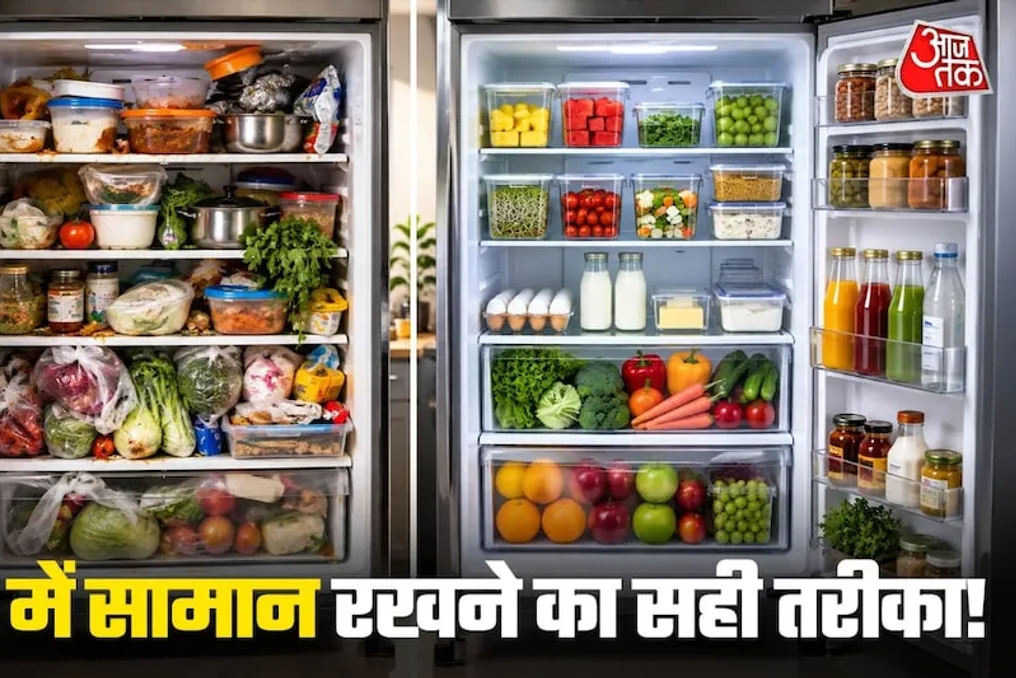
The refrigerator serves not only as a cooling unit but also plays an important role in preserving food year-round. Many kitchen staples spoil without refrigeration, which is why it is used throughout the year. It stores items such as milk, yogurt, cheese, vegetables, fruits, leftovers, and pickles.
However, if food is placed incorrectly, the refrigerator quickly becomes dirty, and many items spoil. Often forgotten foods left deep inside can expire. For instance, greens left in the bottom drawer might spoil because they are overlooked.
If you tend to overstuff your home refrigerator with food, you can adopt several simple habits to keep it clean, fresh, and organized.
In Indian households, it is common to store cheese, milk, yogurt, leftover vegetables, and sometimes meat with vegetables in the refrigerator. In this case, raw meat or fish should always be placed in separate, airtight containers. They must be kept away from other foods and, if possible, on the bottom shelf so that liquid does not drip onto other items.
Many people cut vegetables the evening before to have them ready in the morning. However, pre-cut fruits and vegetables spoil faster than whole ones. Therefore, it is recommended to cut vegetables immediately before use. If pre-cutting is necessary, clean, dry, and airtight containers should be used.
Constantly opening the refrigerator to retrieve food not only increases electricity consumption but also affects the internal temperature. Therefore, determine what you need in advance and take out all necessary items at once. It is especially important to prevent children from opening the refrigerator frequently.
The simplest way to maintain order in the refrigerator is to assign a specific place for every item beforehand. For example, milk, yogurt, and cheese can be placed on one shelf, leftover vegetables and legumes in another compartment, and fruits and vegetables in the bottom drawer. Eggs should be stored in a special egg tray. Butter, jam, sauces, and pickles can be placed on the door shelf. This saves time searching and makes the refrigerator look less cluttered.
Leftover vegetables, some beans, open cheese, or half a carton of cream often remain in the refrigerator. For this, you can create a small 'Eat First' container. Products planned to be consumed within the next one or two days should be placed in it. This way, old food will be visible and not wasted.
Instead of leaving leftovers of beans, vegetables, rice, or sauce in large open bowls or plates, they should be placed in lidded containers. This prevents food odors from spreading to other products and ensures greater organization. Steel or sturdy airtight containers are usually suitable for this. Hot food should be allowed to cool down slightly before being put in the refrigerator.
To keep the refrigerator free and organized, it is important to know which foods are better stored outside of it. Potatoes and onions can be kept in a cool, dry, and well-ventilated place. Whole bananas and raw tomatoes are also typically stored outside. Honey can be kept at normal room temperature.
Nevertheless, milk, yogurt, cheese, cooked food, and perishable items require correct temperature control in the refrigerator. Instead of putting greens in the freezer unnecessarily, they should be placed in the refrigerator's vegetable drawer. It is recommended to check the expiration dates and old food once a week by opening the refrigerator. This helps maintain cleanliness and reduce food waste.