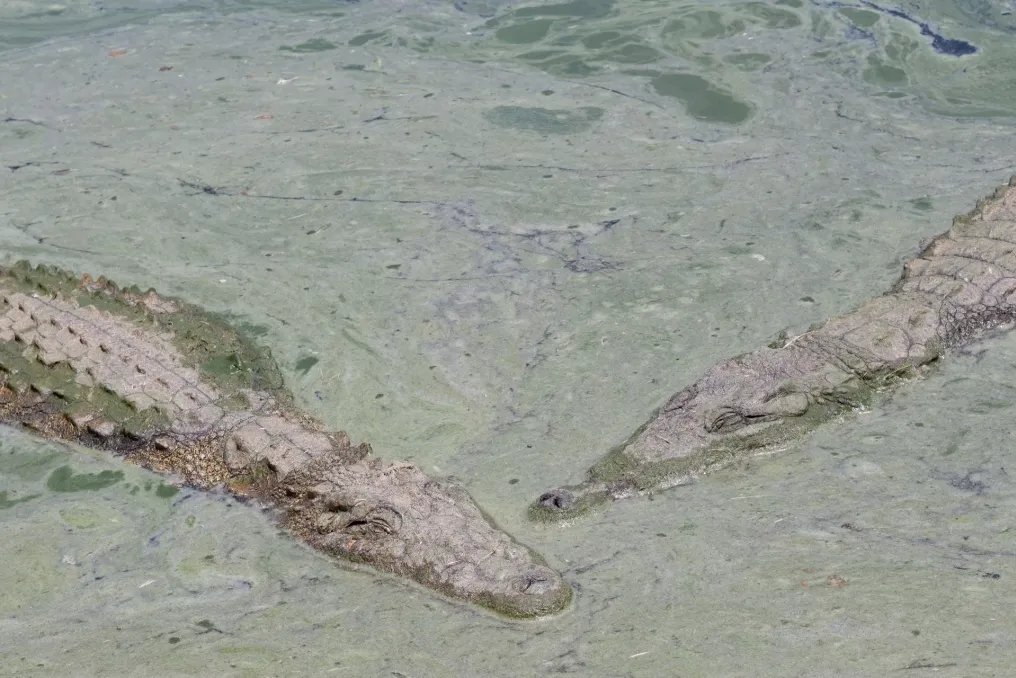
A river in Australia inhabited by about 500 saltwater crocodiles has received approval to be used as a venue for rowing and canoeing at the 2032 Olympic and Paralympic Games in Brisbane.
According to a BBC report, the Fitzroy River in Rockhampton, Queensland, underwent an independent technical assessment confirming its suitability for hosting these competitions. The assessment considered factors such as water levels, weather conditions, and flood risk, but did not take into account the crocodile population of the river.
The Fitzroy River is home to approximately 500 saltwater crocodiles, which locals call 'Salties'. This species can live in both fresh and saltwater and represents the largest living reptile, with some individuals reaching over six meters in length.
Despite its unusual neighbors, the 'Fitzroy River Flatwater Facility' is already used for rowing and other water sports. School championships, local regattas, and national team training camps are held there, with procedures in place in case crocodiles are spotted in the area.
International governing bodies for rowing (World Rowing) and canoe sprint (Paddle Worldwide) have approved the venue following the completion of the technical review. World Rowing President Jean-Christophe Rolland stated that the analysis showed the possibility of ensuring fair competition conditions during the Games, while Paddle Worldwide President Thomas Konieczko noted that the work increased confidence in the venue's ability to provide suitable conditions for canoe sprint athletes.
Rockhampton is located approximately 600 km north of Brisbane and will be one of the locations outside the capital of Queensland used for the 2032 Games. The Fitzroy River venue is already an established facility for water sports, allowing for the development of existing infrastructure rather than the creation of an entirely new site.
The latest assessment focused on whether the course meets the requirements of the Olympic and Paralympic Games under various conditions. Nevertheless, the crocodiles remain an obvious topic of discussion.
Brisbane 2032 President Andrew Liveris previously downplayed concerns about Australian wildlife, comparing the situation to surfing in waters where sharks are present. After the venue's approval, he noted that this decision provided greater certainty for the next stage of venue planning and the execution of the Games.
However, not everyone is convinced that the Fitzroy River is the ideal location for an Olympic event. Australian rower Drew Gunn, a three-time Olympic gold medalist, told BBC Radio about his concerns regarding flooding, fair competition, and the experience for athletes and spectators at a venue located six to seven hours away from Brisbane.
Gunn admitted that he was not concerned about Australian wildlife but agreed that the proximity of crocodiles would be an unusual experience for many athletes. He also questioned how changes in river conditions might affect different lanes during a race. These concerns are raised despite the fact that international rowing and canoeing organizations approved the venue after reviewing the technical assessment. Currently, the Fitzroy River has been granted permission to continue the planning process. By 2032, athletes competing for Olympic and Paralympic medals may compete on a river where hundreds of famous and formidable Australian reptiles live.