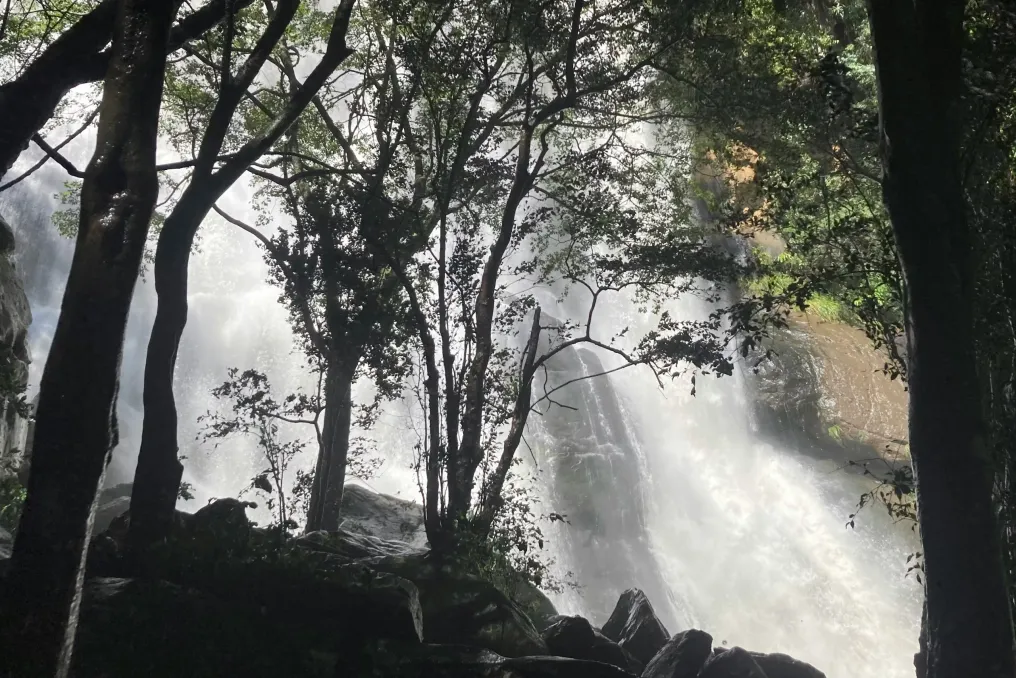
As winter recedes and lessens its influence on the Eastern Cape, Hogsback begins to transform. This settlement is located high in the Amatole Mountains, surrounded by local forests, mountain streams, waterfalls, and open meadows.
Due to its altitude of about 1200–1500 meters, Hogsback features a cool mountain climate, where foggy conditions and cold winters are gradually giving way to spring.
By September, the landscape starts to change: gardens bloom, days become warmer, and the mountains gain more color. This is an ideal time for hiking in Hogsback, along trails into the forest to the waterfalls that have long defined the character of this mountain village.
The Amatole Mountains are part of the Great Escarpment of South Africa. Parts of the slopes are covered with indigenous Afromontane forests, while higher elevations feature montane grassland vegetation.
These forests are integrated into the Hogsback village itself. The local tourism organization offers 22 walking and tourist routes without the need for permits, suitable for both easy strolls and more challenging treks.
One of the easiest places to start is the Hogsback Arboretum on Oak Avenue. Established approximately 130 years ago, the Arboretum contains trees from all over the world, including Californian redwoods, some exceeding a century in age. From here, a short walk leads to the '39 Steps' waterfall, where water cascades down a series of rocky ledges beneath the trees.
This route does not require a full day or complex planning. A few hours among the trees is enough to understand why Hogsback has become synonymous with forest retreats. For a longer experience, the trail to the 'Madonna and Child' waterfall is available, which descends into the local forest before reaching the falls. This path is steeper and requires an ascent back, but allows for a deeper immersion in the landscape.
There are about 36 waterfalls in the vicinity of Hogsback village, ranging from easily accessible ones to those requiring longer hikes.
One of the more unusual is the 'Kettlespout' waterfall. Under favorable conditions, the wind catches the falling water and lifts it upwards, creating a characteristic sight. After rain, the approach can become slippery and wet, so appropriate footwear is necessary. The 'Swallowtail' waterfall offers a different perspective: a walk along the stream to a viewpoint overlooking the Tayum valley.
Spring also serves as a gentle reminder that Hogsback is a landscape shaped by water. Rainfall typically increases in September and October, helping to sustain the flow of streams and waterfalls as the season changes. And, of course, who doesn't love an adventure that ends at a waterfall?
Hogsback has a long tradition of gardening, and its gardens are part of the village's identity. Spring brings color to the gardens through azaleas, rhododendrons, roses, and other flowering plants.
The annual Hogsback Open Gardens exhibition is one of the main events of the season. In 2026, the event will take place over three weekends from October 16th to November 15th, with 11 gardens open to visitors alongside plant sales, markets, and food and wine events.
Even if you are here for this event, it is worth taking time to notice the contrast between the cultivated gardens around the village and the native forests behind them.
There are many more adventurous ways to explore Hogsback, including mountain biking, horse riding, rock climbing, and zip-lining. For example, the area around the 'Madonna and Child' waterfall offers a 35-meter descent into the forest. However, an unforgettable stay in Hogsback does not necessarily require planning an adrenaline-filled itinerary.
Some of the best experiences here are quieter: walks under the trees, following the stream, stopping at a mountain viewpoint, sitting in a garden while the mist moves over the hills.
Because the weather in the mountains changes rapidly, visitors should still arrive prepared for cool and damp conditions. The same unpredictability that might obscure the view can also transform the forest when the mist settles between the trees, and the waterfalls intensify after rain.
The appeal of Hogsback after winter is not that everything suddenly becomes bright and green. It happens more gradually. Small bursts of color appear in the gardens. The forest floor begins to come alive. Water moves across the mountains after rain, and warmer days allow for longer walks.
The beauty of Hogsback lies in this transition, in observing how the mountain landscape emerges from winter one small detail at a time. By the time spring truly takes hold in the Amatole Mountains, the village feels different. Not transformed, but awakened.