Tata Sons has encountered a new internal conflict affecting both its ownership structure and management. This dispute intensified following a board meeting where two key decisions were made: approving steps toward an Initial Public Offering (IPO) in line with the latest guidelines from the Reserve Bank of India (RBI) and ratifying a new five-year term for N Chandrasekaran as executive chairman.
However, both these decisions faced opposition from the Chairman of Tata Trusts, Noel Tata, who is also a nominated director on the Tata Sons board. In the vote regarding the extension of Chandrasekaran's term, there were 4 votes in favor against one 'against.'
N Chandrasekaran receives another five-year term
This decision represents a departure from Chandrasekaran's stance, which he voiced just over a month ago. On August 12, he informed the Tata Sons board that he would conclude his current term, expiring on February 20, 2027, but would not seek an extension. His statement followed months of uncertainty regarding his future role, as the board had postponed a decision on his extension in February.
Nevertheless, on September 17, the board asked him to reconsider his decision. Chandrasekaran agreed, and subsequently, the board voted 4:1 to appoint him as executive chairman for another five years after the current term ends. Noel Tata was the only director to vote against this extension.
Tata Sons moves towards complying with RBI requirements
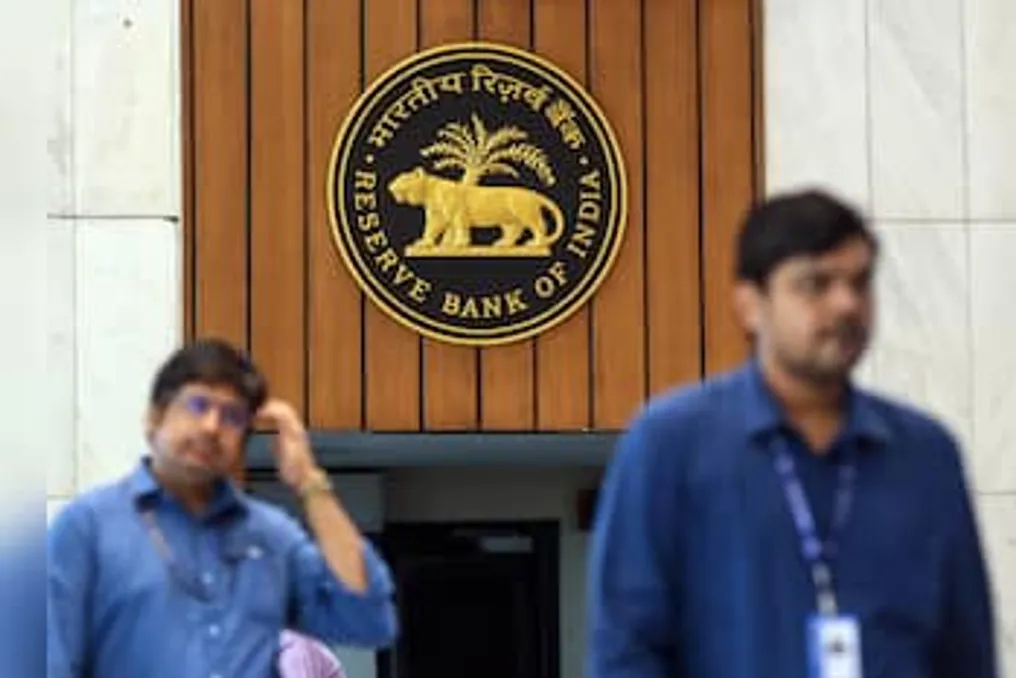
The second major decision concerned the regulatory status of Tata Sons. The board decided to initiate the process of listing Tata Sons, stating its intention to follow applicable RBI guidelines and seek consultation from the central bank, Tata Trusts, and other stakeholders.
This move came less than a week after the RBI rejected Tata Sons' application for voluntary deregistration as a Company of Interest (CIC). Tata Sons had attempted to opt out of registration to avoid the listing requirement applicable to parent Non-Banking Financial Companies (NBFCs). The RBI's decision on September 11 overturned the path to CIC deregistration proposed by Tata Sons, returning the company to the question of how to meet the regulator's listing requirement.
Tata Trusts claims the listing decision has not been made
The board's decision immediately met with objections from Tata Trusts. In a statement following the meeting, Trusts reported that they disagreed with Tata Sons going public. According to Trusts, the board agreed to consider all available options rather than making a final decision on listing.
Trusts stated that these options would be evaluated and presented at the next Tata Sons board meeting, which would then determine the appropriate course of action. Trusts also recalled the board's resolution from March 2024, adopted under the leadership of the late Ratan Tata, stipulating that Tata Sons should remain unlisted. They noted that Sir Dorabji Tata Trust and Sir Ratan Tata Trust reaffirmed resolutions in July 2025 opposing listing. Tata Trusts emphasized: 'Accordingly, the position of Tata Trusts remains unchanged.'
Noel Tata's stance against listing
Noel Tata argued that the RBI notification of September 11 did not mean that going public was the only possible route. He insisted on further discussions with the regulator and proposed requesting additional time to find a way to keep Tata Sons a private company.
One alternative option is the Shapoorji Pallonji (SP) group, which owns about 18.4 percent of Tata Sons. Noel Tata presented the board with a proposal from the SP Group for a partial monetization of its stake. This proposal involves raising at least 25,000 crore rupees through selective capital reduction or buyback, offering a potential liquidity path without immediate IPO.
This issue is significant because the SP Group has sought greater liquidity from its investments in Tata Sons for many years and has supported listing. SP Group Chairman Shapoorji Pallonji Mistry welcomed the RBI's decision, stating that public listing could strengthen transparency, accountability, and governance in Tata Sons. He also called for more active engagement between Tata Sons, Tata Trusts, and shareholders.
Noel Tata's disagreement with the extension of Chandrasekaran's term is a separate issue from his position on listing. Tata Trusts stated that on August 12, Chandrasekaran made a clear decision not to seek a new term. Trusts accepted this decision the next day and asked Tata Sons to begin the process of selecting his successor. Now, Trusts argues that the reversal of this decision was premature. They pointed out that Chandrasekaran's decision was publicly announced and reacted to by employees, creditors, counterparties, the market, and most shareholders. Consequently, they believe the previous decision acquired final character.
Tata Trusts calls extension a 'legal nullity'
The dispute over Chandrasekaran's return has also moved into the legal and governance arena. Tata Trusts labeled the extension as 'illegal' and stated that the decision does not comply with the Tata Sons Charter. According to Trusts, the Charter requires support for the appointment or extension of the Tata Sons chairman by a majority of Tata Trusts nominated directors. Since Noel Tata, one of the Trusts' nominated directors, voted against Chandrasekaran's extension, Trusts asserts that this decision is a 'legal nullity.'
Noel Tata also presented the board with a legal opinion from former Chief Justice of India D. Y. Chandrachud, supporting Trusts' interpretation. Trusts did not disclose the content of this opinion. This position remains the legal stance of Tata Trusts and may become subject to further corporate or judicial proceedings.
What happens next?
The immediate question is how Tata Sons will proceed regarding Chandrasekaran's extension following the 4:1 board vote and whether Trusts will continue to challenge its objections. The listing issue also remains unresolved from Trusts' perspective.
Tata Sons is expected to examine available options and engage in dialogue with the RBI. Tata Trusts wants these alternatives to be evaluated before the matter is considered at the next board meeting. The SP Group's proposal to monetize part of its stake could become part of these discussions.
There is also the issue of shareholder approval and the timing of the Tata Sons Annual General Meeting. The general meeting has faced delays due to issues related to Sir Ratan Tata Trust and the Tata Sons Charter requirement for joint selection of a representative by two key trusts.
How Tata Sons ended up in this situation
The roots of the listing dispute go back several years. In 2017, Tata Sons shareholders approved its conversion from a presumed public company to a private limited company. The National Company Law Tribunal approved the conversion in 2018, and the Supreme Court dismissed the challenge by the Mistry group in 2021.
The regulatory landscape changed after the RBI introduced its scale-based system for NBFCs in 2021. Parent NBFCs were required to list their shares within three years of identification. On September 30, 2022, Tata Sons was classified as a parent NBFC, setting its listing deadline for September 30, 2025.
Instead of listing, Tata Sons repaid debt amounting to 21,813 crore rupees during FY24 and applied to the RBI for CIC deregistration. The company continued to await the RBI's decision while the SP Group insisted on listing. Tata Sons' listing deadline expired in September 2025 without an IPO.
The RBI rejected the deregistration application on September 11, 2026, stating that the request could not be accepted. The Tata Sons board meeting on September 17 followed a few days later. The leadership dispute developed along a similar trajectory. Chandrasekaran became chairman of Tata Sons in 2017 and was appointed for a second five-year term in February 2022. His current term was set to end on February 20, 2027. After the board failed to decide on his continuation in February 2026, he announced on August 12 that he would not seek a new term. Just over a month later, the board reversed this stance.
Two disputes, one board
Now Tata Sons faces two main issues. The board supported Chandrasekaran for another five years and initiated steps to comply with RBI listing requirements. Tata Trusts, which holds about 66 percent of Tata Sons, challenges both decisions—opposing Chandrasekaran's extension and asserting that listing is not yet agreed upon. The SP Group, holding about 18.4 percent, supported the listing path and separately proposed a method to monetize part of its stake.
Thus, the next Tata Sons board meeting will be crucial on both fronts: the company's response to RBI regulatory requirements and the ongoing disagreement over its leadership. The latter dispute now extends beyond a simple board vote. Tata Sons must decide both its regulatory future and the question of who will lead the holding company after February 2027.