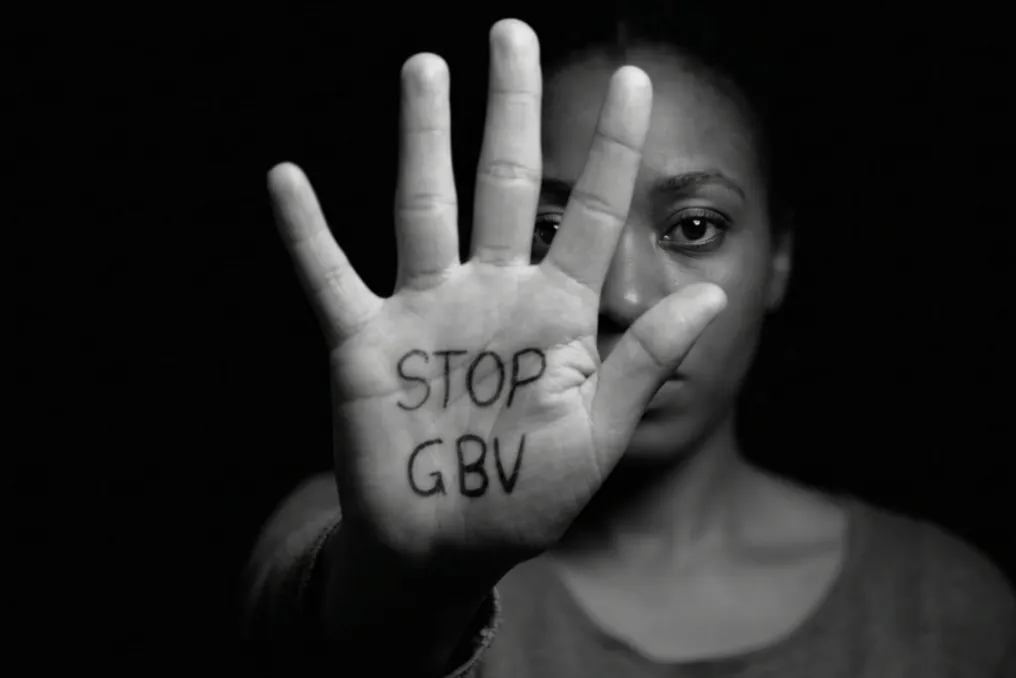
In recent weeks, bodies of women have been discovered in the Gauteng province, raising concerns about femicide and gender-based violence (GBV) in the country. Women working in agriculture are sharing their experiences and insisting on the need for accessible and proactive police response to protect vulnerable families.
The agricultural community has called for justice and severe punishment for perpetrators, as well as strong support for surviving victims.
Recently, the South African Police Service (SAPS) published crime statistics for the first quarter of the 2026/2027 financial year (covering April to June 2026). In total, SAPS registered 50,511 cases of gender-based violence and femicide (GBVF), of which 30,736 led to arrests or referral to the National Prosecuting Authority.
According to these statistics, 5,427 murders were committed between April and June 2026; of these, 569 victims were women, and 1,052 people survived an attempted murder.
A farmer from Free State, Mimi Jacobs, who was brutally attacked on her farm five years ago, shared that after the attack, she had to become more vigilant about her personal safety. She increased security around her home, phone, and other devices, and changed habits, such as no longer walking alone on the road but doing so with a dog, and ensuring a family member always knows her whereabouts.
She advised women experiencing domestic violence to report incidents to the authorities, seek counseling, and talk to a trusted friend. Jacobs emphasized: 'Do not isolate yourself. Life is not a rehearsal; violence starts and ends with you. Use positive self-perception and increase your education so you are not financially dependent on your partner, as women tend to stay due to lack of financial independence.' For added safety, she joined local groups such as an emergency response team and a farmers' association, and keeps a charged spare phone with emergency contacts in a safe place in case of theft.
Motsidisi Modise, a crop farmer in Mpumalanga, believes that calls to declare GBV a national crisis can no longer be ignored by the country's leadership. Having recently survived a robbery on her farm, Modise speaks of the deep vulnerability felt by women working in isolated rural areas. She noted that as a victim of robbery, she personally knows what it feels like to be vulnerable, lost, and afraid when a mother, sister, or child is taken away from their loved ones, as if they are worthless in this life.
Modise also points to systemic obstacles slowing down justice for victims in rural communities, noting that the geographical location of workplaces isolates women in agriculture, making them easy targets.
Reinforcing this state of constant fear, Nontobeko Gqubaza, a crop farmer from KwaZulu-Natal, highlights the heavy psychological burden carried by women who manage farms while also caring for their families. She stated that life in South Africa is traumatic for a woman in itself, as they live in constant fear of what might happen next, wondering if she will make it to work, return home afterward, and what will happen to the daughter left alone at school.
Charlotte Mosena, a farmer and chef from Gauteng, expressed concern that women, especially mothers raising children in the country, are scared about whether their families are safe. She believes that stronger accountability, accessible police patrols, and support services in rural areas, along with clear actions beyond mere campaigns, are necessary. Women must be able to live and work on farms without feeling that their isolation makes them more vulnerable.
Mosena noted that reports of killings or violence against women and children are often heard, followed by campaigns and solidarity movements, but she wonders: 'What happens next?' She particularly stressed the need to focus on the safety of women in rural and agricultural settings, as most farms are located in isolated places, far from police stations, emergency services, and other forms of support, which hinders quick assistance in case of an incident.
Meanwhile, Ndumi Funda, founder and director of the Luleki Sizwe Women’s Project, stated that the recent femicides in Kempton Park are not an isolated issue. Funda noted that the lack of progress in resolving cases, holding perpetrators accountable, and securing harsher sentences for gender-based violence is disappointing for families. He added that some cases receive attention while others remain unsolved due to a lack of public interest.
Sisa Nobanda, founder of the youth initiative Qula Kwedini in Kwalanqe, Western Cape, stated that the conversation must also consider broader community violence affecting men and women who are robbed and killed. He believes that society only reacts to headlines instead of solving the real problem of violence.