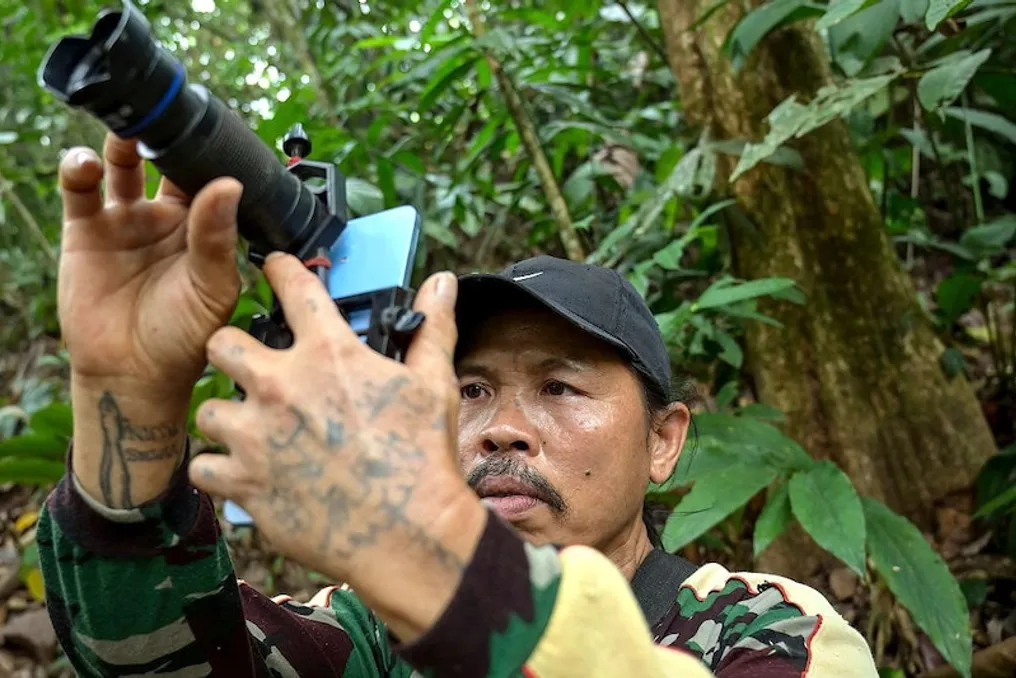
A unique initiative is being implemented on the island of Borneo in Indonesia that is transforming local wildlife hunters into their protectors. Villagers in West Kalimantan province are now exploring the forests, photographing or recording the sounds of orangutans, monkeys, birds, and other animals, receiving monetary compensation for doing so.
This project, known as Kehatiku, is overseen by the environmental organization Borneo Futures. Previously, locals earned income by hunting and selling wild songbirds at the local market. Now, the same people earn an income by keeping the animals alive. The main goal of the program is to make animals valuable in living condition rather than dead. Hundreds of people from nine villages participate, and this has become an additional source of income alongside their daily work.
Project participants upload photos or recordings through a mobile application. A picture of an ordinary bird earns about five thousand rupiah, while a photo of an endangered orangutan can yield up to 130 thousand rupiah. The most successful observers can earn up to 1 million rupiah per month, which significantly exceeds the earnings of an average farmer. People like 50-year-old Octavius note that this money helps pay for their children's college education. They are constantly in the forest, carefully monitoring their surroundings; sometimes, while working in the field, they take pictures after hearing birds sing.
To date, over three hundred and fifty thousand photo records have been collected, half of which have been verified and paid for. An application and artificial intelligence system are used to filter out fake or duplicate data. Most participants are small farmers growing rice, cocoa, durian, and kratom, and this side job does not interfere with their agricultural work. Women have received special benefits: Antonia Uneng from the village of Sungai Ajung was able to purchase a refrigerator and a karaoke machine thanks to her earnings.
Unlike dependence on husbands working abroad, these people now have their own income, which has increased their sense of independence. Elderly farmer Imelda visits the forest with friends, claiming that the walks improve health. Furthermore, they want to protect crops from pests such as wild pigs or deer, which previously damaged the harvests. Two villages have voluntarily banned hunting, indicating that economic incentives are changing behavior.
This scheme not only generates income but also collects data on the distribution and changes in wild animal populations. Nardiono, director of Borneo Futures, explains that previously, fifty thousand rupiah was paid for a captured bird, whereas now the same amount can be earned from five photographs, while the bird remains alive and continues to reproduce. In the long term, observation can bring more income than hunting.
Researcher Paul Ferraro from Johns Hopkins University believes that this model can have a better ecological and social impact compared to top-down conservation programs without incentives. However, there is a problem of funding sustainability: if enthusiasm wanes, people may revert to old habits. The project has received about three hundred thousand dollars in donations, half of which was spent on developing the application and AI system. Funding is guaranteed until 2028, and two more villages will soon join. Seventy-eight species are involved in the project. Success depends on whether the funding is maintained in the long term and whether people can make nature conservation a habit.