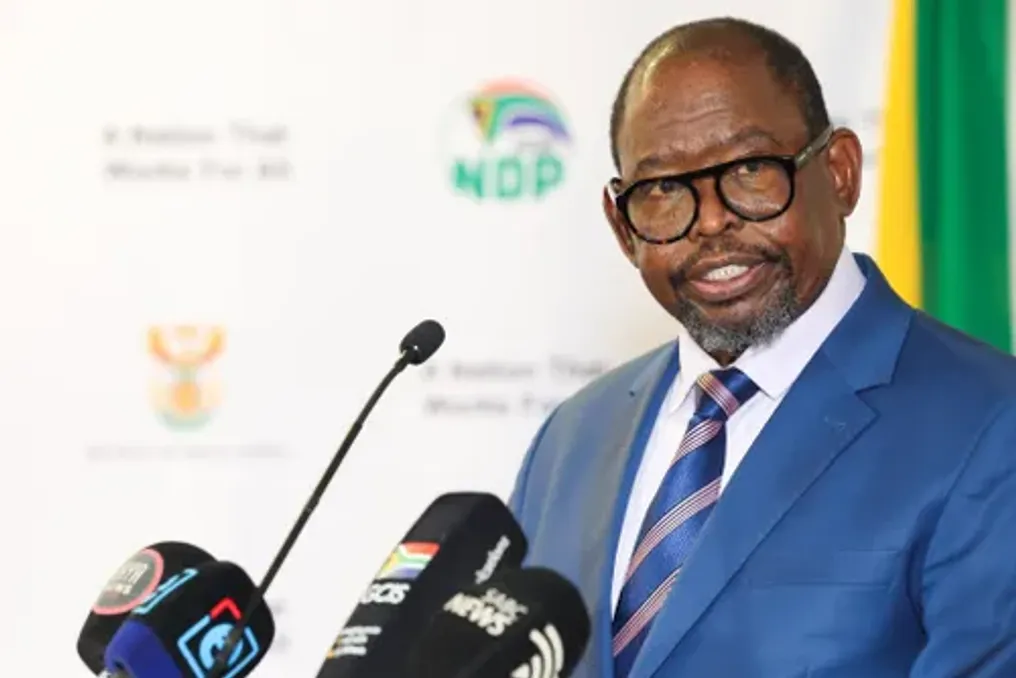
The Minister of Cooperative Governance and Traditional Affairs, Velenkosini Khlabisa, stated that as of August, the number of municipalities experiencing financial difficulties has reached 38. These municipalities have been identified as problematic and are receiving structured assistance through the Municipal Performance Turnaround Strategy and related support measures according to section 154.
Khlabisa noted that these municipalities were identified based on issues in governance, finance, institutional structure, and service delivery, which require targeted assistance. He made this statement in response to a parliamentary question from IFP MP Alko Ngobese, who requested information on the number of affected municipalities and the intervention measures taken by his department.
The Minister emphasized that the Constitution obliges national and provincial governments to provide support and strengthen the capacity of municipalities for self-governance, exercise of powers, and fulfillment of functions. The provincial executive authority may intervene if a municipality fails to meet its executive obligations in accordance with the Constitution or legislation.
He clarified that the forms of such intervention can vary depending on the nature and severity of the identified violations. The Department of Cooperative Governance monitors municipal operations through various support programs and assessments, including the Municipal Performance Turnaround Strategy (MPTAS).
In cases where municipal failures are serious and provincial support is insufficient, the relevant provincial executive authority may initiate intervention in accordance with section 139 of the Constitution. Khlabisa reported that 37 municipalities were currently under intervention according to section 139 of the Constitution.
Among these municipalities are four in the Western Cape, including Beaufort West, Canalendal, Garden Route, and Tsitsikamma. Only Impendle is listed in KwaZulu-Natal, while eMfuleni and Marorang are in Gauteng. Additionally, eight municipalities are in the Free State, five in the Eastern Cape, one in Limpopo, five in Mpumalanga, eight in the North West Cape, and three in the North Cape.
Khlabisa also informed that seven out of the 38 problematic municipalities demonstrated improved audit results during the 2024/25 audit cycle, while 28 remained unchanged, and two showed deterioration. Thirty-five out of the 38 problematic municipalities adopted Municipal Support and Improvement Plans or Financial Recovery Plans for guidance and oversight of turnaround measures.
It was noted that expenditures under the Municipal Infrastructure Grant improved in several problematic municipalities, and municipalities such as Enoch Mgijima Municipality reported increased income related to infrastructure and measurable interventions. However, according to Khlabisa, progress remains uneven, as many municipalities continue to face serious challenges in finance, governance, and service delivery, including adverse audit findings, high debt levels, and difficulties in meeting debt reduction conditions.
The Department will continue to monitor the effectiveness of support measures and interventions in collaboration with provincial governments and the National Treasury, utilizing available constitutional and legislative mechanisms if municipalities fail to achieve sustainable improvement.
Furthermore, Khlabisa reported that 25 municipalities across all provinces reported instances of appointments of unqualified senior management at varying frequencies. Thirty-five such appointments were made for the financial years 2024/25 and 2025/26. Of these, 34 were rectified through corrective measures within the applicable legal framework, and one was deemed invalid and revoked after judicial proceedings.