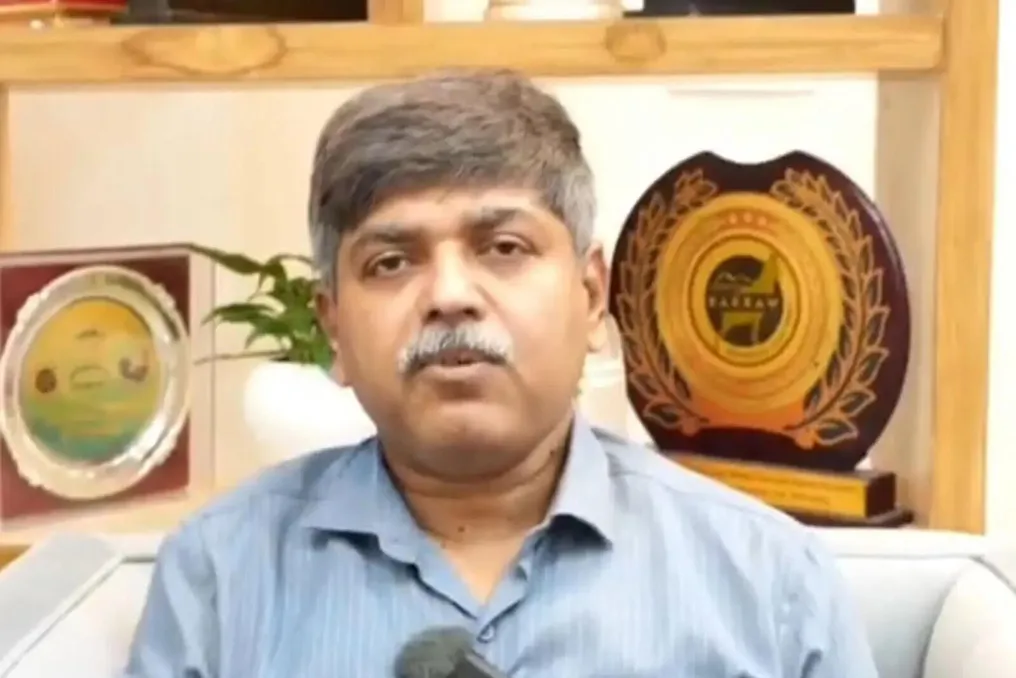
The Chief Secretary of Uttarakhand for Energy, R. Minakshi Sundaram, provided clarifications on Thursday regarding concerns raised by some political parties concerning the planned procurement of 1320 MW of thermal power. He stated that the entire process is being carried out in accordance with prescribed rules, technical requirements, principles of competitive bidding, and after approval by the Uttarakhand Electricity Regulatory Commission (UERC).
Sundaram refuted claims about the energy procurement process, noting that they are not based on facts. The objective of this procurement is to meet the long-term and growing energy needs of the state, not to benefit any specific company.
Explaining the tender procedure, he specified that the Model Document for Tenders, issued by the Union Ministry of Power in 2019, was a general template. Changes were considered taking into account technologies, location, fuel availability, transportation costs, and other specifics of individual projects.
All proposals and objections received from tender participants were examined from technical and practical standpoints. Subsequently, necessary proposed changes were submitted to UERC for consideration, which approved the amendments after detailed discussion.
Sundaram also dismissed the notion that the energy purchase is being handed over to one company without competition. He reported that five companies were found to be compliant during the Request for Quotation (RFQ) stage, and competition was maintained during the Request for Proposal (RFP) stage. The final selection will be based on the overall bid declared during the competitive bidding process.
The planned procurement of 1320 MW aims to satisfy Uttarakhand's basic long-term requirement and guarantee continuous and reliable power supply to consumers.
When developing the tender, the significance of Uttarakhand as a tourist and pilgrimage destination, as well as its ecological sensitivity, was taken into account. Since thermal power plants require large volumes of coal, transporting it over long distances can increase costs. Therefore, the tender allows the plant to be located in any suitable point in the country, enabling companies to offer competitive tariffs while considering fuel availability, transport costs, and other factors.
Sundaram emphasized that there were no restrictions on building the plant within Uttarakhand itself, and any company that builds the plant in the state and offers a competitive tariff can participate in the established process.
Regarding transmission costs, he explained that the terms and associated costs for supplying electricity to Uttarakhand are determined according to the tender conditions and tariff. Consequently, the assertion that building the plant outside Uttarakhand would automatically result in all additional costs falling on consumers was incorrect. The actual financial impact on consumers must be assessed based on the overall electricity tariff.
Concerning fixed charges, Sundaram noted that the Model Document for Tenders set a ceiling for the fixed charge at 70 percent, with at least 30 percent remaining as a fuel surcharge. Considering the actual costs of the bidders, fuel availability, and potential site circumstances, UPCL proposed increasing this ceiling to 75 percent, which would allow the fuel surcharge component to remain at 25 percent. He added that electricity prices were evaluated not only based on fixed charges but also on the overall tariff, including fixed and variable or fuel costs. This proposal was reviewed and approved by UERC after due deliberation.
Increasing the fixed charge ceiling from 70 to 75 percent did not imply an automatic increase in the financial burden on consumers, as the final payment depended on the overall tariff offered as a result of the competitive bidding. Construction timelines were also set to ensure phased delivery of the 1320 MW capacity: the first block has a deadline of 42 months, and the second—48 months.
The Chief Secretary mentioned that a joint venture option between UJVNL and THDC was also considered to meet the demand. However, he clarified that THDC, being a subsidiary of NTPC, must adhere to established NTPC policies, and its core expertise is related to hydropower and pumped storage projects. Expanding activities into other areas would require appropriate permissions from its promoter.
Sundaram also clarified that the estimated amount of INR 1.60 lakh crore to INR 1.66 lakh crore over 25 years does not represent a lump-sum payment, but rather the potential total payment for the entire period. The state's future energy requirement was assessed based on the Resource Adequacy Study by the Central Electricity Authority, and actual payments will depend on the final tariff, the volume of energy supplied, plant availability, and other contractual terms.
Confirming that the procurement process is not solely the decision of one department, Sundaram noted that it involves multiple stages: technical verification, competition among bidders, financial evaluation, and approval by an independent regulatory body. He reiterated that the main goal of procuring 1320 MW is to secure Uttarakhand's future energy needs, not to benefit any specific company, and that the final selection will be made through competitive bidding.