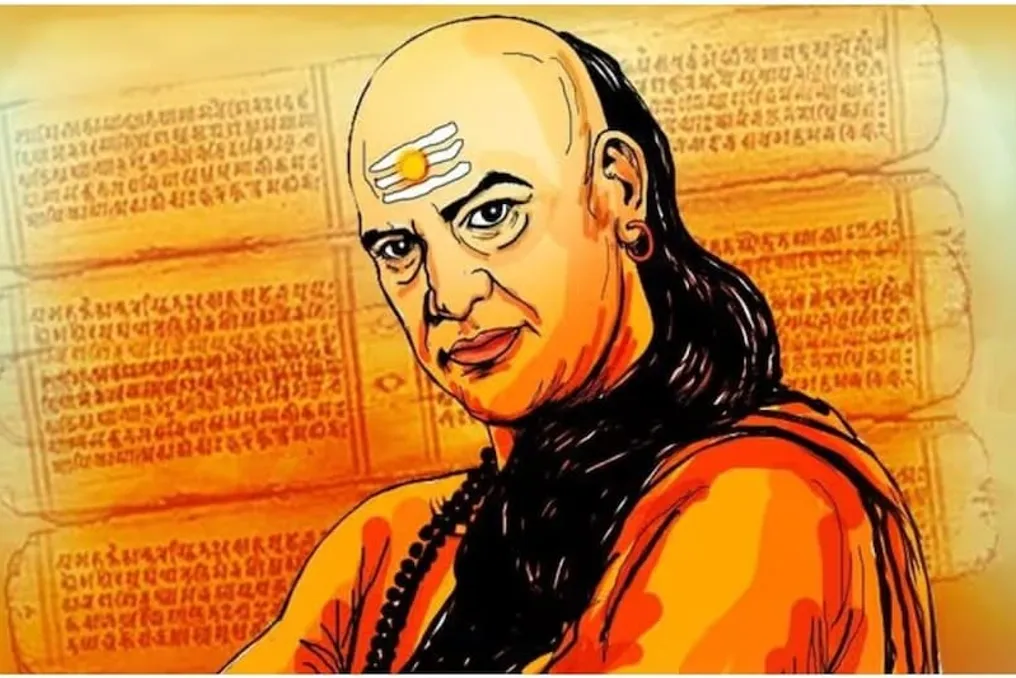
According to Chanakya, four morning habits can lead to financial ruin
Read more
Aaj Tak
www.aajtak.in

According to Chanakya, four morning habits can lead to financial ruin

Acharya Chanakya is recognized as one of India's great thinkers and economists. His teachings and ideas remain as relevant today as they were centuries ago. It is often observed that a person achieves significant income through hard work, but the money does not stay with them, and after receiving their salary, they find themselves in financial difficulty.

According to Chanakya's teachings, daily habits, especially how one starts the day, have a profound impact on a person's financial situation. If certain rules are not followed in the morning, the goddess Lakshmi may be displeased, which can lead to poverty in the household. Next, two main mistakes that prevent money from being retained in the morning are examined.

Firstly, this is creating an atmosphere of conflict or tension in the home immediately after waking up. Acharya Chanakya asserts that the day must always begin in an atmosphere of calm and positivity. In homes where the morning starts with arguments, anger, shouting, or discussions about financial matters, prosperity will never arrive. A stressful environment in the mornings not only worsens mental state but also attracts negative energy. Therefore, it is necessary to maintain silence in the house during the morning hours and avoid unnecessary disputes.

Secondly, this is disrespecting food and money. In Chanakya's philosophy, both food and money are considered sacred and a reflection of the goddess Lakshmi. Many people have a habit of criticizing food products or wasting food, leaving leftovers on their plates in the morning. Furthermore, a careless attitude towards expenses or financial transactions early in the morning can have serious consequences. Those who neglect food or manage money improperly do not retain the goddess Lakshmi.

To improve one's economic situation, it is recommended to adopt simple habits. It is necessary to develop a disciplined daily routine by waking up on time and starting the day according to a clear plan. It is also important to instill the habit of saving by setting aside a portion of earnings monthly. Finally, one should cultivate positive thinking, maintaining calmness after waking up and applying a policy of limiting non-essential expenses.

Similar stories

According to Chankya's teachings, there are three main sources of life's suffering and ways to overcome them
Read more
www.aajtak.in

According to Chankya's teachings, there are three main sources of life's suffering and ways to overcome them

In life, every person strives to achieve happiness, respect, and success, but often the cause of problems is one's own mistakes or external circumstances. Acharya Chankya mentioned many aspects related to human life in his political philosophy that remain relevant to this day. He pointed out certain situations in which a person's life can become difficult, specifically highlighting three such states as sources of suffering.

Chankya's teachings are not limited to advice on making money or achieving success; they also warn about weaknesses and circumstances that should be approached with caution. According to Chankya, proper knowledge, self-control, and the ability to be self-sufficient can protect a person from many life difficulties.

Acharya Chankya explained these three states through a verse: «कष्टं च खलु मूर्खत्वं कष्टं च खलु यौवनम्.कष्टात् कष्टतरं चैव परगेहे निवासनम्॥». The meaning of this verse is that ignorance is painful, and youth can also bring suffering.

The question arises as to why Chankya linked these three states to suffering, and what lesson we can draw from this today. Firstly, Chankya named foolishness, or ignorance, as the cause of suffering. Here, foolishness is understood not only as a low level of education but also as the inability to distinguish between good and evil in life, making decisions without sufficient information, and lacking the desire to learn from one's own mistakes.

A person who lacks knowledge and understanding finds it difficult to make correct decisions. They can easily fall under someone's influence or make a hasty decision whose consequences they will have to pay later. This lesson remains extremely important even today. Taking steps in matters of study, work, business, relationships, or finance without full awareness can exacerbate problems. Therefore, a person needs to constantly acquire new knowledge, ask questions, and learn from their mistakes.

Chankya also pointed to youth as a cause of suffering. At first glance, this may seem strange, as youth is traditionally considered a time of energy, enthusiasm, and opportunity. However, Chankya's hint can be interpreted as an indication of excessive zeal and lack of experience inherent in this age.

In youth, a person's desire to try new things and willingness to take risks increases. If this energy is directed in the right direction, this zeal can become the main reason for great success. But anger, haste, making decisions under emotional influence, and acting without considering consequences can also lead to losses. Therefore, self-control and patience are crucial in youth. Regardless of whether it concerns career, business, friendship, or relationships, one should consider both positive and negative outcomes before making any important decision. Directing one's energy towards studying, career, skill acquisition, and positive activities can be beneficial for the future of the person.

Chankya named the third situation more agonizing than the first two. The verse states: «कष्टात् कष्टतरं चैव परगेहे निवासनम्», which means that living in someone else's house can be the most difficult trial. This can be explained by the feeling of the need for self-sufficiency and freedom. When a person lives in someone else's home, they often do not have complete freedom to live according to their desires. They have to consider the comforts, rules, and conditions of other family members.

If such a situation lasts for a long time, it can cause psychological pressure or discomfort in a person. Although this statement was made in the context of the social conditions of Chankya's time, today it may be connected to a broader message about the necessity of achieving independence.

According to Chanki: Three things you should not be ashamed of, otherwise it will harm yourself
Read more
www.aajtak.in

According to Chanki: Three things you should not be ashamed of, otherwise it will harm yourself

In modern society, pressure on people to look better has increased. People often start comparing themselves to others regarding good jobs, expensive things, a better lifestyle, and financial status. Sometimes, precisely because of this desire for showiness, a person begins to hide their true needs and circumstances. The teachings of Acharya Chanki offer a completely different approach to thinking. According to his views, there are situations in which a person should not feel embarrassed and should not feel humiliated in front of others.

Do not be ashamed of financial difficulties

Every person's financial situation is constantly changing. There are times when someone has enough funds, and there are periods when it becomes difficult to cover expenses. According to Chanki's teaching, financial difficulties are not something to be ashamed of. Instead of hiding hard times, one must accept them and try to get out of the situation. It is much more important to work according to one's abilities, acquire new skills, and seek more favorable opportunities. Turning to debt or making unjustified expenditures just to demonstrate a better position can worsen the problems.

Honest work is never insignificant

Sometimes people tend to evaluate work based on its position or income level, causing some to hesitate even when performing small tasks. Chanki's wisdom is that any work done with honesty is not trivial. Regardless of whether the work is big or small, whether it is business or physical labor, a person should be proud of their work if they perform it diligently. Any suitable job obtained during difficult times can become a path to advancement, and the experience gained from work can open doors to new opportunities in the future.

Do not be ashamed to ask for food when hungry

Chanki's teaching places great importance on the basic needs of the body. If a person is hungry, it is wrong to suppress this hunger just to maintain etiquette or appearance. Food is a fundamental need of the body, so timely nutrition or asking for food when necessary is not a cause for shame. Ignoring the needs of one's health and body cannot be considered a wise action.

Do not limit yourself out of fear of judgment from others

Often, people worry more about what others will think of them than about their own needs. Hiding a bad financial situation, avoiding work, or feeling embarrassed when hungry can be part of this mentality. The main idea in Chanki's teaching is that greater importance should be given to one's self-respect and needs than to the opinion of others. Public opinions constantly change, but the responsibility for one's life lies with the individual.

Acknowledging reality is better than showing off

In the age of social media, the influence of comparison and showing off has increased even more. Seeing expensive cars, luxurious homes, or the luxury lifestyle of others, people begin to consider their own lives inadequate. However, spending more than your real means allow simply because you see someone else's life is unwise. A happy life is not only about having expensive things; financial discipline, hard work, self-respect, and accepting one's real circumstances are also extremely important. Chanki's teaching reminds us that asking for help when needed, honest work, and acknowledging one's basic needs are not weaknesses. True weakness manifests when a person hides their needs and the truth only out of fear of society.

Popular