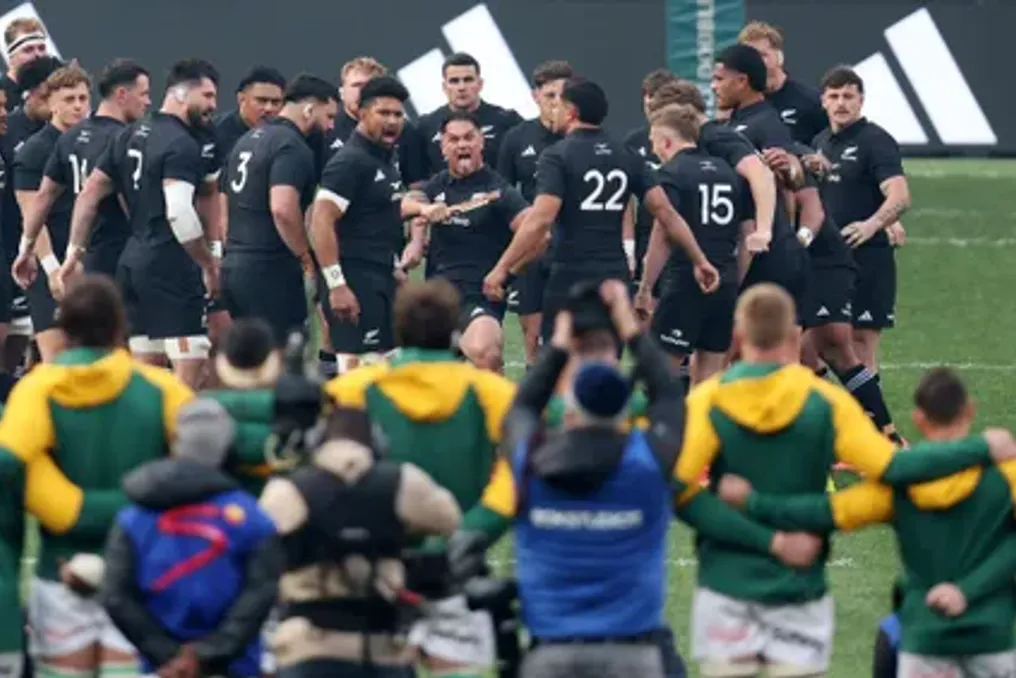
Test match between Springboks and Wallabies in Perth seen as preparation for the 2027 Rugby World Cup playoffs
Read more
IOL
iol.co.za

Test match between Springboks and Wallabies in Perth seen as preparation for the 2027 Rugby World Cup playoffs

The upcoming test match between the Springboks and the Wallabies in Perth provides the Springboks team with an opportunity to conduct practical training ahead of the 2027 Rugby World Cup playoffs.

Despite the immediate goal of winning away against the Wallabies, the coaching staff under Rassie Erasmus is already analyzing all logistical and game details in anticipation of defending the title next year in Australia.

The Springboks are scheduled to return to this venue in October 2027, where they will face Romania in the third group match of the World Cup, making this test match a strategic operational rehearsal.

The group match itself is expected to be predetermined, as the Boks are likely to easily defeat the Romanian team. However, it is the first playoff match in Perth that will command the full attention of the Springboks.

Since the Springboks are likely to finish first in Group B, they will face the best team that finished third in Groups D, E, or F in the Round of 16. Siya Kolisi's team is expected to meet one of the teams from Japan, Samoa, or Tonga in this match before a possible quarter-final clash against their long-time rivals, the All Blacks.

Playing in Perth next Saturday allows the Boks to adapt in advance to the specific environmental conditions and logistical features of the city. Furthermore, Western Australia has a large South African community, and the upcoming match will give the Boks insight into the loud support in 'Perthfontein' that they might expect in 2027.

When South Africa meets Romania next year, as well as whoever awaits them in the Round of 16, the opponents may differ, but the environment will remain the same. By conducting rehearsals at the stadium, hotels, and training facilities now, Erasmus ensures that his team eliminates unknown variables, striving to reach peak form by the start of the main World Cup stage.

In the World Cup campaign, where success is determined by minor advantages, this early reconnaissance in Perth could prove to be a subtle yet decisive edge.

Similar stories

Springboks will postpone the return of the greatest rivalry trophy due to the match against the Wallabies in Perth
Read more
iol.co.za

Springboks will postpone the return of the greatest rivalry trophy due to the match against the Wallabies in Perth

The Springboks team is forced to wait to celebrate their victory in the 'Greatest Rugby Rivalry' tournament before their fans, as they still have to play a match against the Wallabies in Perth before they can return to South Africa.

After a convincing 43-28 victory over the All Blacks in Baltimore on Saturday, the world champions will not return home immediately after completing the memorable 3-1 series.

Instead, the Springboks will travel directly from the United States to Australia, where they are scheduled to face the Wallabies in Perth on Sunday, September 27th, with the match starting at 5:45 AM South African time.

This means that Rasmus Erasmus's team will spend the next couple of weeks in Perth, preparing for another important test match. Furthermore, this could be an ideal opportunity for the management to scout for the 2027 Rugby World Cup ahead of defending the title in Australia.

For the Boks, the immediate priority is now maintaining winning momentum against Australia, rather than celebrating the success against their main rival.

The four-match 'Greatest Rugby Rivalry' series presented Springboks and All Blacks with another exciting chapter in their rich history. South Africa lost the first match at Ellis Park stadium but then won at DHL Stadium in Cape Town and FNB Stadium in Soweto, securing an undeniable 2-1 advantage in front of nearly 90,000 fans.

Subsequently, the team traveled to Baltimore, where they achieved one of the most impressive attacking victories of the year, defeating New Zealand 43-28 and winning their debut four-match series 3-1.

Although three of the four matches were played in front of passionate home crowds in Johannesburg and Cape Town, these fans will now face a wait before they can celebrate the latest acquisition by the Springboks, which was secured in front of more than 68,000 people at M&T Bank Stadium.

The rivalry between the Springboks and All Blacks remains the greatest in rugby due to mutual respect
Read more
iol.co.za

The rivalry between the Springboks and All Blacks remains the greatest in rugby due to mutual respect

Despite the rivalry between the Springboks and the All Blacks being arguably the greatest in world rugby, respect between the players and teams is maintained even after the match concludes.

Unlike many other sporting confrontations where players might avoid interacting after the game, the opposite occurs in this rivalry. Although players fight fiercely during the 80 minutes of play, and coaches sometimes exchange sharp remarks at press conferences, the atmosphere quickly normalizes after the match ends, and both teams demonstrate mutual respect.

Erasmus and ReNNy shared a beer

This rivalry between South Africa and New Zealand illustrates the essence of the sport. The Springboks coach Rassie Erasmus and his colleague from the All Blacks, Dave Rennie, although they may have tactical disagreements, set these differences aside after the final whistle and media duties.

These two coaches have repeatedly met over a pint before and after various series matches, serving as a reminder that their confrontation is based on respect, not hatred. Erasmus mentioned that they drank beer after the match and planned to meet in Cape Town.

Dave Rennie confirmed that they shared a beer immediately after the game, despite verbal sparring over the score.

This friendly relationship extends to the players. Springboks captain Siya Kolisi and All Blacks captain Ardie Savea have developed a deep friendship that goes beyond rugby. They have attended church together, and Savea's children show particular affection for the Springboks captain, calling him 'Uncle Siya.'

Kolisi emphasized that when he plays against a friend, he shows respect by giving everything he can on the field, which he believes is very important. This says a lot about what lies beneath what could be considered the most intense rivalry in international rugby.

For 80 minutes, Kolisi and Savea lead their teams into battle, ready to risk their bodies for victory. Although Kolisi delivered a strong hit to Savea in Cape Town, Savea admitted feeling it, but after the battle, respect remains.

Springboks and All Blacks share a flight

The rivalry does not need to become personal. On the contrary, the mutual respect between the players makes this spectacle special. This was demonstrated in an unusual way before the fourth and final match in Baltimore, when the Springboks and All Blacks traveled together on a charter flight from Johannesburg to Washington.

Most of the journey passed in silence, according to eighth player Jasper Wiese, but the mere fact of the joint long journey was symbolic. The silence was understandable, as one team had won while the other had lost. Despite harsh words, powerful hits, tactical battles, and continuous competition, it is still rugby, and that is why the Springboks and All Blacks rivalry will go down in history as perhaps the greatest contest on the planet outside the Rugby World Cup. Because the Boks and the All Blacks might want to destroy each other for 80 minutes, running the oval ball across the field, but when it is over, they can still share a beer, eat together, attend church, and call each other friends.

Five Reasons Why Springboks Could Achieve a Convincing Victory Over All Blacks in Baltimore
Read more
iol.co.za

Five Reasons Why Springboks Could Achieve a Convincing Victory Over All Blacks in Baltimore

The Springboks, led by Rassie Erasmus, are poised to achieve a dominant victory over the All Blacks. The fourth match of the 'Great Rivalry' rugby series is approaching, and signs indicate that the Springboks will have their first 80-minute match in this series and will heavily defeat the All Blacks.

The Great Rugby Rivalry

The Springbok team possesses momentum and confidence. They are in their eighth year under Rassie Erasmus and have established a habit of recovering from setbacks and performing strongly in major tournaments, such as two World Cups and the British & Irish Lions series.

This pattern is repeating itself in the 'Great Rivalry' matches. Although the Springboks lost the first match, they responded with wins in the subsequent two games and appear to have learned how to exert constant pressure on the All Blacks.

In contrast, New Zealand is only in the third month of Dave Rennie's era and is still learning on the fly. The Springboks clearly know their goals, whereas the All Blacks are still searching for their path.

All Blacks Have Suffered Mental and Physical Losses

In the match in Kalabaas, the All Blacks gave everything, leaving nothing on the field and giving South Africa everything they had, yet they still suffered a defeat. The score of 29-24 may underestimate the significance for New Zealand, and they are aware of this. More seriously, three of their key players have sustained injuries, notably their talisman Ardie Savea.

The importance of Savea to the All Blacks cannot be overstated—he is not only a world-class player but also a center of cohesion, an inspiring captain who leads by example. His absence creates a huge gap.

The Springbok attack is putting pressure on New Zealand. The dominance of the Springbok forwards was reportedly hindered by an overly meticulous approach to the scrum in the second match. However, last week, Nick Amashukeli allowed the teams to interact more freely, similar to how Matthew Carlie did in the first match.

The result was telling: the All Black forwards began spending more time moving backward. Signs suggest that Karl Dixon from England will again allow the forwards to compete honorably for the scrum in the fourth match. If this happens, the All Blacks will face a serious problem, as the authority of the Springbok forwards grows as the series progresses, and the pressure inevitably exerts physical and psychological impact.

The All Blacks are experiencing a shortage of personnel. At the start of the series, Erasmus noted that the All Blacks players accumulated about 60 minutes more per person during the World Cup than their Springbok counterparts. This is partly because Erasmus rotated his squad widely during the tournament, while Rennie did not have such an opportunity.

Now the consequences are becoming clear. Over seven matches in the RGR, several players from the All Blacks' first team were forced to return home: from early casualties Billy Proctor and Kalaba Clark to Savea, Quinn Tupai, and Luca Jakobsen. Rennie was forced to make significant changes for the fourth match, including eight newcomers in the matchday squad. This is a large number of changes for a team aiming to win a match of this magnitude.

Springboks Have Gained Speed

This series has been very intense, but when the third match reached critical moments, it was South Africa that managed to find extra pace. Jesse Kriel's try changed the course of the game, and the Springboks sealed the victory. They won two consecutive matches and, crucially, demonstrated how to finish a competition of this level.

The All Blacks must win in Baltimore to level the series score. This might seem like an advantage for New Zealand, but psychologically, it could work in reverse. The Springboks cannot afford to lose the series, so they can play with the confidence of a team that has already proven its point, and with the freedom that comes from not needing to prove anything.

If South Africa can replicate something like their rout of the All Blacks with a score of 43-10 in Wellington last year, Baltimore could become another memorable chapter in the Great Rivalry.

}, {
Popular