Studies show a link between literacy levels and employment opportunities and income
Read more
IOL
iol.co.za

Studies show a link between literacy levels and employment opportunities and income

South Africa has seen significant improvements in educational indicators over the past few decades. The proportion of people aged 20 and over with no education has decreased from 11.4% in 2002 to 3% in 2024. Concurrently, the share of individuals who have completed at least 12th grade has risen from 30.5% to 52.1%.

However, education level remains critically important for employment. According to the latest labor market data, the unemployment rate among South Africans without a secondary school certificate reaches 39.2%, which is significantly higher than the 12.4% among graduates. The overall unemployment rate in the country in the second quarter of 2026 was 33.6%.

According to the 2022 census, 14.2% of South Africans aged 20 and over had no formal education or had not reached the 7th grade, which is used as an indicator of functional illiteracy. This corresponds to approximately 5.35 million adults, of whom just over three million are women and 2.35 million are men.

Studies outside of South Africa confirm the relationship between literacy and financial outcomes, as well as job type. A 2011 study based on employment data in Brazil found that literate people earned more and were more likely to be employed in the formal sector. Initial results showed a 21.25% increase in wages for the literate after controlling for observed characteristics, and an 8.1% increase in the probability of working in the formal sector.

When researchers accounted for changes over time, the effect was smaller: literacy was associated with a 4.4% increase in wages and a 4.3% higher probability of formal employment.

The benefit of literacy

Other studies using data on adult skills from 23 countries also identified a correlation between skills and income. An increase in numeracy by one standard deviation was associated with an average wage increase of 18% among working-age workers, although results varied by country.

Literacy also affects people's ability to apply for jobs, understand workplace instructions and employment documents, participate in training, and develop new skills as jobs change. An analysis of literacy and language competence conducted by the RARA Education Project indicates such practical effects in the workplace, asserting that literacy influences employability, career progression, access to training, and the ability to communicate effectively at work.

The education gap

Recent South African labor market data shows a substantial difference in unemployment rates depending on the level of education. Nearly 40% of people without a secondary school certificate were unemployed in the second quarter, compared to 12.4% among graduates.

Unemployment, both among those without and those with a certificate, exceeds South Africa's overall unemployment rate of 33.6%. Furthermore, the labor market itself weakened during this quarter. The number of unemployed South Africans increased by 345,000 people to 8.5 million, while employment decreased by 16,000 people to 16.7 million. Consequently, the official unemployment rate rose from 32.7% in the first quarter to 33.6%.

Longer-term data from Stats SA, tracking unemployment by education level from 2018 to the second quarter of 2026, shows that this difference is not due to one weak quarter; unemployment among people without a certificate has consistently been significantly higher than among graduates.

Progress made

Nevertheless, the situation regarding literacy in South Africa has improved significantly over the last three decades. The proportion of adults classified as functionally illiterate dropped from 35.7% in the 1996 census to 14.2% in the 2022 census. More recent household survey data suggests that the decline continues. The 2024 Stats SA household survey estimated that 9.4% of South Africans aged 20 and over are functionally illiterate, which is lower than the 28.5% recorded in 2002.

The generational gap is very large. In 2024, 3.1% of South Africans aged 20 to 39 were classified as functionally illiterate, compared to 9.4% aged 40 to 59 and 33.1% among those over 60. Among young adults, this figure was 3.8% for men and 2.4% for women. Among those over 60, it rose to 29% for men and 35.8% for women.

Similar stories

Reading problems in South Africa call into question the educational value of artificial intelligence
Read more
iol.co.za

Reading problems in South Africa call into question the educational value of artificial intelligence

South Africa is facing a serious issue with basic education: by the end of the third grade, fifteen percent of students cannot read a single word. This fact calls into question the potential of artificial intelligence (AI) in the country's schools.

This data was obtained as part of the National Survey by the Department of Basic Education's Funda Uphumelele and was noted by the Reading Panel in 2026. The survey covered 27,838 students in 710 schools and showed that only about three out of ten students in the first three grades achieved target reading levels in their home language.

For educational institutions considering the implementation of AI, the question arises as to how this technology can help teachers identify children's difficulties, respond to them promptly, and track learning progress.

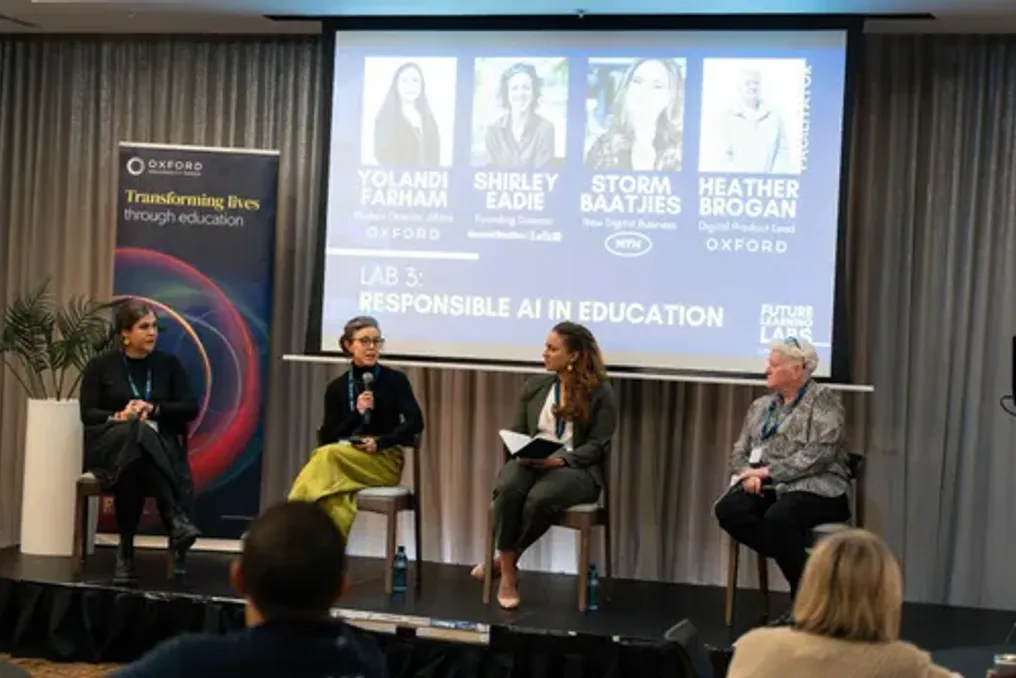
In September, workshops were held in Cape Town and Johannesburg by Future Learning Labs from Oxford University Press South Africa. These events brought together educators, publishing specialists, and researchers to study how digital tools can support the learning process. Discussions linked the possibilities of AI with real classroom requirements, such as identifying knowledge gaps, selecting appropriate support, assessing students' independent abilities, and determining accountability for presented material.

Heather Brogan, Oxford's digital products manager and program moderator, emphasized that the initial stage must involve understanding the people who will use the technology. According to her, it is necessary first to find out exactly what the student is struggling with and what support the teacher requires before responsibly developing solutions for both.

The focus on identifying student difficulties means that the school must first define the problem it wants to solve and then consider whether a specific tool can help and how its contribution will be assessed. This distinction is critical because a completed assignment may only give a limited view of a child's understanding. If AI helped produce an answer, teachers may need additional opportunities to understand how the student arrived at the conclusion and which parts of the work they can explain without assistance.

Post-task discussion can provide this opportunity. Asking students to describe their reasoning, justify the evidence used, or apply the same knowledge to another question helps teachers assess their understanding in greater detail. The value of this exchange lies in revealing whether the student can repeat the answer but needs support to explain it; or if they understand the main idea but struggle with articulating it clearly. Follow-up questions allow the teacher to differentiate these complexities and decide what support to provide.

The question of reading assessment raises a similar issue: how does information received from students influence teaching? Angelique Timmis, Head of Curriculum at Curro Holdings, highlighted the topic of reading comprehension, drawing on Curro's experience in literacy. She stated that reading assessment should help determine what to study next, allowing support to be targeted at areas of difficulty and its effectiveness to be checked. Technology becomes useful when it facilitates this process.

The phrase 'what to study next' gives the assessment a practical purpose. The result becomes meaningful when it helps the teacher make a decision about the response, and subsequent assessment provides a chance to check whether the intervention helped. Applying this approach in digital learning requires schools to look deeper than just the presence or use of a resource; it requires considering what the resource reveals about the learning process and whether teachers can use this information to guide their work.

These reading results are particularly relevant for the early years of schooling. Since many children have not yet reached target reading levels in their home language, the value of any proposed intervention depends on how well it aligns with the skills they are still developing.

Similar attention to comprehension can be directed towards developing AI literacy. Vocabulary knowledge, comprehension ability, and subject knowledge help students analyze the answers they receive, recognize incomplete explanations, and formulate questions that advance their learning. Classroom activities can give children the opportunity to practice these skills: for example, comparing an AI-generated answer with information from another source, identifying unsubstantiated claims, or explaining why one story seems more convincing than another. Such activities give teachers a basis for assessing the logic of the student's conclusions and help integrate the use of AI into a broader process of information verification and questioning.

All these possibilities impose responsibilities on schools and service providers. Decisions regarding AI in the classroom include content suitability, the role of teachers, and procedures for handling problems. Yolandi Farham, Oxford's Africa Product Director, noted that the adoption of technologies must be guided by responsibility towards the students from the outset. She stressed that every decision to implement AI carries responsibility towards the student, requiring clarity on who verifies the content, how teachers guide its use, and how problems are resolved. These responsibilities must be clear from the beginning.

The practical realization of these expectations may require an agreement between school leaders, teachers, and families on what constitutes acceptable assistance. Students must know when to disclose the use of AI and what information can be entered into the tool. Expectations may also vary depending on the type of classroom task: assistance with learning an idea differs from what is permitted when assessing independent understanding. Explaining the purpose of the activity helps students realize the operating boundaries. Teachers will need support to fulfill their oversight duties: training and time to analyze generated material will help assess its accuracy, relevance to student needs, and alignment with the curriculum. Clear procedures for reporting issues are also part of this work, where questions about content or usage must have a defined verification pathway understood by all participants.

The situation in South African classrooms was central to the contribution of Shirley Idi from Human Studios and Lefa AI. She emphasized the importance of involving those affected by technology decisions. Idi stated that South Africa needs an approach based on its own classrooms, where teachers, students, and parents help define both opportunities and risks. Language, accessibility, and the reality of teaching must become part of this dialogue.

Idi's call for a 'classroom-based' approach draws attention to the conditions of using the digital resource. A school considering a tool must verify whether students can use it, if its language and content suit their needs, and if teachers have the necessary support for effective application. Ultimately, the contribution of any technology must manifest in the child's learning itself, approaching the end of the third grade, through growing ability to read, comprehend, explain, and ask questions.

The Need to Align South Africa's Education System with Economic Requirements
Read more
iol.co.za

The Need to Align South Africa's Education System with Economic Requirements

South Africa faces a paradox: millions of citizens remain unemployed while employers simultaneously report a shortage of critical skills. The economy continues to suffer from a deficit of key competencies, even as a significant portion of the population remains jobless.

The main question is not whether there is a skills problem, but whether the education and training system is transforming quickly enough so that the skills it produces match the needs of an economy evolving through technology, innovation, and new forms of work.

A World Bank assessment of South Africa's digital skills potential, published in The Star on September 9, 2026, highlights this issue. These findings confirm difficulties already identified by the government and align with the concept of the 'Skills Revolution,' announced by President Cyril Ramaphosa and central to the Higher Education and Training Department's program under Minister Boeta Manganeli.

South Africa does not just need more degree holders; it needs people possessing knowledge, practical competence, and digital capabilities that allow them to fully participate in the changing economy. This requires creating a post-school education and training system that is more closely linked to jobs, more responsive to labor market demand, and better predicts the country's future skill needs.

The core objective of the 'Skills Revolution' is to bridge the gap between learning and earning, between qualifications and abilities, and between produced skills and those required by the economy. This problem is particularly evident in technology and digital fields such as software development, cybersecurity, data analytics, cloud computing, network infrastructure, and artificial intelligence, which are becoming increasingly vital across all economic sectors.

The pace of technological change is outpacing the ability of traditional education and training systems to adapt. Therefore, the government must change the principles governing the post-school education and training system. It is insufficient to continue issuing qualifications based on old templates while the surrounding economy changes.

President Cyril Ramaphosa clearly articulated this necessity in his 2026 Address to the Nation, calling for a radical overhaul of the skills development system. He proposed strengthening the dual learning model, combining education with practical workplace experience, increasing industry participation, and ensuring closer alignment of skills development with economic needs.

Minister Manganeli also emphasized that the goal is not merely to increase the number of qualifications, but to strengthen the link between education, skills, employment, and economic growth. In his 2026 Budget Speech, he stated that access to education should ultimately contribute to employment, economic participation, and opportunities.

Thanks to this, the Department's budget for 2026/27, amounting to 149.2 billion rand, is at the heart of the 'Skills Revolution' and digital transformation program. This is not just a declaration; steps are already being taken to change how skills are developed, delivered, and connected to economic opportunities.

One key focus area is the modernization of qualifications and the expansion of vocational qualifications that place greater emphasis on practical competence and work experience. This shift towards occupation-based learning is intended to ensure the relevance of education and training amid technological changes and labor market demands.

A second area is strengthening the dual learning model, including apprenticeships, artisan development, and workplace-integrated training. Young people should not leave the education and training system with only qualifications but without the practical experience necessary to start working.

This is especially crucial for the Technical and Vocational Education and Training (TVET) college system. TVET colleges must become primary centers for developing professional and technical skills, forming stronger and more structured partnerships with industry. The goal is to make the transition from classroom to workplace more reliable, systematic, and closely tied to employment.

The third direction is integrating digital transformation into the post-school education and training system. The Department is expanding digital learning and career counseling, and strengthening programs and partnerships in areas such as artificial intelligence, data analytics, software development, analytics, and cybersecurity.

The essence is to equip South Africans with the digital capabilities needed for productive participation in an economy where technology is deeply integrated into all sectors, professions, and workplaces, rather than simply producing tech specialists for technology's sake.

The fourth direction requires employers to become active partners in defining and creating necessary skills. Minister Manganeli has consistently stressed that the private sector cannot remain a bystander in skills development while reporting shortages of skilled personnel. Thus, business must become a co-producer of skills.

The Department interacts with employers from various industries, including ICT, engineering, mining, agriculture, and financial services, aiming to transform these relationships into meaningful learning, work experience, and employment opportunities.

This also requires different approaches to the governance and effectiveness of Sector Education and Training Authorities (SETAs). SETA reform must enhance industry involvement, improve governance, and ensure that skills development directly addresses economic priorities.

SETAs must increasingly be evaluated not only on expenditure volume or the number of programs created, but on achieved outcomes: how many people were trained, what they were trained in, where the training took place, what the cost was, and, critically, how many of them subsequently find employment or participate in economic life.

The World Bank's intervention here is particularly useful, reminding that the true measure of a skills system is not the sophistication of its policies or the number of qualifications issued, but the relevance of those skills, people's ability to apply them, and the creation of pathways to work and economic opportunities.

The government acknowledges this problem, but acknowledging the problem should not overshadow the scale of reforms already underway. Furthermore, the challenges of digital transformation cannot be viewed in isolation from broader inequalities within the education and training system.

Digital transformation occurs in a society where access to devices, connectivity, and basic digital skills remains uneven. A student cannot advance into advanced digital fields if the foundations for that progress are weak or inaccessible.

The answer must cover the entire skills chain: from foundational education and career counseling, through universities, TVET colleges, and public education, to on-the-job training, lifelong learning, and employment. The goal is to create a system where these parts function not as disparate elements, but as a unified pathway from learning to livelihood.

For this reason, the 'Skills Revolution' should not be reduced to a reaction to the latest report or skills shortage. It is a broader reform of how South Africa approaches the concepts of skills, education, work, and economic development.

The country cannot afford a stagnant skills system while the economy rapidly changes. It is also unacceptable for employers to be unable to find people with the right skills while a large number of young South Africans cannot find decent opportunities.

This paradox is neither inevitable nor acceptable. It demands a more conscious connection between what the education and training system produces and what the economy requires.

Thus, the World Bank report provides constructive evidence that can help the government sharpen and accelerate the work already begun. It also emphasizes the importance of implementing measurable results and continuous engagement with employers.

The task is not to develop another strategy for the sake of strategy. The task is to implement the reforms already identified with greater urgency, coordination, accountability, and measurable goals.

Ultimately, the 'Skills Revolution' lies in changing the relationship between education and opportunity. South Africa must move from a system that too often measures success by the number of qualifications produced to one that places greater emphasis on developed abilities, acquired work experience, applied skills, and created opportunities.

As Minister Manganeli emphasized, the post-school education and training system cannot become a 'waiting room' for unemployment. It must become a platform for empowerment, productivity, innovation, and national development.

The vision is a skills system that anticipates economic changes, rather than merely reacting to them; one based on labor market demand; one that gives employers a significant role in developing the skills they require; one that integrates digital capabilities throughout the post-school education and training system; and one that provides young South Africans with a credible pathway from learning to livelihood.

The skills problem is real. The answer must be equally real and urgent. It must be measured not by the strength of our intentions, but by the quality of implementation and the opportunities we ultimately create. This is the goal of South Africa's 'Skills Revolution.'

{

Popular