Schools in Dubai are now required to comply with a detailed set of health and safety requirements. These standards cover all aspects of educational institution operations, including classroom design, playgrounds, swimming pools, science laboratories, as well as student drop-off and pick-up zones.
The requirements are outlined in a new compliance guide issued by the Knowledge and Human Development Authority (KHDA) for private educational institutions. This document is part of a broader regulatory system for educational organizations in Dubai.
This guide is one of four compliance guides presented by KHDA on Thursday as part of the Flexible Regulatory Framework, under the Education 33 (E33) strategy. The guides cover preschools, private schools, higher education institutions, and training institutes.
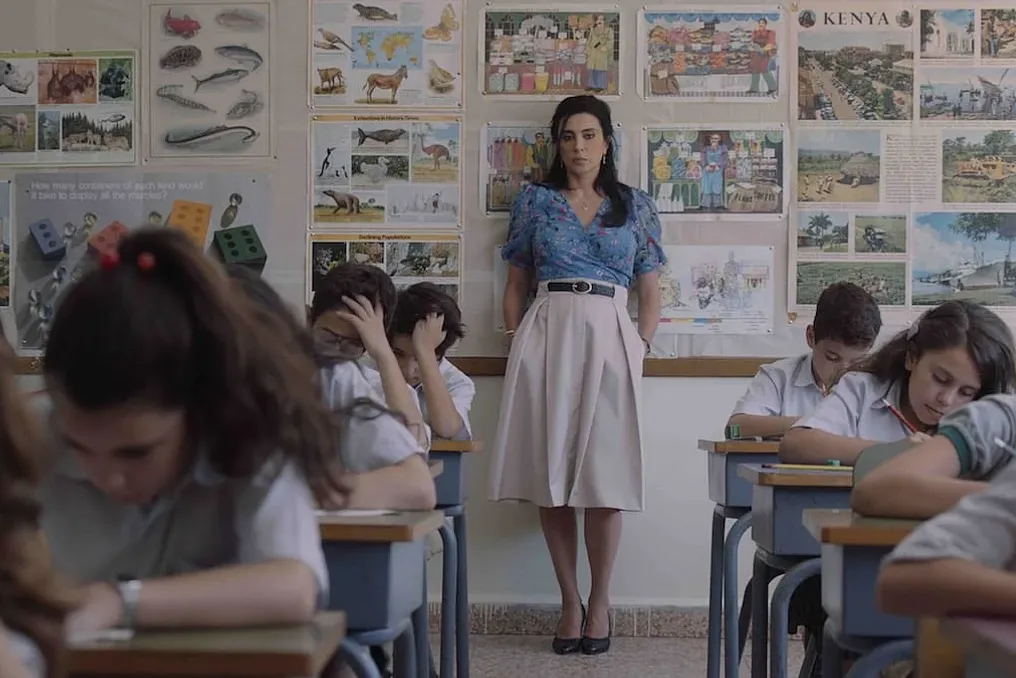
For parents, the guide for private schools provides a detailed overview of the safety measures that must be implemented on campus. For younger students, the guide specifies that all kindergarten and first-grade classrooms must be located on the ground floor of the school building.
Schools must also ensure that classrooms are not overcrowded, considering room size and safety requirements, especially during evacuations and other emergencies. Classrooms must provide natural light and fresh air through appropriate ventilation systems, and air conditioners in all school premises must be efficient and fully functional.
Furniture must be age-appropriate and free of sharp corners. Kindergarten classroom doors must also be equipped with child finger protection mechanisms. Electrical outlets and connections must be securely fastened, covered, and positioned safely.
Furthermore, schools are required to post emergency safety instructions in classrooms and maintain clear evacuation procedures. Students and staff must undergo regular training to know how to act in case of an emergency.
Safety requirements apply to both indoor and outdoor play areas. Equipment and furniture must be suitable for the children's age and regularly inspected and maintained. The surface under playground equipment must be soft and shock-absorbent. This requirement applies to both indoor and outdoor areas, with sharp edges and hard columns needing to be covered with protective, shock-absorbing material.
Outdoor playgrounds must be surrounded by a safe and sturdy fence and must not have uncovered drainage holes. Due to Dubai's hot climate, a particularly relevant requirement mandates that at least 30 percent of outdoor play areas must be shaded by canopies. The guide also obligates schools to ensure that materials exposed to direct sunlight remain safe for children even at high temperatures.
Constant supervision must be maintained in play areas, and a first-aid kit must be kept in an easily accessible and visible location.
Swimming pools in schools are governed by a separate set of rules. Pools must comply with the specifications of the Dubai Municipality, the Dubai Building Code, and relevant technical guidelines. They must be regularly cleaned, disinfected, and sanitized—at least once every six months—by a Dubai Municipality-approved company. Schools must keep detailed records of cleaning operations and ensure water quality meets established standards.
The pool area must be securely enclosed when the pool is not in use or when a lifeguard is absent. Schools must also ensure that students do not access the pools unsupervised; barriers are required between pools used by younger and older students. The number of lifeguards must be proportional to the number of students using the pool, and lifeguards must possess valid training certificates.
Other requirements include non-slip surfacing at the pool edge, accessible life rings, and a first-aid kit near the pool. Pool usage rules must be clearly posted in both Arabic and English, including 'No Diving' and 'No Jumping' signs. Pool depths, especially shallow and deep sections, must also be clearly marked.
The guide establishes extensive measures for science laboratories, particularly concerning the storage and handling of chemicals. Schools must ensure that laboratories are appropriately sized and adequately equipped for students. A fume hood must be provided when preparing or using volatile, hazardous, or odorous gases and materials.
Reactive and incompatible chemicals must be stored separately, and hazardous chemicals must be kept in locked cabinets in a preparation room near the laboratory or in a sealed cabinet if a separate storage area is unavailable. Chemical storage areas must have adequate ventilation, and chemicals must be stored at recommended temperatures to prevent reactions or decomposition.
Laboratories must also be equipped with basic safety gear, including a first-aid kit, eyewash station, and emergency shower, all of which must be in visible and accessible locations. Personnel working in chemical laboratories must be trained in safe chemical handling and emergency procedures. Students must be supervised by a teacher or lab supervisor when using the laboratory.
The guide also requires schools to provide personal protective equipment, including gloves, safety goggles, face shields, closed-toe shoes, and lab coats. Laboratories must have effective ventilation systems, and schools must maintain registers of chemical expiration dates and provide Material Safety Data Sheets (MSDS) or equivalent safety labels.
Safety measures also cover the daily transportation of students to and from school. Schools must provide sufficient parking spaces for cars and buses, and designate a drop-off and pick-up zone on fenced school grounds or within a safe walking distance. During student drop-off and pick-up, licensed supervisors must be present in accordance with Dubai school transport regulations. School buses must hold a license from the Roads and Transport Authority, maintaining valid ownership throughout.