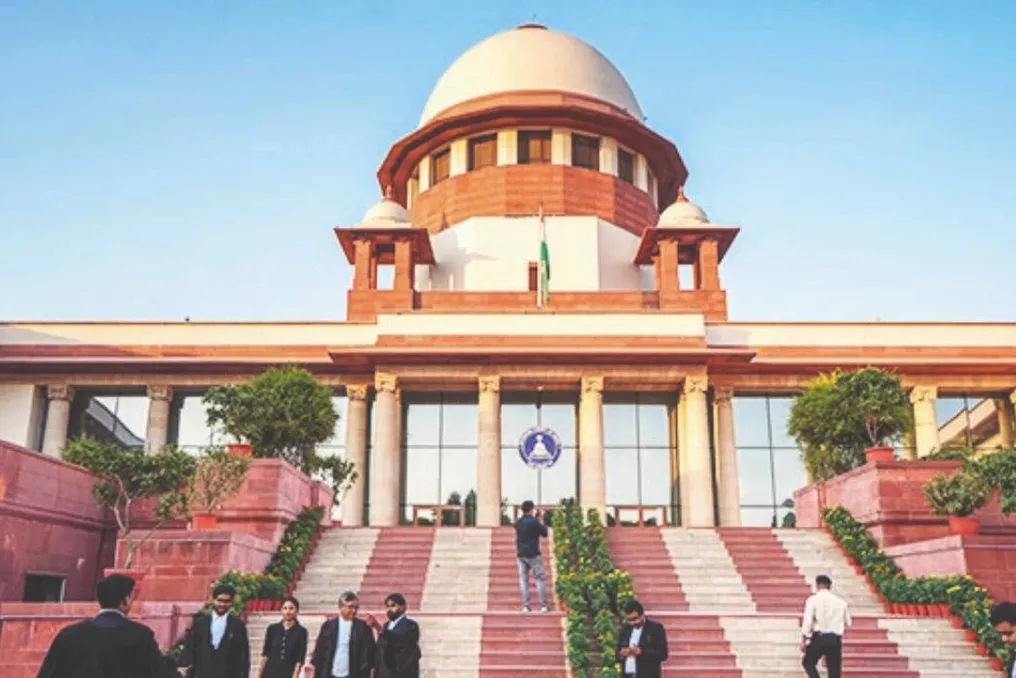
Supreme Court rules Tamil Nadu must change approach and allow Hindi teaching in schools
Read more
The times of India
timesofindia.indiatimes.com

Supreme Court rules Tamil Nadu must change approach and allow Hindi teaching in schools

The Supreme Court of India stated on Thursday to the Tamil Nadu government that it must adjust its stance on teaching Hindi in schools and hold discussions with the Central Government regarding the establishment of Navodaya Vidyalayas in every district.

The bench, comprising judges B. V. Nagarathna and A. G. Masih, noted that individual states cannot act as sovereign nations. The court emphasized: 'You must change your mindset; it is not permissible for Hindi not to be taught in the territory of Tamil Nadu.'

Tamil Nadu had previously opposed the creation of these institutions because they align with a trilingual policy that includes Hindi, which contradicts the state's bilingual policy.

The court added that additional elements would not diminish standards despite all the positive achievements of the state. It also called upon the residents of Chennai not to distance themselves from Delhi, and vice versa.

Senior Advocate Jaydeep Gupta, representing the state, argued that imposing a central decision on the government was a violation of the federal structure. He stated that this contradicted the state's policy and that such amalgamation was not the goal of the Constitution. Gupta clarified that the matter concerned a society-run school, not a central government institution, and there was a persistent demand for Hindi to prevail.

Gupta also argued that cooperative federalism could not function in only one direction, and the judiciary should not govern such a policy.

The bench required the state to comply with this ruling and scheduled the next hearing for December. Previously, in December, the Supreme Court had directed Tamil Nadu to identify land parcels needed for establishing Navodaya Vidyalayas in each district within six weeks.

The court explained that it did not require land acquisition, but merely its identification, noting the necessity of dialogue. It advised: 'You cannot claim you will not adopt the policy. Today it is education; tomorrow it could be something else. You must soften this rigidity in your mind.'

The case was heard after Tamil Nadu filed a petition challenging the Madras High Court's decision, which mandated the establishment of Navodaya Vidyalayas in every district. The High Court ruled that Navodaya Vidyalayas do not violate the Tamil Nadu Language Study Act, and the state's complete refusal to establish such schools restricts students' right to choose educational institutions.
Similar stories

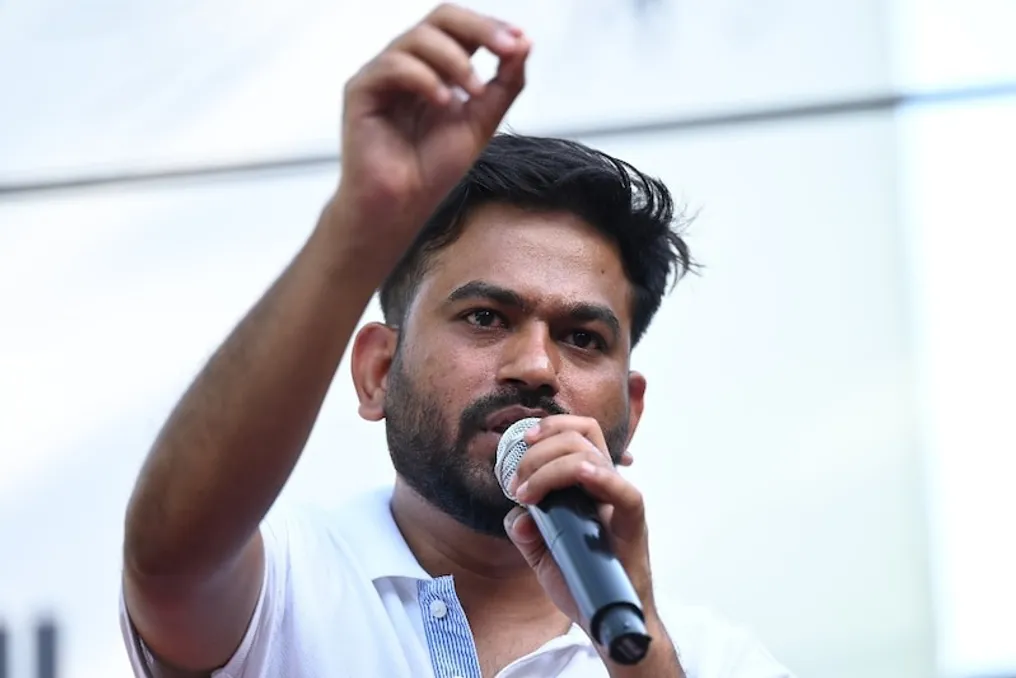
CJP launches 'Fix Tribal Schools' campaign; Abhijit Dipke alleges government negligence
Read more
www.aajtak.in

CJP launches 'Fix Tribal Schools' campaign; Abhijit Dipke alleges government negligence

The Corroach Janata Party (CJP) is set to launch its 'Fix Tribal Schools' campaign from the Gadchiroli region of Maharashtra starting today. CJP founder Abhijit Dipke announced this on Wednesday. His main allegation is that the government has neglected tribal schools in India for the past eight decades.

Addressing a press conference, Abhijit Dipke clarified that the objective of this campaign is to draw the government's attention to the problems faced by tribal students and the discrimination they are undergoing. Notably, CJP had also initiated a nationwide campaign called 'Fix Schools' a month prior, aimed at improving the condition of rural and urban government schools.

During the press conference, Abhijit Dipke emphasized that all governments over the last 80 years have ignored the schools in the tribal areas of the country. Because of this, they are starting the 'Fix Tribal Schools' campaign from the Gadchiroli district of Maharashtra starting Thursday. Gadchiroli is a tribal-majority district located in the Vidarbha region of Eastern Maharashtra. Dipke stated that under this initiative, CJP representatives will visit tribal schools to evaluate their basic facilities and infrastructure.

Dipke appealed to the government to pay special attention to students in tribal areas, stating that they possess immense potential. The CJP founder also said that the government should prioritize the tribal community as they constitute a significant part of the population. He considered claims of only 7.8% GDP growth rate or becoming a $5 trillion economy insufficient.

Dipke urged all governments to focus on tribal schools and the rural areas of the country. He claimed that more than 590 tribal students have died in Maharashtra over the last two years. Dipke alleges that many tribal student deaths are due to snake bites, but there is no response from the government regarding these deaths. He argues that if such incidents occurred in cities like Pune or Mumbai, it would cause an uproar across the country. Additionally, he mentioned that more than 30 tribal students have died in the Balaghat tribal area of Madhya Pradesh in the last two months, and tribal student deaths have also been reported in Chhattisgarh, Jharkhand, Odisha, Andhra Pradesh, and Uttarakhand.

According to him, the families of the deceased tribal students do not receive proper compensation either. Dipke also expressed concern over the Eklavya Modern Residential Schools, alleging that 477 out of these 720 schools are non-functional. The CJP founder also highlighted the enrollment rate of tribal students in higher education, which is only 22.8%, and pointed out that only 130 applicants from Scheduled Tribes (ST) received admission to IIT. Dipke questioned why the number of admissions and faculty members in IIT is so low, labeling it as discrimination against tribal students.

Popular