Triple Series in ODI: The Rise and Fall of a Golden Era
Read more
Aaj Tak
www.aajtak.in

Triple Series in ODI: The Rise and Fall of a Golden Era

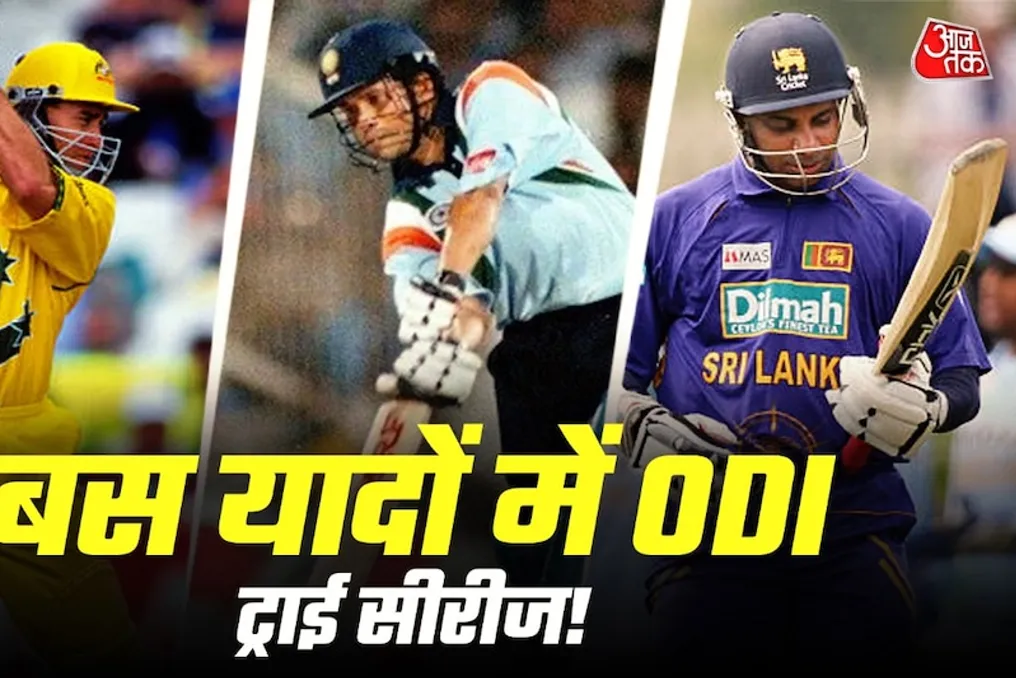
At one time, the ODI (One Day International) itself was synonymous with a major event. Although the World Cup is held every four years, between these tournaments, there were other significant competitions for fans, among which triple series held a special place. These tournaments involved a competition between three teams with a league stage, a leaderboard, a fight for the final, and constantly changing dynamics in every match.

The popularity of these series was so great that the excitement was not limited to the action on the field. Spectators watched which teams would reach the final, how many wins each team would need, and under what conditions the pace of the game would be decisive.

In modern realities, where Test cricket has gained the goal of a Test World Cup, and T20 cricket has captured a huge market thanks to franchise leagues, ODI is trying to find its place between them. At such a time, memories of old triple series are particularly interesting, as 50-over cricket did not need external stimuli then.

Kerry Packer is often mentioned in the history of triple series. A dispute arose between media magnate Packer and Cricket Australia regarding television rights. Following this, Packer launched World Series Cricket. To make this league successful, Packer needed the best cricketers in the world. At that time, the West Indies were the strongest team, and Packer's team attracted many of their star players.

After this, triple series were held between Australia, the West Indies, and World XI. Matches concluded in a single day. Bright uniforms and white balls were used, and the television coverage was much more modern than before. The quality of the cricket was also outstanding. The West Indies participated in four of the first six Australian seasons and were champions every time. Even after Packer and the Australian board reached an agreement, this format continued to be held within Australia's domestic cricket calendar.

When this model, popular in Australia, reached South Asia, its influence grew. In 1983, the then Chairman of the Indian Cricket Control Board (BCCI), N.K.P. Salve, began working on organizing the World Cup in India. He was joined by Nur Khan from Pakistan and Gamini Dissanayake from Sri Lanka. During this process, the Asian Cricket Council (ACC) was founded on September 19, 1983. Then, in 1984, India, Pakistan, and Sri Lanka held the first Asian Cup in Sharjah. This event marked the beginning of multinational cricket in Asia. Gradually, Sharjah transformed into not only a venue for the Asian Cup but also a major center for ODI cricket.

In the 1990s, the influence of English cricket began to spread to the Indian subcontinent, and Sharjah became the focal point of these changes. Major players from India, Pakistan, and other countries regularly played here. Celebrities attended the matches, and the popularity of the games on television steadily increased. Long before the era of franchise cricket, Sharjah turned cricket into a large-scale spectacle. By the end of 1992, 29 ODI tournaments involving three or four countries had been held. Of these, 15 took place in Australia, and nine in Sharjah. Thus, the history of triple series in ODI is mainly linked to two locations: Australia and Sharjah.

In the 1990s, international cricket from South Africa returned, and Sri Lanka also quickly became one of the strong global teams. In 1996, Sri Lanka became the World Champion. The number of strong ODI teams in international cricket increased. This directly benefited the triple series. From 1996 to 2008, full member teams held three-nation ODI tournaments in Singapore, Morocco, Netherlands, Malaysia, Ireland, Scotland, and Canada. The four-year interval between World Cups and the limited popularity of the World Cup also made these tournaments important. It was the main way to watch ODI cricket between strong teams throughout the year.

These tournaments saw not only trophies won but also events that influenced rules, tactics, and thinking in cricket. In 1979, in Sydney, the England team had to save three runs on the last ball. Captain Mike Brearley positioned almost all his fielders near the boundary. A year later, New Zealand needed to score seven runs off one ball. Greg Chappell from Australia asked his brother Trevor to throw the ball underhand. This incident caused a big controversy in cricket. In 1982-83, Lance Cairns hit six sixes at the MCG (Melbourne Cricket Ground) using a specially prepared bat. In the 1980s, Javed Miandad took advantage of the conditions at the WACA Ground in Perth and scored an unbeaten 59 against the West Indies, including 45 singles and no fours or sixes. In 1986, Gus Logie from the West Indies was named 'Player of the Match' for his fielding performance in Sharjah. This in itself was an exceptional event.
Similar stories

Experts discuss the possibility of returning three experienced players to the Indian squad for the ODI World Cup 2027
Read more
www.aajtak.in

Experts discuss the possibility of returning three experienced players to the Indian squad for the ODI World Cup 2027

The return of many players to the Indian national team is proving to be a complex process. Nevertheless, some veterans who have played for India for a long time are actively training, striving to come back to the team. The question arises whether these experienced athletes will get a chance to step onto the field again.

The Indian team's focus is on the upcoming 2027 ODI World Cup. In the previous tournament in 2023, the Indian team demonstrated impressive play on home soil. However, the final against Australia ended in a painful defeat, a memory that remains fresh for both players and fans.

In light of this, the coaching staff and selection committees are working to form a strong squad for the 2027 tournament. Many prominent cricket figures believe that the team should once again look at its veterans in fast bowling.

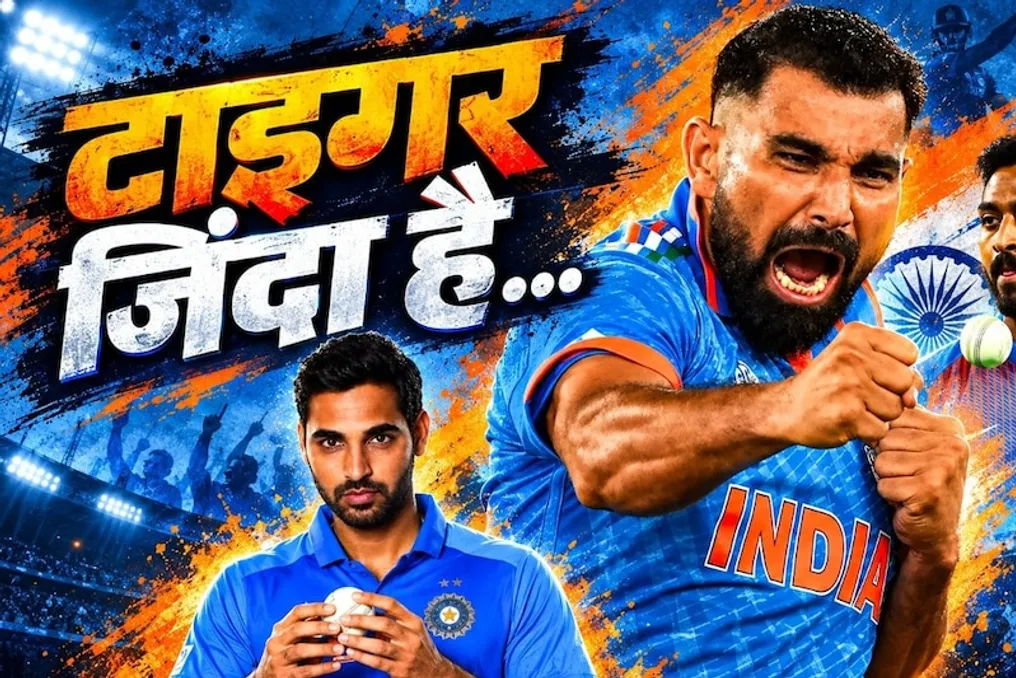
Some senior players are showing outstanding results in domestic competitions, such as the 'Duleep Trophy', using both bat and ball. The need for experienced fast bowlers like Mohammed Shami and Bhuvneshwar Kumar could be critically important for the Indian team on the fast pitches of South Africa.

Mohammed Shami will strengthen the team's attacking capabilities

Fast bowler Mohammed Shami, aged 36, continues to trouble batsmen with his deliveries. Last season in the Ranji Trophy, Shami caused significant damage, taking 37 wickets at an average of just 16.72 with the red ball. With experience accumulated in Tests and ODIs, where he has taken over 200 wickets, Shami's experience could prove extremely useful for the Indian team on the fast African pitches in 2027.

Fans are watching Bhuvneshwar Kumar

Bhuvneshwar Kumar has also reached the age of 36, but his spin mastery remains at a high level. Last season in the IPL, he was the second highest wicket-taker, collecting 28 wickets with excellent economy. Although Kumar has not played for India since 2022, his ability to take wickets with the new ball in the powerplay is a rare quality among spinners. Internationally, with 294 wickets, Kumar could become a significant pillar for India on overseas tours.

Krunal Pandya awaits a return after five years

All-rounder Krunal Pandya, aged 35, is in exceptionally good form in recent IPL seasons. In the IPL, he not only bowled effectively, taking 14 wickets, but also scored 226 runs at an average of 145. The Indian team has always needed players capable of winning matches both offensively and defensively. Despite Pandya not having played for India since 2021, his current form is likely to attract the attention of selectors.

Pakistani cricketer Saeed Anwar, known for his historic match against India, has become a Mullah
Read more
www.aajtak.in

Pakistani cricketer Saeed Anwar, known for his historic match against India, has become a Mullah

Currently, the Pakistan team is on tour in England, where their performances have not yielded the expected results. The team has lost two consecutive Test matches, trailing the series 0-2. Now, the Pakistani team aims to win the final match of the series, scheduled for September 9th, to avoid the disgrace of a complete defeat. Significant changes have also occurred within the Pakistani squad ahead of the Edgbaston match: seven players were dropped, and the coaching staff underwent reshuffles.

Despite the current difficult period, the Pakistani team once held a very strong reputation in world cricket, featuring many outstanding athletes. Among them, one cannot forget the left-handed opener Saeed Anwar, whose trademark was the ability to score quickly from the start thanks to excellent timing and shot placement.

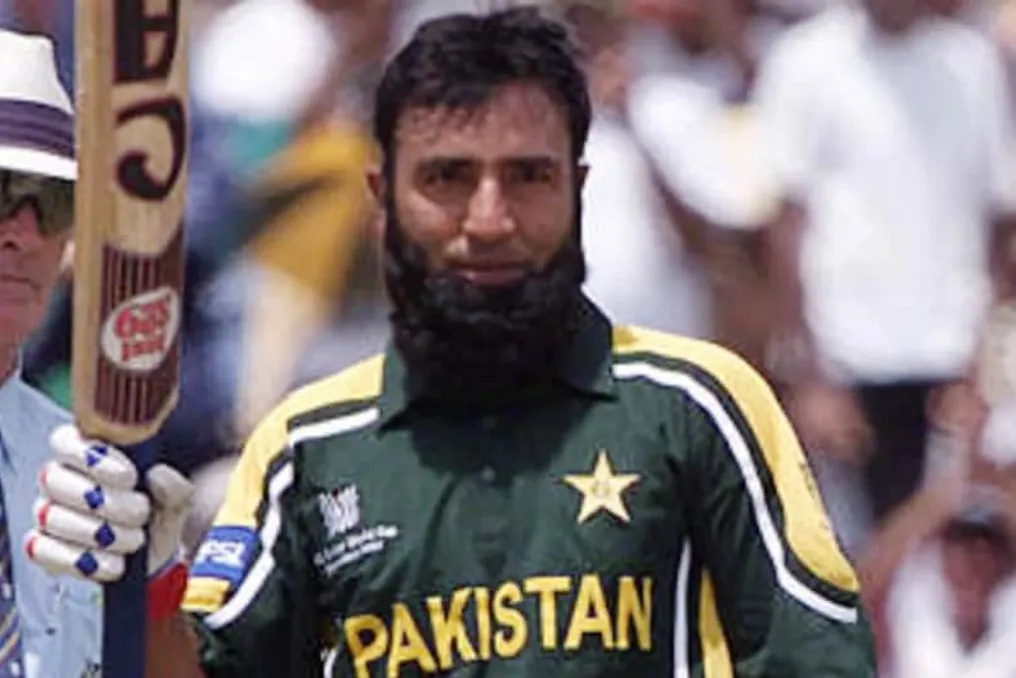
Saeed Anwar's international career, which marked his 58th birthday on September 6th (Sunday), spanned from 1990 to 2003. For Pakistan, he amassed thousands of runs in both Tests and ODIs. In 1997, during an ODI against India in Chennai, he played a knock of 194 runs off 146 balls, which was the highest individual score in an ODI at that time. He approached two hundred runs but was caught by Saurav Ganguly off a Sachin Tendulkar delivery.

Interestingly, this record of Saeed Anwar was matched in 2009 by Charles Coventry of Zimbabwe, who scored 194 runs without being dismissed. Subsequently, in 2010, Indian legend Sachin Tendulkar played a historic innings of 200 runs without being out against South Africa, thereby surpassing Anwar's record.

Anwar batted actively not only in ODIs but also in Tests, where he also registered many big scores. It is worth noting that many of his best Test performances took place on foreign soil. In 1994 in Wellington against New Zealand, he scored 169 runs, marking his first Test century. Two years later, in Hove against England, he delivered an impressive innings of 176 runs. In 1998, in a Test match against India in Calcutta, Anwar remained unbeaten on 188 runs, which was his highest Test score. His batting attracted attention because he hit boundaries not so much through power as through mastery of timing and placement.

For Pakistan, Saeed Anwar scored 4052 runs in 55 Test matches, maintaining an average of 45.52, and scored 11 centuries and 25 half-centuries. His ODI statistics were even more impressive: in 247 matches, he accumulated 8824 runs, including 20 centuries and 43 half-centuries. He was particularly renowned for his magnificent drives off the off-side. If a bowler left even a small gap outside the mid-stump, Anwar would immediately drive the ball to the boundary. His game combined aggression with a special kind of beauty.

Saeed Anwar's Test career concluded under very emotional circumstances. In August 2001, in a Test match against Bangladesh in Multan, he scored 101 runs, which was his 11th and final Test century. In that match, Pakistan posted a formidable total of 546/3 in the first innings, and five batsmen from the team scored centuries. This unique record of five centuries in one Test match is jointly held by Pakistan and Australia. However, for Anwar, this match brought more pain than joy.

After his daughter Bismah, who was three and a half years old, passed away after a long illness just two days after his century in the Multan match, Anwar returned to Lahore. After this tragedy, he did not play any more Test matches. He stepped away from cricket for some time, and his life changed. This is why the 101 runs scored in Multan entered the list of the most memorable and touching centuries of his career.

Having lost his daughter, Saeed Anwar returned to ODIs and scored a century against India in the 2003 World Cup. Although Pakistan lost that match, Anwar's innings was magnificent. He dedicated this century to his daughter Bismah. This innings became one of the most emotional moments of his international career.

Saeed Anwar announced his retirement from international and first-class cricket on August 15, 2003. Following this, he engaged in religious activities and began growing a beard. Anwar actively participated in events related to the propagation of Islam. Muhammad Yusuf, a former batsman for Pakistan, was also significantly influenced by Anwar in life. Yusuf converted to Islam in 2004 and later stated that Saeed Anwar had provided him with great assistance during his religious change. Before converting to Islam, Yusuf was known as Yusuf Johana.

Four World Records in International Cricket: Three Belong to Indian Players
Read more
www.aajtak.in

Four World Records in International Cricket: Three Belong to Indian Players

Maintaining records in international cricket is fraught with immense difficulties, yet some achievements remain with legendary players in both the men's and women's divisions. Among these record holders are figures such as Sachin Tendulkar, Muttiah Muralitharan, as well as players from the women's squad, including Smriti Mandhana and Dipti Sharma.

Sachin Tendulkar, one of the greatest batsmen in history, has accumulated 34357 runs throughout his international career. His consistent scoring in Tests and One Day Internationals has made him the leader in this list, demonstrating stability and longevity in world cricket.

In men's international cricket, Muttiah Muralitharan from Sri Lanka is recognized as the best bowler. He managed to take an impressive 1347 wickets during his international career. Thanks to his exceptional spin and variety, he posed a serious problem for batsmen for a long time and holds this record.

In women's international cricket, the leading run-scorer is Indian opener Smriti Mandhana. Her current tally stands at 10880 runs. Mandhana, known for her aggressive style of play, reached this milestone through outstanding performances in various formats, surpassing the previous record set by former India captain Mithali Raj, who scored 10868 runs.

Indian all-rounder Dipti Sharma has also achieved significant success in international cricket. She took 365 wickets in international matches, becoming the top bowler in women's cricket. This record was previously held by another Indian athlete, Jhulan Goswami, who took 355 wickets. Dipti, contributing to both bowling and batting, played a vital role in the Indian team for a long period.

Notably, out of the four mentioned records, three belong to players from India: Sachin Tendulkar and Smriti Mandhana lead in batting, and Dipti Sharma is the top bowler in women's cricket.

Popular