Astronomers have confirmed the existence of the youngest known planet. The planet, named Elias 2-24 b, is less than a million years old and is still orbiting within the gas and dust disk surrounding its parent star.
This discovery was made based on the analysis of archival observations and may give scientists a deeper understanding of the process of giant planet formation. The research results were published in The Astrophysical Journal Letters.
Before the discovery of Elias 2-24 b, the record for the youngest planet was held by four worlds: two orbiting the star PDS 70, and the other two orbiting WISPIT 2. All these previous planets were over five million years old.
Challenges for Planet Formation Models
Lucas Cieza, a professor at the Institute of Astrophysical Research in Chile and co-author of the study, noted that existing planetary formation models had difficulty explaining the previous youngest record holders. He stated that Elias 2-24 b demonstrates that even the best current models do not account for some important processes.
Andrea Bernardi, a graduate student at the University of Diego Portales in Chile and head of the research group, explained that planets must be located in the regions where they are forming. This is where Elias 2-24 b was discovered.
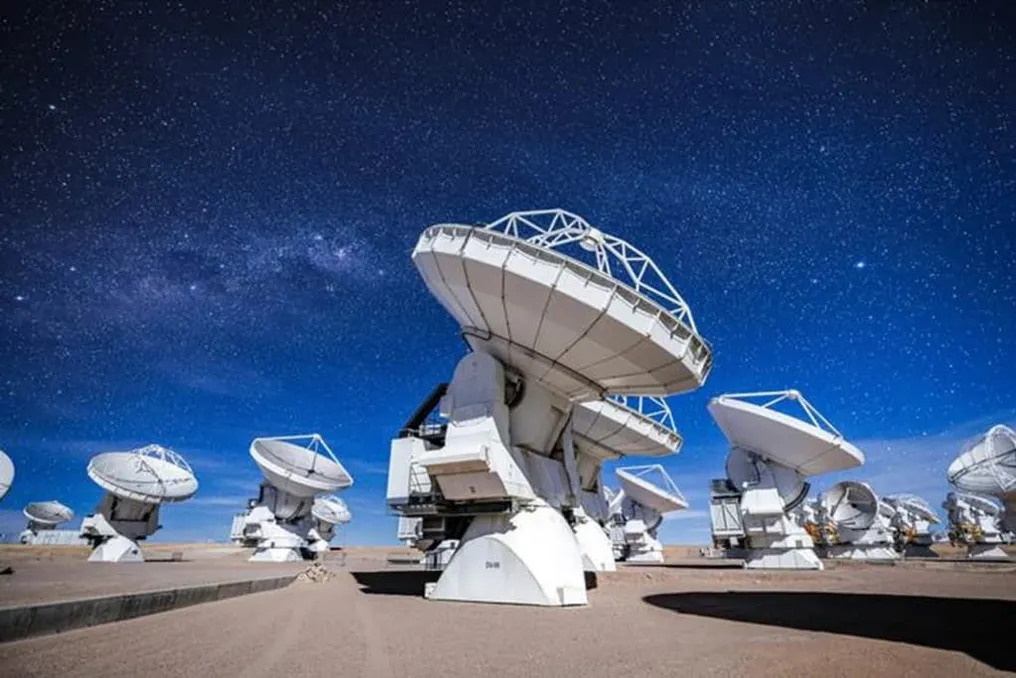
The confirmation of this planet resolves a mystery that has interested astronomers for about ten years. Observations conducted with ALMA in Chile revealed an area in the dust disk around the star Elias 2-24. Later, a faint light object in this area was detected by the Very Large Telescope (VLT) of the European Southern Observatory, also located in Chile.
The problem was that according to existing planet formation models, such a structure should have appeared too early and too far from the star for a Jupiter-sized planet to have formed.
Current models suggest that forming a Jupiter-sized planet at a distance equivalent to Jupiter's distance from the Sun—slightly more than five times the Earth-Sun distance—requires about five million years. The farther the distance from the star, the longer the time required.
However, Elias 2-24 b is located approximately 55 times farther from its star than Earth is from the Sun, and it already exhibits characteristics consistent with a forming planet.
To determine whether this light object is truly a planet, the team led by Bernardi conducted additional observations in the archives of the V. M. Keck Observatory in Hawaii. The researchers found the same object in records from 2018 and 2020. By analyzing the movement of this light spot over time, astronomers concluded that its behavior corresponds to that of a planet, rather than an optical error or a background star.
Bernardi emphasized that this confirmation was only possible through the combined use of several telescopes.
Limitations of Current Detection Methods
Most of the approximately six thousand confirmed exoplanets are billions of years old and orbit relatively close to their stars. This is partly because the most frequently used exoplanet search technique relies on so-called transits. This phenomenon occurs when a planet passes in front of its star, causing a slight decrease in the observed brightness of the star.
However, this method becomes significantly more difficult for newly formed planets. These worlds may still be deep within the material of the disk that formed them, and they may also orbit very far from their stars. Because of this, scientists have few opportunities to directly observe this initial phase.
Cieza noted that the galaxy is constantly producing new stars and planets, so theoretically, the entire process can be observed, but there is a large lack of data that most telescopes can collect. Currently, scientists are 'practically blind' to these 'infant' planets.
Elias 2-24 b provides exactly this opportunity to study this period. Since the planet is still growing within the gas and dust disk, it can help test and improve the models used to explain the formation of giant worlds.
The confirmation also demonstrates the potential of new instruments for studying very young planets. NASA's Nancy Grace Roman Space Telescope, launched on August 30, is equipped with an even more powerful coronagraph and will be able to observe planets that are currently difficult to detect due to the brightness of their stars.
The same methodology that allowed the identification of Elias 2-24 b will enable the Roman telescope to find planets in smaller orbits, including true Jupiter analogs that are currently almost impossible to observe directly. For example, Elias 2-24 b is located approximately ten times farther from its star than Jupiter is from the Sun.
Cieza concluded that this is just the beginning of a new era of discoveries. He noted that it is astonishing that modern technology allows us to observe the process of planet formation, and that Roman will take planet hunting to a new level.