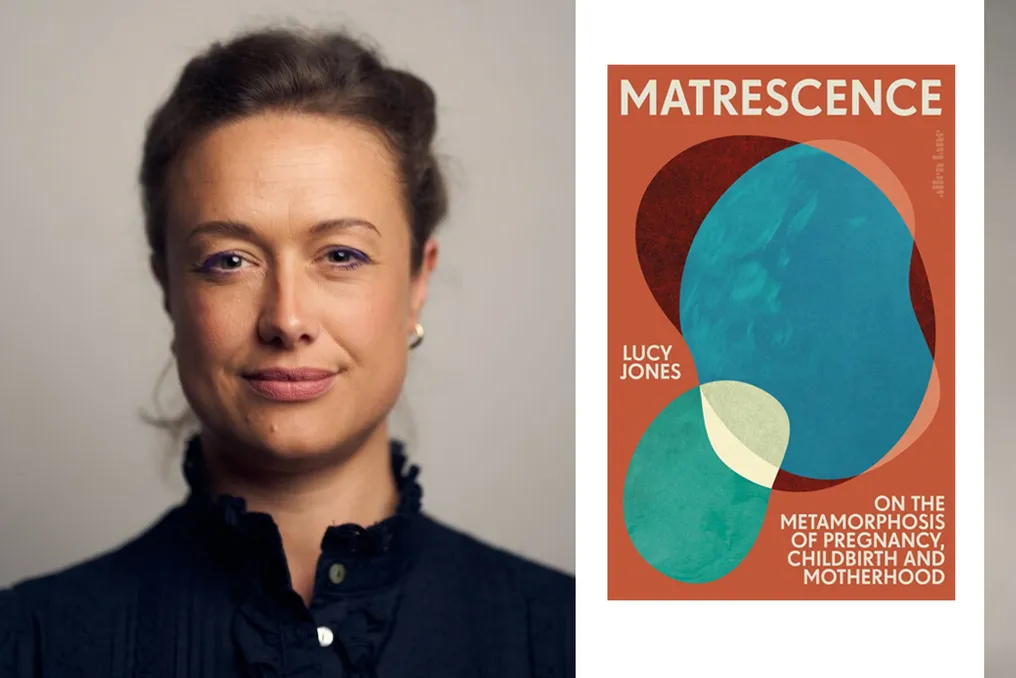
Lucy Jones, a science journalist and author of 'Matrescência: On the metamorphosis of pregnancy, childbirth, and motherhood,' and a semifinalist for the 2024 Women’s Prize for Non-Fiction, addresses personal accounts and investigations into the continuity of life across various species in her book. She analyzes the physical, mental, and social transformations that women from different cultures experience during pregnancy, childbirth, and motherhood, focusing especially on scenarios of social isolation and the hyper-idealization of the maternal role.
The book's title derives from the term 'matrescência,' coined in the 1970s, which compares the changes of this period to intense and lasting phases of childhood and adolescence. Jones, who resides in England, spoke with Superinteressante about the neuroscience of motherhood and the social challenges in supporting mental health before and after childbirth.
Jones expressed surprise upon discovering the profound biological and physical changes that occur during pregnancy, childbirth, and early motherhood. She reported that before having children, she was unaware that the brain undergoes significant modifications in several areas, permanent ones comparable to those in adolescence. Furthermore, she learned that baby cells remain in the mother's body and vice versa, a process scientists are still trying to understand. She also noted that the father's and other caregivers' brains can undergo deep changes depending on various factors.
The journalist expressed shock at the large amount of misinformation, incorrect terminology, obscurantism, and taboos surrounding maternal health and experience. It was disturbing for her to realize that becoming a mother represents an immense transformation, far greater than what had been presented to her. Frequently, motherhood is portrayed as a transient hormonal event, a simple 'natural' role. Jones lamented the scientific negligence and insufficient social support offered to mothers during a period of great vulnerability.
This led her to question what society gains by concealing, denying, and hiding the realities of pregnancy, childbirth, and early childcare. These reflections prompted her to analyze the foundations of liberal philosophies and political economy in her culture, realizing that the treatment given to caregivers and mothers reflects how industrial societies treat the planet, non-human species, and global communities, revealing an extractive and colonial mentality based on Enlightenment ideas, misogyny, patriarchy, and racial capitalism.
When asked about other species where mothers become as physically and emotionally vulnerable as humans, Jones mentioned mothers practicing matrifagy. In at least six types of spiders, after the hatching of the young, the mother first feeds them with regurgitated liquid and subsequently offers her own body as food. Other species, such as the curved ear scissors, pseudo-scorpions, certain nematodes, and ceciliids, also exhibit this behavior.
In the human context, especially in individualistic Western societies, the experience of becoming a mother can be extremely vulnerable due to a lack of social support, isolation while raising young children, and the absence of adequate maternity assistance, which generates serious consequences for an intrinsically social species.
Jones refuted the widespread belief that the female body possesses inherent knowledge about gestation, childbirth, and care, or that maternal instinct is purely innate. Her personal experience and that of others demonstrate that reality is much more complex than simplistic and patriarchal narratives. Although she felt the urge to protect and love her daughter, she had to actively learn how to care for her and what was necessary.
Pregnancy and childbirth reconfigure the brain, possibly to prepare the individual to sustain a baby, but everyone is born with basic neural circuits for care, and this is learned through affection and direct care. By naturalizing childcare, this view ignores how challenging it is and fails to recognize that caring is hard and rewarding work that should be the responsibility of everyone, not just women. The mythology of absolute maternal happiness masked this complexity, although today there are more cultural representations addressing the drama and ups and downs of this journey.
Regarding the situation in Brazil, Jones observed that the increase in outsourcing since the last labor reform has resulted in a decrease in access to paid maternity leave. To promote changes among employers, she advocates for building a world centered on care, life, and flourishing, not profit. She argues that society depends on babies, and these need multiple caregivers to develop, given that we evolved in collective care networks.
It is urgent to reorganize economies to meet the needs of everyone, including babies, overcoming the logic of profit. It is necessary to challenge sexist ideology so that men assume a more equitable share of caregiving work and combat the general devaluation of this work. Jones believes that only legislation can force change in employers, citing Norway, where paid leave with a 'use it or lose it' rule reduces the stigma faced by parents who wish to step away from work to care for their family. Countries like Finland, Sweden, Norway, and Denmark, which value care, consistently rank among the happiest in the world.
To improve support for women in the postpartum period, Jones suggests immediate investments in care. She cites the Kraamzorg program in the Netherlands, which provides hours of postnatal home assistance from an obstetric nurse, helping with feeding, cleaning, light chores, and physical and emotional support. In the Netherlands, the postpartum depression rate is 8%, contrasting with 10% to 15% in England, which lacks this social support.
Public space is also crucial. Ruth Naughton-Doe, a British researcher on perinatal loneliness, proposed solutions such as outdoor areas designed for families, benches for rest and breastfeeding, diaper changing stations in public restrooms for both genders, and transport improvements. Furthermore, better parental leave for both parents, flexible work, and accessible, high-quality early childhood education services are essential. Naughton-Doe emphasized that making the challenges of parenthood visible is vital, and the word 'matrescência' serves as a linguistic tool to discuss this neglected transition, allowing questions such as: 'How is your matrescência?' or 'How is your patrescência?'
Jones responded that it should not be an issue exclusive to mothers. All parents involved in the birth of a baby must have access to treatment and support. Discussing postpartum depression in mothers, fathers, and non-pregnant partners is fundamental to reducing stigma. Although pregnancy is a biological experience of the mother, it is also biological for the father or caregiver. It is comforting that there is an international group of neuroscientists studying perinatal mental health, as the entire society benefits from treating this major transition more seriously.
Reflecting on the extraordinary and painful nature of motherhood, Jones mentions that many mothers find catharsis in reading her book, feeling that they 'were not going crazy.' She admits that after becoming a mother, it took time to understand the neoliberal, capitalist, and patriarchal structures that make contemporary matrescência destabilizing. It took two years to psychologically process her first experience and consider having another child. Despite abhorsing the way Western society treats new mothers and its inability to value care, the experience of having children provided her with immense pleasure, intellectual stimulation, creativity, and joy.