OpenAI launches Astra for Law, an AI for lawyers, intensifying competition with Anthropic in the US
Read more
Olhar Digital
olhardigital.com.br

OpenAI launches Astra for Law, an AI for lawyers, intensifying competition with Anthropic in the US

OpenAI unveiled Astra for Law on Thursday (17), its new artificial intelligence (AI) solution dedicated to the legal field. This tool offers specific functionalities for legal professionals, including plugins and features that facilitate case research, as well as adjustments to the AI model itself to suit the demands of the sector.

This launch reinforces OpenAI's strategy to expand its presence in the corporate market by offering customized products for various professional areas. Previously, the company had introduced ChatGPT for Financial Services to cater to the financial market, and it has also developed solutions for teachers, healthcare professionals, life science researchers, and users focused on health and personal finance.

Boehmig commented during the press presentation that the goal is 'to solve the issue of how to remain at the frontier of capability, but also to make the outcome relevant to a specific type of knowledge-based work.' With this new product, OpenAI enters direct competition with Anthropic, its main rival in this segment.

In May, Anthropic had already announced an expansion of its own AI tools for the legal sector. Although both launches share characteristics, such as integrations with other tools, OpenAI emphasizes that it adapted its model specifically for legal work, implementing modifications and incorporating features for this purpose.

When questioned about the rivalry with Anthropic, Boehmig stated that OpenAI's approach should be customer-centric, saying: 'You win by focusing on the customer and not on the competition.'

Adjustments to response format

Another change implemented by OpenAI relates to the length of responses. According to the company, Astra for Law generates responses about twice as long as standard Astra responses. This change was motivated by direct user feedback, as 'lawyers prefer longer answers.'

The intention is to tailor the system's operation to the particularities of legal work, where more detailed answers are considered beneficial for analyzing documents, cases, and complex issues. Furthermore, OpenAI plans to allow legal tech companies to integrate this tool into their own systems.

Companies like Harvey and Legora will have the possibility to add the feature to their platforms. The launch also includes ChatGPT plugins created by these and other companies, citing Thomson Reuters, iManage, and DeepJudge. Wu reported that the team responsible for the legal product collaborated with OpenAI's financial services team to develop this initiative.

A feature that stood out in the financial market launch will be gradually added to the legal product: a citation functionality. OpenAI announced that it will make this feature available later for Astra for Law. The original news was published in Olhar Digital.

Similar stories

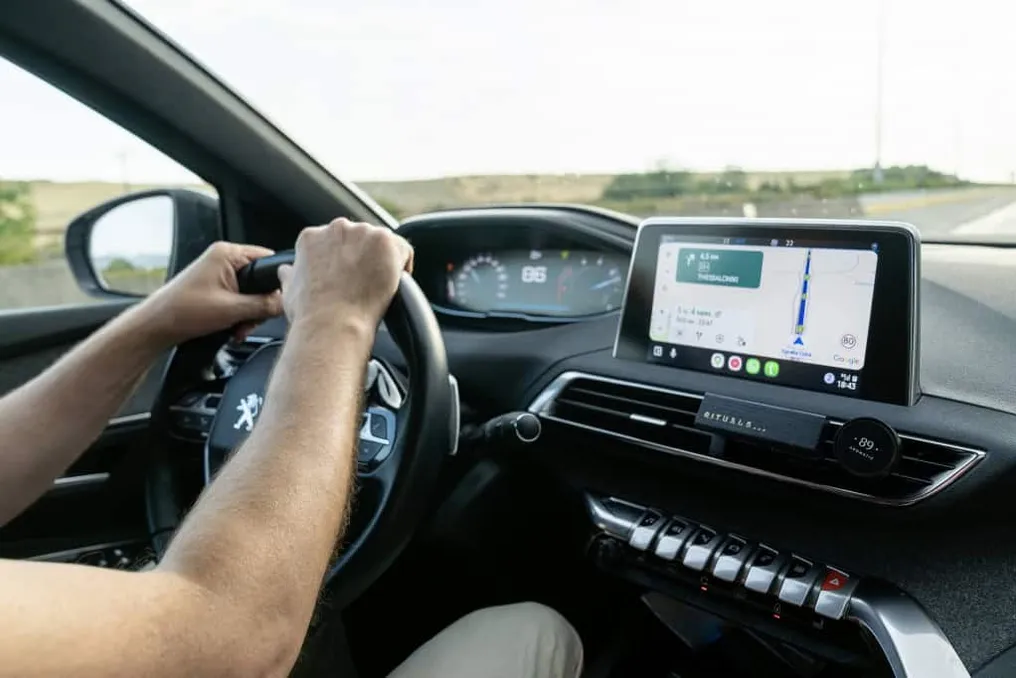
Experts discover new vulnerability: malware begins attacking car multimedia centers
Read more
olhardigital.com.br

Experts discover new vulnerability: malware begins attacking car multimedia centers

Researchers from Kaspersky have identified the first documented campaign of malware specifically designed to infect vehicle multimedia systems. This threat was discovered in June 2026 and utilizes a hidden multi-stage loader to install malware onto Android-based automotive systems.

The criminals' goals include conducting advertising fraud, using multimedia centers as intermediaries for malicious internet activity, and committing other criminal acts. According to Kaspersky, this campaign is the first documented case where malware infects a car's multimedia center through an infection chain specifically developed for these systems.

Researchers believe this activity may be linked to MoYu Group, a group associated with the BadBox botnet—a network of devices that can be remotely controlled by criminals. In the case analyzed by Kaspersky, the malware reached the devices through a vulnerability in the system responsible for updating the center's applications.

This mechanism is used in various models and was developed by DoFun. Its function is to automatically download necessary software for the center to operate. Criminals exploited this process to inject JarService—a program capable of installing other malware unnoticed by the driver. Although the source of the attack has not yet been determined, the company responsible for the system was notified of the vulnerability and has fixed the issue.

The malware was installed as a regular application but had no interface and ran in the background. Thus, the user did not need to interact with the program, and they might not have noticed the compromise of the center.

Kaspersky identified nine different commands implemented by the attackers. Furthermore, the criminals obtained information about the infected device, including screen resolution, device model, connected Wi-Fi network ID, and the MAC address used to identify the device on the network. This data allowed the campaign organizers to gather intelligence on the compromised hardware and manage various functions of the malware.

Additional Information

During the investigation, Kaspersky found signs of a connection between the campaign against automotive centers and MoYu Group, a group linked to the BadBox botnet. The comparison was made with previous activity targeting internet-connected televisions. Researchers also identified common technical elements between the panel used for botnet administration and home proxy services named PXYEDGE and ProxyForU.

BadBox is a botnet consisting of compromised Android devices, including streaming TV devices, smartphones, and tablets. Criminals use hidden access points, known as backdoors, to conduct advertising fraud, data theft, and use home networks as transit points for illegal internet traffic.

The discovery of a campaign targeting multimedia centers expands the range of Android devices that can be used in such operations. Fabio Marenghi, lead security researcher at Kaspersky, states that groups associated with BadBox continue to carry out malicious activities even after efforts by specialists and authorities to dismantle the botnet.

Marenghi stated: "Despite the efforts of cybersecurity specialists and authorities to dismantle the BadBox botnet, individual agents associated with it continue to carry out malicious activities and infect devices worldwide."

According to the researcher, the methods of spreading this type of malware are becoming increasingly diverse, including pre-installed backdoors and compromised IPTV applications. However, in the case of automotive centers, criminals used a different strategy: they exploited the legitimate software update function of the system application to distribute the malware.

Marenghi noted: "Attackers are actively conquering new platforms. This malware is the first malicious application specifically targeting vehicle multimedia centers through an infection chain specifically designed for these automotive systems."

For the researcher, this incident underscores the necessity of strengthening the protection of automotive platforms against malware. He concluded: "This serves as a warning that modern automotive platforms urgently require robust protection against malware."

Huawei plans to release new AI chip Ascend 960 in Q1 2027 to compete with NVIDIA
Read more
ventureburn.com

Huawei plans to release new AI chip Ascend 960 in Q1 2027 to compete with NVIDIA

When one company sets the rules in artificial intelligence hardware, innovation completely stops, prices rise sharply, and startups desperately need time on servers. This suffocating situation is currently observed in the industry due to a serious shortage of graphics processors.

Huawei is acting as a disruptor to this status quo. The upcoming new Huawei chip is designed to radically change the approach to creating large language models by directly addressing the acute shortage of computing power. The company has stopped merely catching up; it has declared its intentions.

At the Connect 2026 event, Huawei announced plans to release Ascend 960 in the first quarter of 2027. According to available information, Ascend 960 is positioned as an extremely powerful chip for artificial intelligence tasks.

Despite years of skepticism that strict trade restrictions would permanently delay Chinese tech firms, they have proven wrong. Instead of giving up under pressure, Huawei has focused its efforts on survival, investing huge sums in independent research.

Its own localized supply chain has been established. Now, the focus is on a processor designed specifically for processing massive neural networks and resource-intensive generative models.

In the current situation, not only speed but also energy efficiency is important. Data centers consume an unprecedented amount of energy, and any chip capable of reducing the load on the power grid will have an advantage.

NVIDIA has not just created a competitive advantage; it has built an impenetrable fortress with its Superpod architecture, which combines tens of thousands of GPUs into a single, cohesive brain. Nevertheless, Huawei aims to capture a significant share of this market.

This goal is planned to be achieved through very aggressive improvements in interconnects. Simply putting a fast processor on a motherboard is not enough; the real magic always happens at data transfer speeds.

If the 2027 benchmark forecasts prove true, Huawei's network infrastructure could match the impressive throughput of premium NVIDIA enterprise solutions. This opens up the prospect of a world where developers are not exclusively tied to proprietary ecosystems, and there is a real choice of hardware.

Geopolitics complicates all aspects. It goes beyond silicon components and turns into a full-scale proxy war for global technological supremacy.

If Huawei successfully scales production by the first quarter of 2027, the international consequences will be significant. Developing markets will immediately take advantage of this opportunity, gaining access to raw computing power. This will force a reevaluation of control over artificial intelligence, leading to a complete market split.

Code defines our future, and hardware realizes it. For software developers, this shift is both frightening and inspiring. Moving away from established systems requires significant time and entirely new workflows.

However, competition invariably leads to better tools. Perhaps we will see a powerful push towards open source to bridge the gap between these competing semiconductor giants. Software engineers are highly averse to vendor lock-in.

If the 2027 launch provides genuinely functional power, the developer community will solve the software side of the issue itself. The era of the solo game is officially over.

Popular