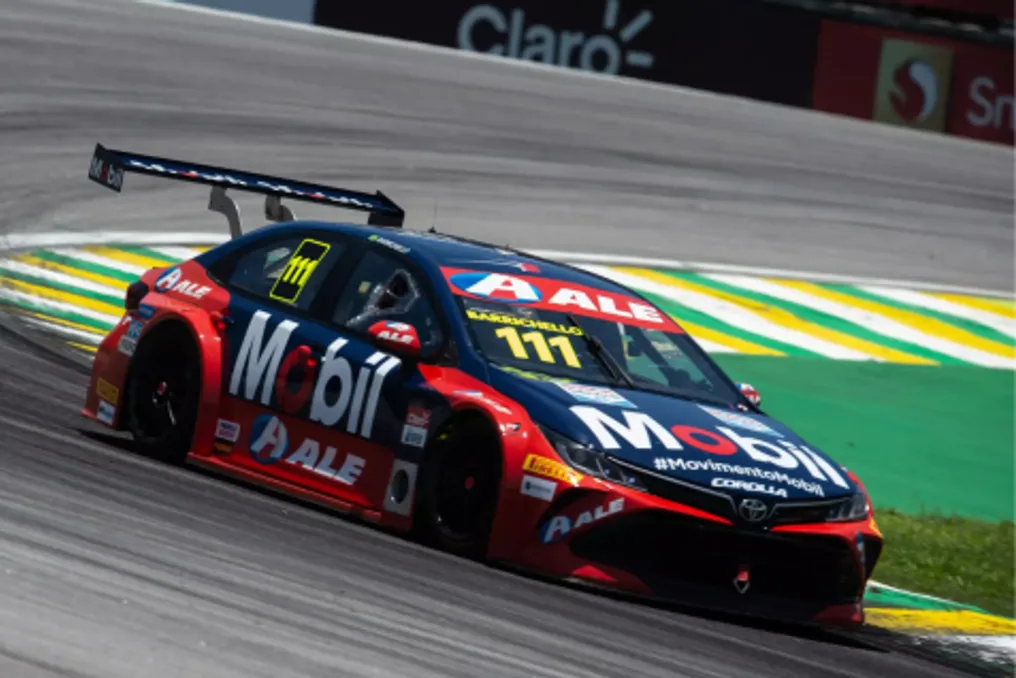
Scuderia Bandeiras has stated that it has no intention of returning to Stock Car as long as Lincoln Oliveira maintains control of the category. Currently, the position is held by Átila Abreu, the driver and team leader, who left the championship after the fifth round of the 2026 season. At that time, the team included names such as Rubens Barrichello, Nelson Piquet Jr., and Rafael Suzuki.
When questioned about a possible return in 2027, Abreu categorically stated that while the current management persists, the chances are nil. However, he indicated that a significant move would be necessary for the team to reconsider its participation. He mentioned that if the category were sold, they would study a return, as they have a great appreciation for Stock Car, considering it a 47-year-old and large category, despite going through a difficult time under the current administration.
Lincoln Oliveira, who is the CEO of Vicar, the promoter of Stock Car, and controller of Grupo Veloci, is also the father of Gabriel Bortoleto, the only Brazilian currently in Formula 1.
The crisis that led to Bandeiras' departure began in 2025 when Stock Car introduced a new generation of vehicles. The sedans and V8 engines were replaced by SUVs equipped with four-cylinder turbo engines, part of the project called SNG01. From the beginning, the category faced recurring failures in engine and gearbox systems, leading to the nickname 'Stop Car' and forcing the organization to postpone an entire round to solve the problems. Drivers expressed public concerns, citing risks to their safety.
Vicar's response shaped the relationship with competitors. Felipe Massa and Bruno Baptista were fined R$100,000 each for criticizing the organization after the Cascavel round, violating a contractual clause that prohibits derogatory comments about the category. A technical council from the CBA confirmed safety irregularities in the SNG01 model.
For the 2026 season, the category reversed the change and returned to using the naturally aspirated V8 engine. This technical correction, however, generated a legal dispute over who should bear the costs. In Stock Car teams, cars are not manufactured internally; they acquire a standardized package called the Audace Tech Competition Kit, which belongs to the same group as Vicar. This standard aims to ensure equality on the grid but also makes teams dependent on a single supplier, as parts and supplies must be obtained exclusively through the Audace StockManager system.
Bandeiras acquired four kits, one for each car, for the amount of R$1,168,449.00, with a contractual guarantee of use for ten years. The agreement stipulated that the project could undergo changes during this period, dividing modifications into two categories. The contract states that any update must be funded by Audace, Vicar, or a sponsor, and never by the team itself. The justification is that the promoter defines the engine and car design, while the team prepares the budget and seeks sponsorships based on projected costs.
The engine replacement implied more than just changing the engine; it required implementing new wiring harnesses, a new cooling configuration, a new electronic management system, in addition to distinct mechanical supports and interfaces. The costs fell on the teams, totaling R$178,807.00 per car, amounting to R$715,228.00 for Bandeiras. The invoices issued by Audace described the item as 'V8 Upgrade Kit sale,' a term that, according to the contract, obligated the category to make the payment.
On June 10, the 3rd Civil Court of Cotia (SP) issued an injunction banning the charge, blocking access to StockManager, and any penalties for default, under penalty of a R$100,000 fine in case of non-compliance. Abreu confirmed that the process has not progressed since then, stating: 'Procedurally, no.'
However, he refutes the idea that the departure is limited to the V8 Kit, acknowledging that it was a factor, but pointing to other reasons. According to Abreu, the climate worsened after the judicial litigation. He cited difficulties in parts supply, safety issues, and vehicle protection matters. The aspect he considers most serious is the tax one. Bandeiras alleges having questioned the category about procedures that, in the team's view, exposed the Scuderia to unanswered fiscal risks. It was this situation that made continuity unfeasible due to the compliance requirements of the team's international sponsors. Abreu declared: 'There was no more legal security.'
With 19 years of participation in Stock Car, Abreu estimates the financial loss reaches eight figures. He reported having built an unprecedented structure in Brazilian motorsports, investing over R$20 million in team formation, not including personnel hiring. He expressed surprise at such occurrences, saying: 'Encountering situations like these, I never imagined.'
He concluded that despite having gone through various administrations, the lack of legal, tax, and respect for teams and drivers made remaining unsustainable, as these are problems the team cannot accept. Currently, the team is evaluating legal measures. In addition to contesting the charge, they are seeking the return of R$211,817.68 already paid by Bandeiras and its sponsors. Abreu stated: 'We are in judicial avenues, seeking to repair all our rights and everything that happened to us.'
The organizer's perspective differs. In a statement released at the time, Vicar informed that the notification of the departure of the Bandeiras and Bandeiras Sports teams occurred only after the Superior Sports Justice Court (STJD) unanimously upheld the penalties imposed by the Brazilian Automobile Confederation (CBA). Vicar alleged that the punishments stemmed from technical irregularities found in approved components during category inspections, directly affecting competitor safety. The company assured that the entire process followed regulations and guaranteed the right to defense.