Ranking of the Most Venomous Snakes in the World and Brazil
Read more
Super Abril
super.abril.com.br

Ranking of the Most Venomous Snakes in the World and Brazil

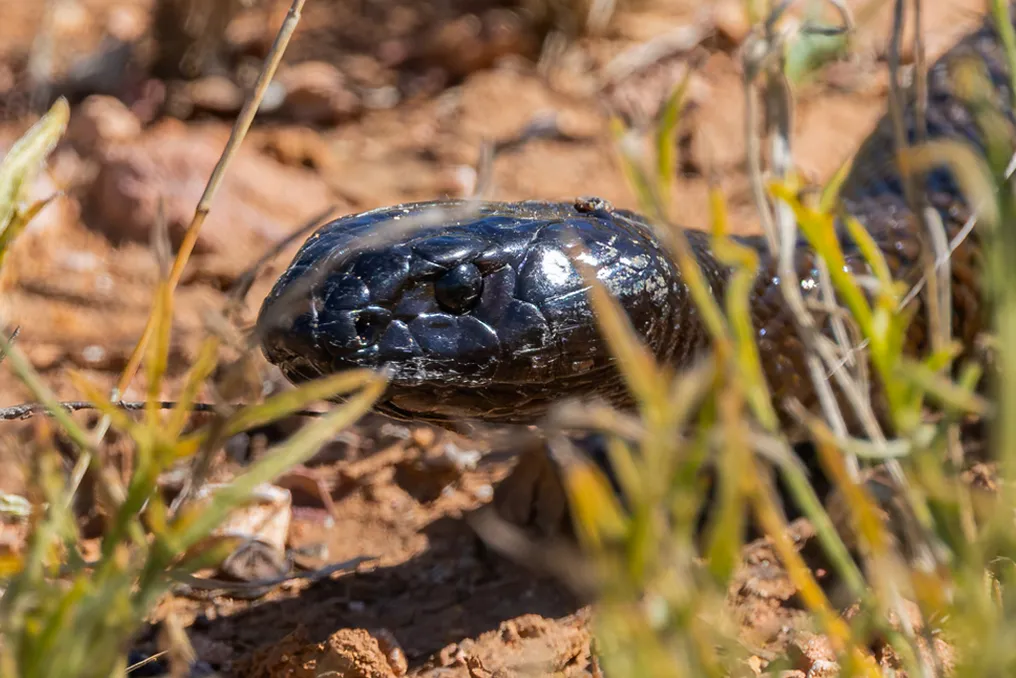
The world title for the most venomous snake belongs to the Inland Taipan (Oxyuranus microlepidotus), a species found exclusively in Australia. Its bite can inject enough venom to kill over one hundred people.

In Brazil, the title of the most venomous snake is held by the True Coral Snake (Micrurus sp.), which is a distant relative of the taipan.

Both snakes belong to the family Elapidae, which includes 240 highly toxic species worldwide, excluding Europe, according to biologist Otavio Marques from the Butantan Institute in São Paulo. It is estimated that annually between one and two million snake incidents occur, whether venomous or not, of which about 50,000 end fatally.

Venomous snakes (the technical term for animals that inject toxins, as in the case of snakes) are classified into three different categories based on the action of their venoms.

The first group, which includes the taipan and the coral snake, possesses venom that acts on the peripheral nervous system, causing respiratory arrest. Vipers, on the other hand, inject substances that provoke blood clotting disorders, hemorrhages, and local necrosis. Finally, sea snakes secrete myotoxin, responsible for muscle fiber destruction and acute kidney failure, according to biologist Fatima Viveiros, also from the Butantan Institute.

Situation in Brazil

Among dangerous snakes in Brazil, the following species stand out:

  • True Coral Snake (Micrurus sp.): Although it is the most venomous snake, it is rarely bitten, accounting for only 1% of all snake incidents in the country.
  • Rattlesnake (Crotalus durissus): Approximately 30% of victims of this snake die if they do not receive antivenom in time.
  • Surucucu Pico-de-Jaca (Lachesis muta): This is the largest venomous snake in Latin America, exceeding three meters in length. Its bite causes severe swelling and bleeding.

Global Situation

Globally, the most dangerous are considered to be:

  • Inland Taipan (Oxyuranus microlepidotus): An Australian snake whose bite can cause respiratory paralysis and death within minutes, and it is considered the most venomous in the world.
  • Brown Snake (Pseudonaja textilis): Another Australian species; a single drop of its potent venom is enough to be fatal to a human.
  • Malay Ground Snake (Bungarus candidus): Found in Southeast Asia and so dangerous that 50% of victims do not survive even after receiving antivenom.


Similar stories

Safety Tips: Scents That Attract Snakes During the Rainy Season
Read more
www.aajtak.in

Safety Tips: Scents That Attract Snakes During the Rainy Season

Seasonal rains, while making the weather pleasant, also bring the risk of various insects and venomous animals. During this period, the number of snake sightings inside homes often increases. However, it is important to know that certain smells emanating from your home and surroundings can attract snakes. Snakes have a very acute sense of smell and follow these aromas and scents in search of food, water, or shelter, penetrating right into the dwelling.

To stay safe on rainy days, it is crucial to understand exactly which things and smells serve as an invitation for snakes.

Presence of mice and small creatures: Open food, food scraps, or grain left in the house attracts rats, lizards, and frogs. The physical scent of these animals serves as a direct signal of prey for snakes.

Pet food and grain: The smells of grain spilled from bird feeders and chicken coops quickly attract snakes.

Smell of dampness and wet earth: Stagnant water, humidity in drains, and the smell of wet earth characteristic of the rainy season attract snakes looking for coolness and shelter.

Smell of decaying leaves and clutter: The odor formed by the decomposition of dry leaves in the garden, as well as the smell of old or wooden piles of clutter, provides snakes with a safe place to hide.

Smell of eggs: If there are bird nests or chickens near the house, snakes easily find their destination by smelling the eggs.

Immediately clean up food remnants and waste: Open food or garbage in the house attracts rats, and the smell and presence of rats, in turn, attract snakes as prey.

Maintain cleanliness around animal habitats: Smells from bird feeders, chicken coops, or pet food attract both small animals and snakes.

Do not allow water to accumulate around the house: Water and humidity collected during the rain attract snakes looking for coolness.

Perform garden pruning: Dense vegetation and the smell of decaying leaves, as well as moist soil, provide snakes with a suitable hiding place.

Spray phenol and kerosene: Use substances with a strong odor near house entrances and sewage drains to repel snakes.

Scorpion venom named the world's most expensive liquid product, with a price reaching 1 billion rupees per liter
Read more
www.aajtak.in

Scorpion venom named the world's most expensive liquid product, with a price reaching 1 billion rupees per liter

When it comes to the most expensive liquids in the world, many might think of snake venom, but in reality, the most valuable among liquid products is scorpion venom. Its price is estimated at approximately 1 billion rupees per liter. In addition, there are several other liquids that cause surprise with their high cost, including sperm from certain breeds of horses, blue blood from the horseshoe crab, jasmine oil, Bulgarian rose oil, and Manuka honey from New Zealand.

In our minds, expensive things are often associated with gold, diamonds, or jewelry, but there are also liquid products in the world whose price is astonishing. Some of them cost millions, while others reach billions. Among these, scorpion venom ranks first.

Scorpion venom is among the most expensive liquids. According to a Business Insider report, its cost can reach 1 billion rupees per liter. This means that one liter of this venom can cost a huge amount of money.

Why is it so expensive?

The main reason for the high price is the extreme difficulty of extracting the venom from the scorpion. Only a very small amount of venom—about 2 milligrams—can be obtained from one scorpion. Accumulating large volumes requires a large number of scorpions. This venom is used in medical research, where scientists conduct various studies to detect cancer, develop malaria drugs, and treat other diseases. Its low availability and scientific significance significantly increase its cost.

The next item on this list will also surprise readers. Sperm from high-quality horse breeds can be extremely expensive. There is particularly high demand for the sperm of horses that have achieved outstanding results in racing. It is used to breed offspring of the best breed, and in some cases, its price can reach millions of dollars.

Next is the blue blood of the horseshoe crab. Its color is not red, but blue, and it has special significance in the medical field. A product called LAL (Limulus Amebocyte Lysate) is made from this blood, which is used to test for bacterial threats in medicines and vaccines. This is why its blood is considered very valuable.

Jasmine oil is also included in the list of expensive liquid products. The main reason for its high cost is the enormous number of flowers and the labor required for its production. It is said that about 1,000 kilograms of flowers may be needed to obtain approximately one kilogram of jasmine oil. Jasmine buds are often picked early in the morning to preserve maximum aroma. This oil is mainly used in expensive perfumes and cosmetic products.

Rose oil from Bulgaria is also expensive. Thousands of kilograms of rose petals may be needed to make it. The flowers are picked early in the morning and then quickly processed. High-quality rose oil is valued at approximately $10,000–$15,000 per kilogram and is in high demand in the elite perfume industry.

Argan oil from Morocco is known worldwide for its unique properties. It is made from the fruits of the argan tree. The extraction process requires significant effort, and in many places, it is prepared manually. Argan oil is used in both cosmetics and food products.

Manuka honey from New Zealand can also be much more expensive than regular honey. It is produced from special flowers, and its high demand is due to certain natural properties. Laboratory tests are conducted to verify the quality of genuine Manuka honey. At the same time, traditional Japanese black vinegar, known as kuromitsu, is valued for its special production process. It is prepared in clay vessels over a long period, and due to the time and labor involved, its price is significantly higher than that of ordinary vinegar.

This list also includes printer ink, which can surprise with its price. Although printer cartridges are small, their cost can be very high, making the ink expensive per liter. Furthermore, other expensive liquids include Italian anchovy sauce, cow's milk, chia oil from East Africa, mezcal from Mexico, Korean rice syrup, cochineal insect dye, blood plasma, single malt whiskey, champagne, and sake.

Popular