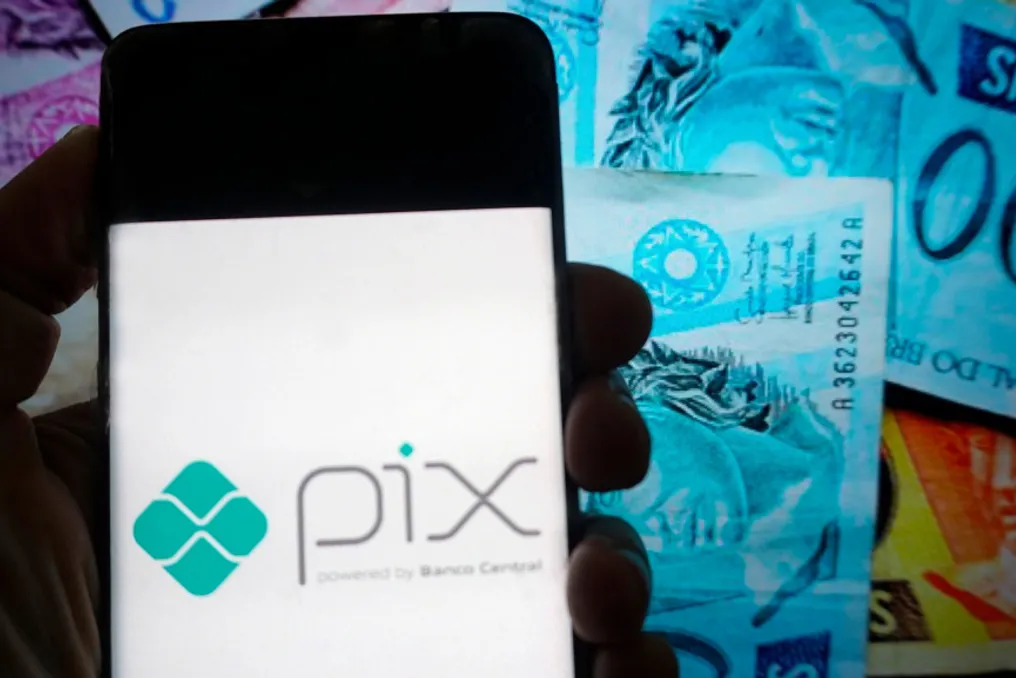
Pix, one of Brazil's technologies that transformed the global scenario, has profoundly altered the way money circulates in Brazil. Launched by the Central Bank in 2020, it quickly established itself as the most used payment method in the country, demonstrating a complete market shift in just over five years, with continuous plans for improvement.
The development of Pix began with Central Bank technicians in May 2018, culminating in the payment system's launch in November 2020, after a 31-month period of work. Murilo Rabusky, a financial technology specialist, stated that Pix redefined the national monetary logic.
Previously, transfers made outside banking hours required up to one business day (DOC) or incurred costs (TED). Pix eliminated this wait, operating 24 hours a day, seven days a week, including holidays. For individuals, the service is completely free, and funds are credited to the account in seconds.
Rabusky highlighted that the crucial factor for Pix's success was its structural design. The Central Bank conceived it as a public infrastructure, unlike traditional banking products such as TED, DOC, boleto, and check. This approach forced all institutions, from large banks to fintechs, to adhere to the same standards and system.
Gustavo Siuves, another finance specialist, added that Pix established a connecting layer that allowed the market to innovate on this foundation. Essentially, Pix is an instant payment system, ensuring that money lands immediately, whether via debit or credit, in the recipient's account.
Pix functionality allows for the creation of keys, which can be a CPF, email, CNPJ, phone number, or a random combination of characters. This simplification replaced complex banking details, making the act of paying or transferring as simple as sending a message, and the fee-free nature for individuals removed existing barriers in other methods.
Siuves emphasized that Pix integrated various financial journeys, benefiting both businesses and consumers. New billing modalities emerged, such as QR Code payments, alongside new commercial experiences focused on recurrence and proximity.
The system gained rapid acceptance in Brazil. According to the Central Bank, more than 170 million individuals have already used Pix, representing 80% of the Brazilian population, consolidating it as the most used payment system in the country. Siuves mentioned that Pix facilitates everything from purchases in stores to splitting bills among friends and receiving payments for freelancers.
Furthermore, Rabusky pointed to Pix's role in financial inclusion, as it enabled access to digital payments for individuals without traditional bank accounts or cards. It also offered small businesses and freelancers an immediate, cost-free way to sell and receive money.
Gustavo Siuves, who works as CRO at the fintech Azify, added that Pix supports larger initiatives, such as Open Finance. Transaction data generated by Pix helps financial institutions better understand the economic profile of clients and companies, facilitating the construction of credit and products aligned with individual needs.
Globally, Pix has positioned Brazil as a model for instant payments, being studied by other nations as they design their own infrastructures. The Central Bank views Pix as a process of continuous evolution, where new functionalities are gradually implemented.
For 2025, the Central Bank planned the launch of Automatic Pix and Proximity Pix, with refinements expected in 2026. Other developments include Guaranteed Pix, which will allow installment payments within the system itself, and Offline Pix, which will enable transactions without an internet connection.
However, Rabusky stressed that internationalization is the most relevant front for the coming years. Currently, the use of Pix abroad depends on bilateral agreements with financial institutions in countries such as Argentina, Chile, Portugal, and Spain. The Central Bank is investigating a greater advance: connecting Pix directly to international instant payment systems, allowing transactions initiated in Pix to interact natively with the infrastructure of other countries, overcoming dependence on point-to-point bank agreements.