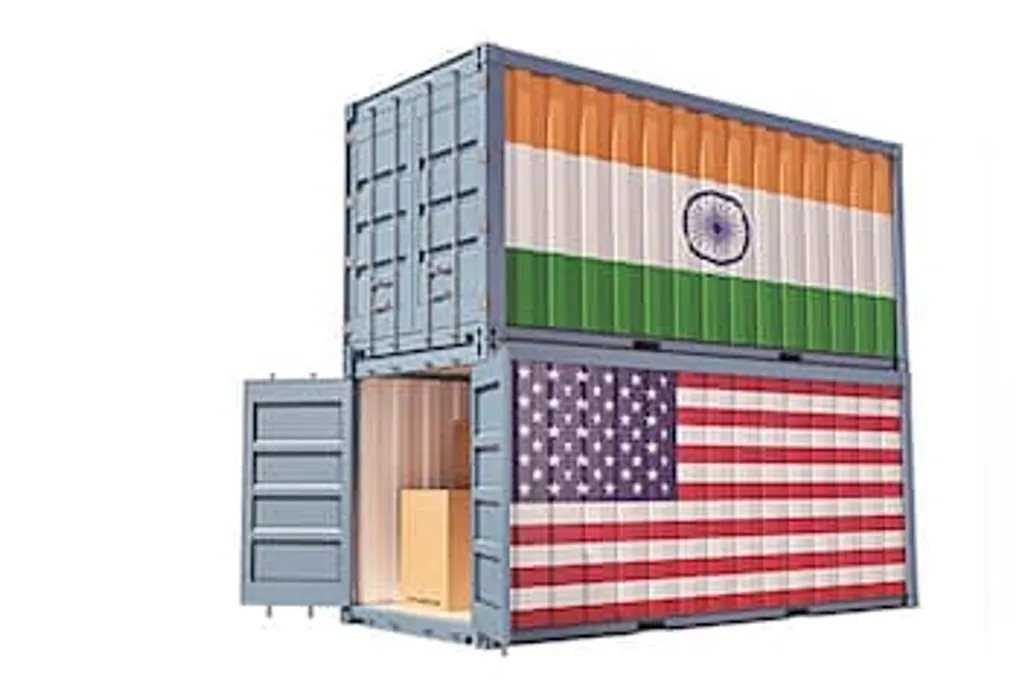
The Ministry of External Affairs of India (MEA) stated on Thursday that India cannot be pressured regarding its energy sources, noting the potential damage from a bill passed by the US Congress just a few hours earlier. This law grants President Donald Trump the authority to impose sanctions against Russia and set high tariffs, reaching 100 percent, on countries purchasing oil and gas from Russia, including India.
The MEA emphasized that India is firmly committed to ensuring the energy security of its population of 1.4 billion people. The official statement indicated that this will be achieved through diversifying supply sources and adapting to changing market conditions. The government plans to closely cooperate with Indian industry and trade associations to address the consequences of these events.
Following the start of the war between Russia and Ukraine in 2022, Moscow became India's primary supplier of crude oil due to offered discounts. Some estimates suggest that after supply chains in West Asia were affected, Russia provided nearly half of India's crude oil imports.
In its statement regarding the Sanctions on Russia and Iran Act, New Delhi noted that any sanctions could have potential implications for bilateral relations between India and the US. It was also mentioned that the issue of sanctions 'was discussed at a high level in recent months with various interlocutors from the US.'
The MEA added that the Indian side has clearly outlined its intentions to take all necessary measures to protect its economic and trade interests, and it has clearly articulated the potential consequences of sanctions not only for bilateral relations but also for the global energy market. The Ministry is monitoring the further development of the situation.
Sources in New Delhi indicated that although the bill grants the US president the authority to impose sanctions, he must decide on applying them to India.
Previously, after the US Congress passed the Countering America's Adversaries Through Sanctions Act (CAATSA), sanctions against India for purchasing five S400 air defense systems from Russia in 2018 were not applied. In 2022, the US House of Representatives passed a legislative amendment that approved an exemption for India from CAATSA sanctions.
It is anticipated that India and the US will hold bilateral trade discussions during the G20 Trade Ministers meeting, scheduled for September 30 and October 1 in Wisconsin, USA.
Experts view this bill as an attempt by the US to gain leverage in negotiations for a Bilateral Trade Agreement (BTA). Ajay Srivastava, founder of the Global Trade Research Initiative, stated that this is a 'crude and dangerous attempt to pressure India into signing a BTA on unilateral terms.' He added that India purchases Russian oil to ensure affordable energy for 1.4 billion people, not to finance the war, and that these purchases helped stabilize global prices and supplies.
Srivastava also warned that tariffs could penalize Indian exporters and American consumers, disrupt trade, and grant the US president excessive power over major partners, urging Washington to focus on diplomacy and energy market stability rather than threatening a strategic partner for defending its legitimate economic interests.
According to experts, the actual impact of the new tariffs on Indian exports can only be assessed after the US announces the tariff rates, the scope of goods, and the implementation schedule. However, specialists suggest that a significantly higher tariff introduced under this bill is likely to lead to a substantial decrease in Indian exports to the US.
Madhavi Arora, Chief Economist at Emkay Global, gave an example: 'India's average monthly exports to the US fell to $6.5 billion from September 2025 to February 2026 (when India faced 50% tariffs), compared to $8.1 billion in the previous six months. It has since risen to $8.5 billion (from March 2026 to August 2026) after the tariff rate was reduced to 10%.'