According to the 'Gender Panorama 2026' report, published today by UN Women and the United Nations Department of Economic and Social Affairs (UNDESA), all three organizations working on gender equality are experiencing a loss of influence. The report shows that where women hold real power, outcomes improve across all aspects of the 2030 Agenda for Sustainable Development, including peace, education, poverty eradication, and climate change.
However, the report points to a systematic weakening of the very institutions created over decades to promote gender equality. This weakening leads to paralysis or regression in progress precisely when the world cannot afford to take steps backward.
The study's findings demonstrate a political regression in gender equality that is 'transversal, measurable, and cumulative.' Specifically, over the last two years, the institutional mechanism for gender equality has lost its influence in one of the three cases. Furthermore, about one in four such mechanisms faced cuts to operational budgets during the same period, and nearly one in ten lost full control over its funding.
Funding allocated to gender equality has dropped to its lowest level since 2021, with organizations protecting women's rights bearing the greatest negative impact, as stated in the document.
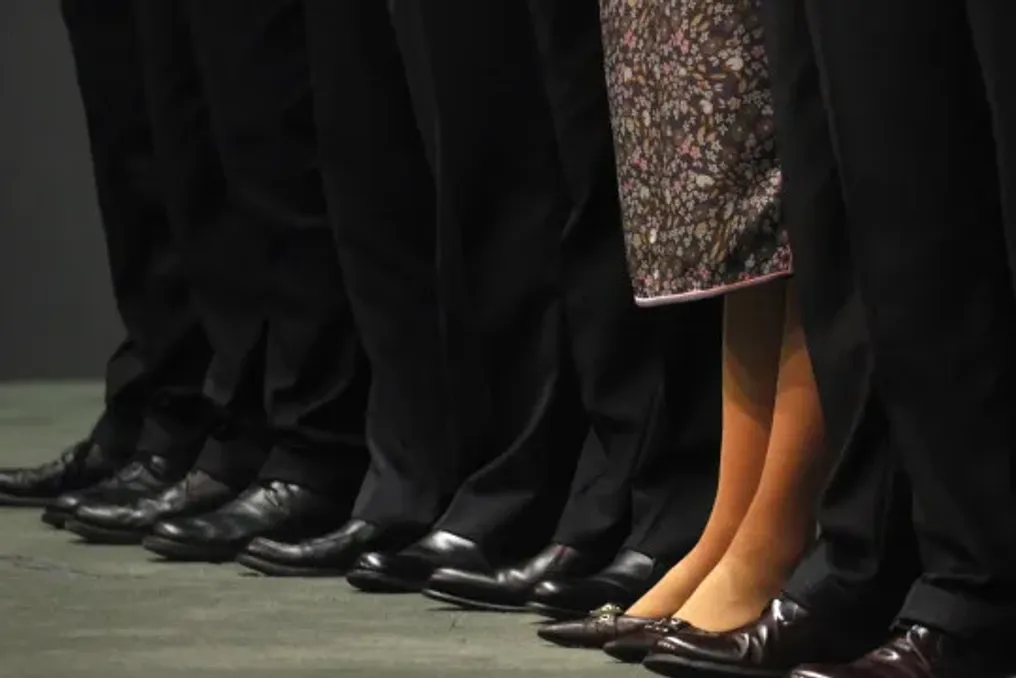
The UN stated in a press release that there remains a 'stark concentration of political power': six out of seven countries are led by men, and women continue to face systemic obstacles at every stage. In some countries, up to eight out of ten female candidates for public office are subjected to violence in the public sphere. Even when women reach the cabinet level, they are disproportionately removed from ministries holding the most power in security and economy.
As an example of this disparity, the UN notes that nearly nine out of ten defense ministers and more than eight out of ten finance ministers are men. Considering all these factors, the United Nations emphasized that none of the Sustainable Development Goal indicators for gender equality (SDG 5) are moving toward achievement by 2030.
UN Women Executive Director, Sima Bahus, stated: 'The evidence is clear: when women lead, societies become stronger, economies become more resilient, and outcomes are better for everyone.' Nevertheless, Bahus stressed that as long as power remains concentrated in institutions that systematically exclude women, societies will lag behind their full potential. She added: 'Equality cannot be achieved without equal access to power—because equality without power is not equality.'
UN Under-Secretary-General for Economic and Social Affairs, Li Junhua, assured that the current data leaves no room for ambiguity: 'At the current pace, gender equality is still 171 years away.'
This issue extends beyond governments. Women hold only 6% of CEO positions in companies worldwide and head less than 20% of supreme courts, leaving decisions shaping business, law, employment, and the global economy predominantly in the hands of men.
Ahead of the meeting of dozens of heads of state and government in the UN headquarters in New York, UN Women and UNDESA call for an end to political regression in gender equality and for a fairer distribution of power. The UN statement says this means ensuring an equal voice for women in political and economic decisions, adequate funding for gender equality institutions, protection of women's rights organizations and civil society, as well as guaranteeing equal power for women in shaping decisions affecting the economy, peace, security, technology, and public life.