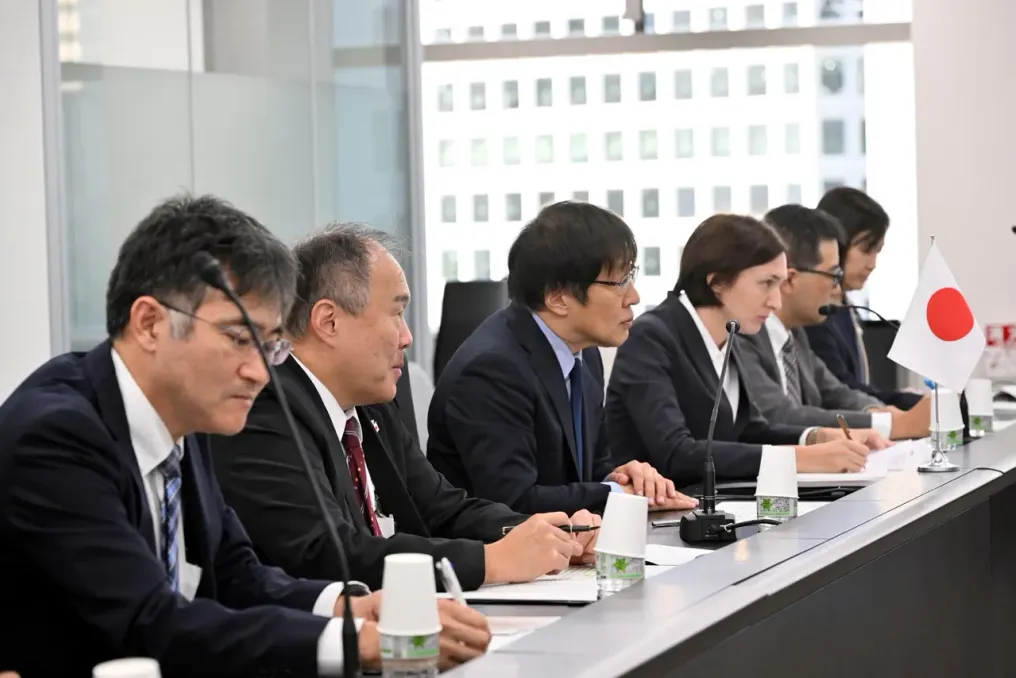
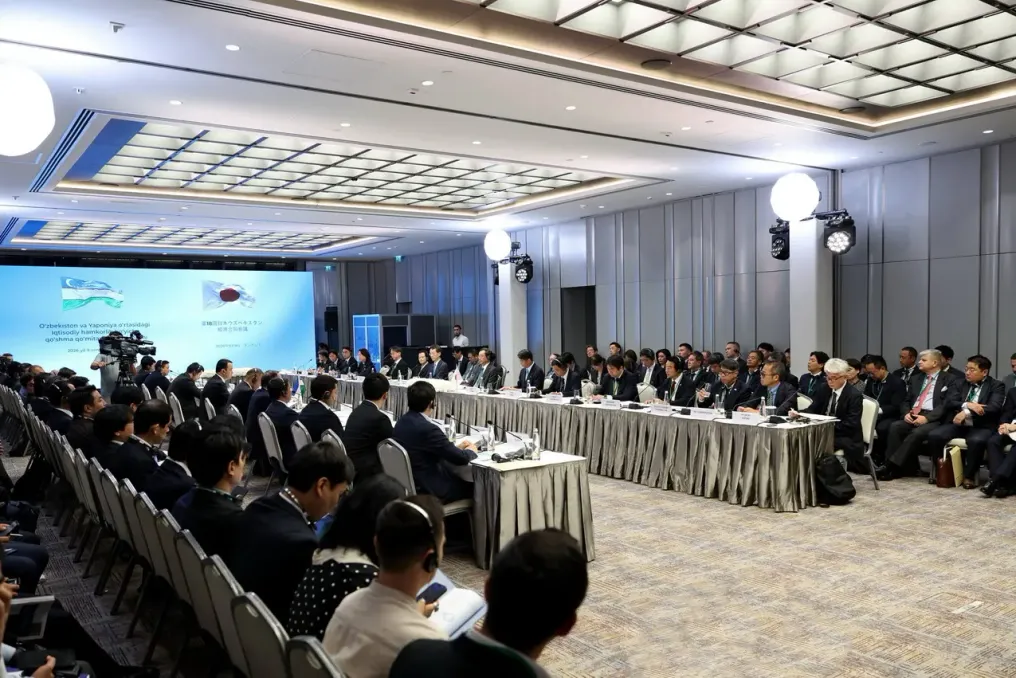
The 18th meeting of the Committees on Economic Cooperation between Uzbekistan and Japan was held in Tashkent, where the parties discussed the implementation of joint investment projects and potential areas for bilateral interaction. The event took place on September 9.
The co-chairs of the meeting were Laziz Kudratov, Minister of Investment, Industry and Trade of Uzbekistan, and Masayuki Tanimoto, Chairman of the Japan-Uzbekistan Committee and Senior Advisor to the President of Mitsubishi Corporation.
The meeting was also attended by Kenji Yamada, State Minister of Economy, Trade and Industry of Japan, Kenji Hirata, Japanese Ambassador to Uzbekistan, representatives of relevant state bodies, financial institutions, business associations, and companies. More than 130 people participated in the Japanese delegation, including representatives of major corporations and development organizations.
The increased interest from Japanese businesses is linked to agreements reached in December 2025 during the Central Asia-Japan summit and a state visit. Following these events, a portfolio of 75 projects worth 12 billion US dollars was formed.
At the current stage, the parties have focused on the consistent implementation of the agreements reached and transitioning the project portfolio to the practical stage of implementation. Uzbekistan's economic indicators also contributed to further cooperation: the country's GDP increased by 7.7% in 2025, and economic growth reached 8.5% in the first half of 2026.
Sectors for Further Investment Cooperation
The parties identified several industries that can form the basis for future investment partnership. These include energy, chemical industry, mechanical engineering, critical minerals, healthcare, and information technology.
Priority areas recognized are the modernization of production facilities, localization of production, deep processing of raw materials, digitalization of enterprises, and expanding the presence of companies in foreign markets. Participants also discussed the conditions necessary to accelerate the launch of industry projects, including increasing opportunities for non-sovereign financing and creating special economic zones.
It is expected that the combination of financial instruments, prepared production sites, and infrastructure will open up additional opportunities for Japanese investors. Special attention was paid to the digital sector: more than 20 Japanese companies are already operating as residents of IT Park Uzbekistan. Uzbekistan's IT service exports exceeded 1 billion US dollars, and participants noted that the existing base creates prerequisites for developing outsourcing, promoting Uzbek digital solutions in the Japanese market, and implementing technological projects.
The practical part of the meeting included presentations from representatives of relevant Uzbek agencies, Japanese companies, educational institutions, and financial organizations. Issues such as industrial cooperation, digital transformation, mineral resource development, personnel training, and business support mechanisms were discussed. This format allowed participants to compare the needs of individual sectors with the technological solutions and experience of potential Japanese partners.
After the conclusion of the meeting, a ceremony was held to sign bilateral documents. Representatives of companies from both countries held direct negotiations and business meetings aimed at agreeing on the next steps for joint projects and establishing new business contacts.