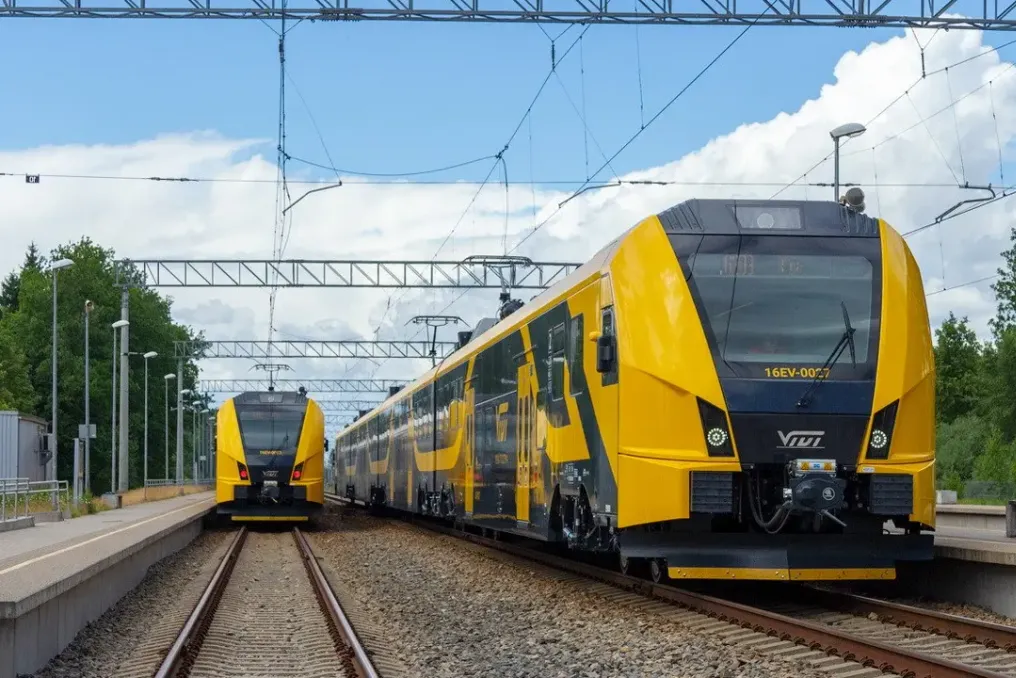
The City Council of People's Deputies of Tashkent approved a project to acquire ten modern electric trains from the Czech company Škoda Transportation. The relevant resolution was adopted on September 17, 2026, according to kengash.gov.uz.
The new rolling stock is intended to replace the outdated fleet. Currently, only ten sets of suburban trains operate, consisting of 77 carriages, most of which are ER9E models manufactured between 1983 and 1987. Repairing this fleet would cost approximately 135 billion soums but would only extend their service life by four years, prompting the authorities to purchase new transport.
The problem is also reflected in passenger traffic: in 2025, 10.5 million people traveled on suburban trains, which is 4.1 million fewer than in 2000. Passengers are switching to car transport due to the low frequency of service, lack of air conditioning, hard seats, and noise in the old carriages.
The new Škoda 25Ev sets are designed to accommodate 432 seated passengers—nearly twice as many as current trains. The total capacity, including standing passengers, will reach 880 people. These trains will be operated for at least 30 years and will be equipped with a climate control system capable of maintaining an interior temperature no higher than +32°C even when the external temperature reaches +50°C, as well as a system allowing up to eight carriages to be connected.
The total cost of the project will be 157 million euros. The main part of the financing, specifically 123.5 million euros, will be provided by the European Investment Bank as a 24-year loan. The remaining amount will be covered by the project's own funds and Uzbekistan's share, including VAT on imported equipment, which the project plans to be exempted from.
The purchase of the trains will be carried out by JSC 'Uzbekistan Railways' through its subsidiary Shahar Atrofida Yulovchi Tashish. Project implementation is scheduled for the period from 2026 to 2030, during which 156 jobs will be created on new lines and in train maintenance.
This decision was made in fulfillment of a presidential decree adopted in December 2025, which provides for increasing the number of suburban train passengers from 10.5 million to 23.5 million by 2030.