General Motors has requested that the Brazilian government adopt the North American technical standard for vehicle homologation. This change would allow large pickup trucks and SUVs produced in the United States to enter the Brazilian market, which are currently prohibited by national legislation. The news was reported by the GM Authority portal.
Fábio Rua, Vice President of Public Policy, Communication, and ESG for GM South America, stated that the company has already formalized this request with the regulatory bodies in Brasília. He cited Chile and Uruguay as examples of nations that already recognize American standards. The executive told Estadão that if Brazil adopts this standard and promotes regulatory uniformity, there will be conditions for American automobiles to arrive in the country. The company projects the importation of approximately 3,000 units annually, with a special focus on pickup trucks, if the request is approved.
Currently, in Brazil, a vehicle only obtains the Traffic Legislation Compliance Certificate (CAT), issued according to Contran guidelines, after undergoing tests in laboratories accredited by Inmetro. This set of requirements was established based on UN regulations (UNECE), which are used in Europe. In contrast, the United States uses FMVSS standards, where the manufacturer itself performs self-certification before the local traffic agency, NHTSA.
Regulatory differences arise in specific aspects: impact tests use distinct protocols; while Europe uses the partial overlap deformable barrier, the American approach prioritizes the full frontal collision, including tests with unbelted dummies. Regarding lighting, US vehicles often feature red rear turn signals combined with the brake light, whereas Brazilian standards require amber color. Furthermore, concerning emissions, Proconve L7 and L8 follow the Euro 6 standard, not the American EPA limits, without considering Brazilian gasoline, which contains 27% ethanol and requires specific calibration.
Some convergence already exists: Contran Resolution 970/2022 allows tests conducted under FMVSS to be accepted as an alternative in the lighting chapter.
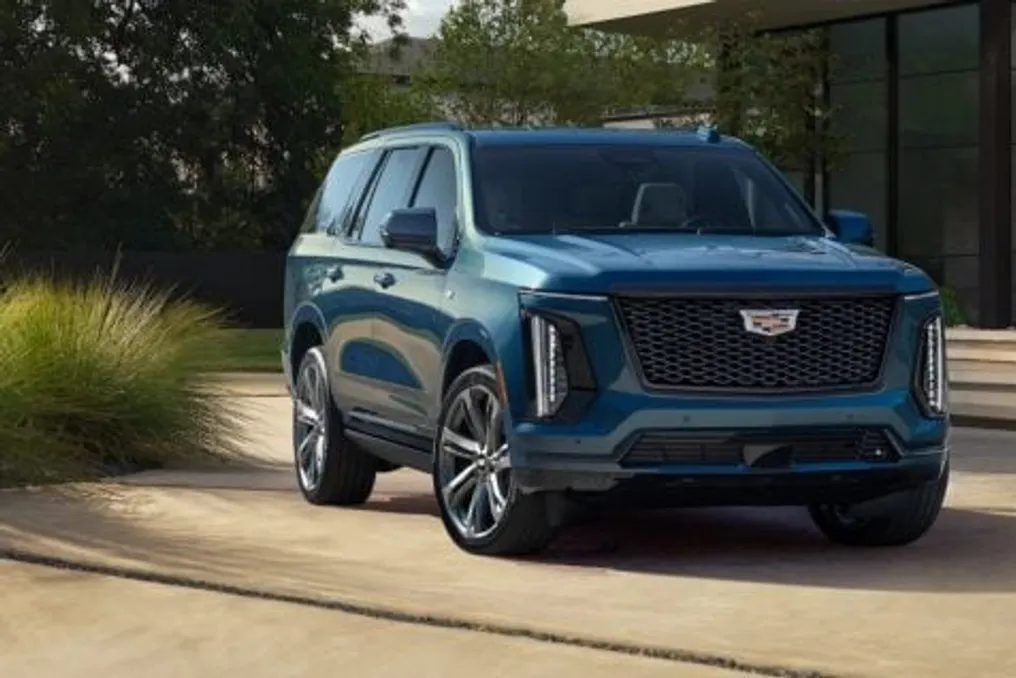
A notable example is the Cadillac Escalade, an SUV up to 5.76 meters long, which was certified only under FMVSS and was therefore excluded from the brand's recent launch in Brazil, which included the electric models Optiq, Lyriq, and Vistiq, homologated separately. Rua also pointed out that legislation is an obstacle to the return of GMC, specifically the Sierra 2500 and 3500 diesel pickups. Historically, models like Camaro and Bolt EV have managed to enter by meeting European standards, and the current Silverado is imported from Mexico in a version exclusive to the Brazilian market.
This request is added to another GM initiative reported by international media: the introduction of Buick in Brazil from China. According to the new plan by SAIC-GM, whose contract was renewed until 2047, the joint venture will begin exporting electrified vehicles to various markets, including South America.