
Western Cape Government Confirms Support for Clothing and Textile Sector During Visit to Ciovita
Read more
IOL
iol.co.za

Western Cape Government Confirms Support for Clothing and Textile Sector During Visit to Ciovita

The Minister of Agriculture, Economic Development and Tourism for the Western Cape, Dr. Ivan Meyer, reaffirmed the provincial government's commitment to the local clothing, textile, footwear, and leather (CTFL) sector. He visited Ciovita, a producer of high-quality sportswear located in Woodstock, on Thursday to assure the continuation of support for the local industry.

As an active participant in the Cape Clothing and Textile Cluster (CCTC), Ciovita employs 265 people and highlights how innovation, export-led growth, and local manufacturing can contribute to job creation.

Currently, the CTFL sector accounts for 4.4% of the Western Cape's gross value added in production and provides 10% of all manufacturing jobs in the province. During his visit, Meyer met with the management of Ciovita and CCTC to discuss expanding local production, increasing exports, and strengthening partnerships between industry and government.

Meyer stated that the Western Cape Government values the role of the CCTC in enhancing production competitiveness by bringing together over 100 stakeholders in the value chain. He added that the cluster's mission aligns perfectly with the Growth Strategy for Jobs, which focuses on private sector-led growth, investment, and sustainable employment.

Courtney Grant, Chief Facilitator of the CCTC, noted that Ciovita exemplifies the cluster's goal—building a globally competitive and inclusive value chain. Grant emphasized that companies like Ciovita demonstrate what can be achieved when local producers compete on quality, flexibility, and excellence.

Established in 2005, the CCTC collaborates with retailers, manufacturers, small and medium enterprises (SMEs), and institutions to promote localization and investment. The Western Cape is South Africa's primary hub for design-oriented apparel manufacturing, hosting 158 clothing manufacturers, nearly 18,000 CTFL employees, and major national retail headquarters.

Ciovita's Commercial Director, Freddy Enslein, shared the company's global aspirations, recalling the brand's history. He mentioned that when Ciovita was founded, the goal was to put Woodstock on the world map by creating a bicycle kit that could compete with the best European brands. Today, the company's products are on par with global leaders, and they continue to take pride in manufacturing in the Western Cape.

Meyer specifically noted that supporting leading local manufacturers and industry clusters remains vital for fostering inclusive economic development across the province.
Similar stories

Uzbekistan discusses textile certification requirements for entry into export markets
Read more
uzdaily.uz

Uzbekistan discusses textile certification requirements for entry into export markets

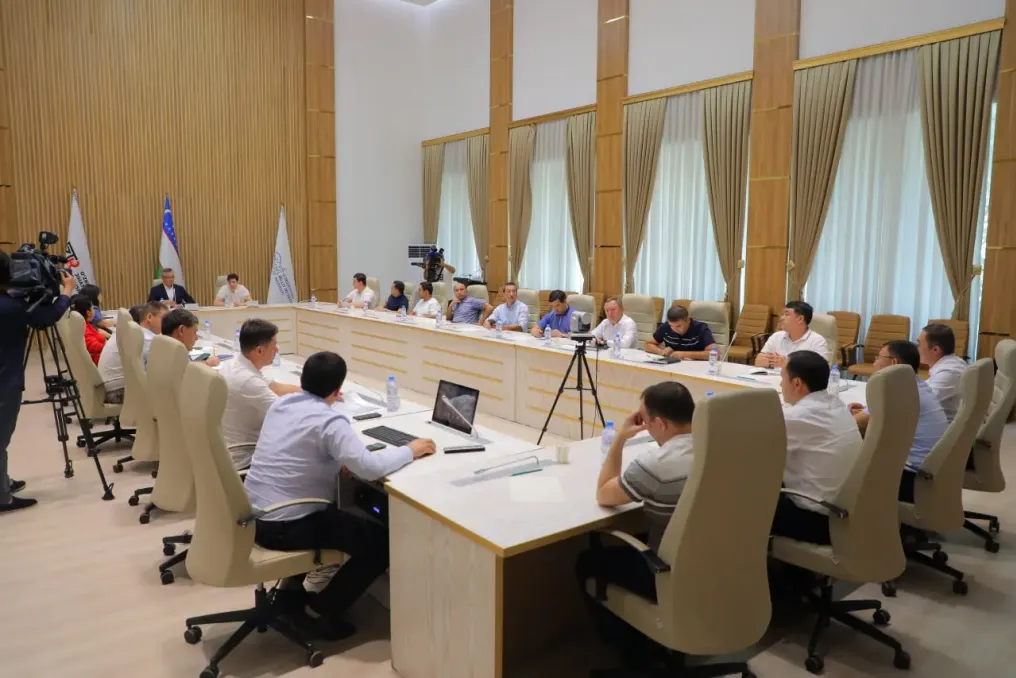
Representatives of Uzbekistan's textile companies participated in an open dialogue dedicated to international requirements for accessing foreign markets. The event was held as part of the Entrepreneur Support Club in Technical Regulation at the Agency for Technical Regulation.

The event was jointly organized by the Agency for Technical Regulation and the Agency for Light Industry Development with the participation of textile sector enterprises. Participants reviewed ways to increase the export potential of domestic producers, eliminate technical barriers, and implement international standards.

In 2025, Uzbekistan's textile exports reached 2.6 billion US dollars, with products supplied to 75 countries. The goal for 2026 is to increase export volume to 4 billion dollars.

Entrepreneurs were informed that there is no single certificate that allows textile products to be exported to any foreign market. Requirements depend on the destination country and the specific type of goods, including technical regulations, labeling, safety requirements, laboratory tests, chemical composition, and additional conditions set by foreign buyers.

Companies were advised to study the requirements of a specific market in advance. Special requirements for entering the markets of the European Union and the USA were discussed in detail. In the EU, it is important to correctly state the fiber composition and comply with labeling requirements. In the United States, enterprises must consider information on fiber content, country of origin, manufacturer data, and clothing care instructions.

Specialists explained the purpose of the international standards OEKO-TEX® STANDARD 100 and Global Organic Textile Standard (GOTS). When choosing certification, participants were recommended to focus not on the prevalence of the certificate, but on the requirements of the target market, product characteristics, and the conditions of the foreign buyer.

Significant attention was paid to laboratory testing and metrological support for production. Entrepreneurs received recommendations on testing products for composition, physical and mechanical properties, color fastness, fiber content, and the presence of harmful substances. The accuracy and reliability of measuring instruments used by manufacturing enterprises were also discussed.

Finally, specialists answered entrepreneurs' questions regarding certification, testing, labeling, the application of international standards, and overcoming technical barriers to export. Participants emphasized that the ultimate goal for enterprises should be the production of high-quality, competitive products that meet international standards and are in demand in external markets.

Popular