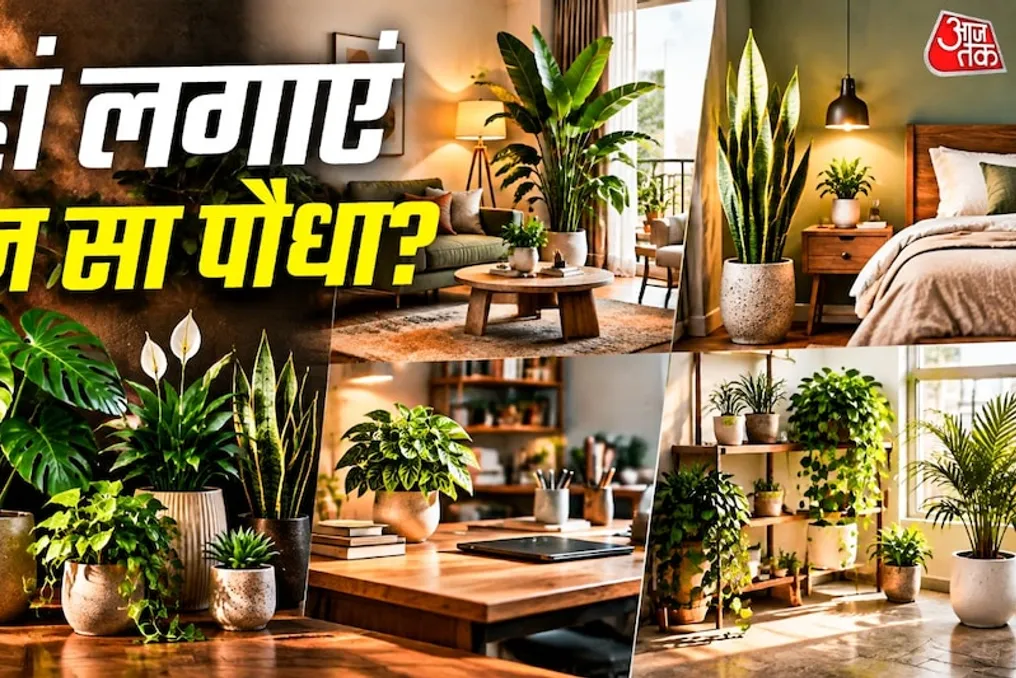
How to create a luxurious home look without expensive furniture: Recommendations for choosing houseplants
Read more
Aaj Tak
www.aajtak.in

How to create a luxurious home look without expensive furniture: Recommendations for choosing houseplants

Modern people strive to make their homes beautiful and attractive, often spending significant amounts on expensive furniture and decorative items. However, to give a home a fresh and aesthetic look, it is not always necessary to purchase expensive decorations. Sometimes one green plant is enough to transform an entire room.

When choosing a plant, it is important to consider not only its external beauty but also the conditions in which it will be located: the amount of light in that area, available space, and care possibilities. The right choice, based on these factors, will ensure the plant blooms for a long time and improve the overall beauty of the dwelling.

If you plan to add houseplants to your home, you should determine in advance which type of plant is best suited for a specific room. Different areas—from the living room and bedroom to the desk and entrance area—require the selection of different types of plants. Below is an overview of the best houseplants for different parts of the house and recommendations for their placement.

The living room is an area where activities take place throughout the day, so it is appropriate to place a plant that immediately catches the eye. If there is enough light and space in the room, 'Bird of Paradise' is an excellent option, whose large leaves give the room a tropical look.

'Monstera Deliciosa' is also well-suited for the living room due to its large, split leaves, which harmonize with modern interior design. If space is limited, 'Philodendron Burle Marx' can be considered. For a more unusual decoration, 'Alocasia Dragon Scale' can make the room attractive with its unique leaves.

Since bedrooms do not always have constant sunlight, it is preferable to choose plants that can remain lush even in low light. 'Snake Plant' is a simple choice in this regard, as it does not require frequent watering and does not take up much space.

'ZZ Plant' is also suitable for those who cannot dedicate daily care to plants; its shiny leaves add greenery to the room. 'Peace Lily' can give the bedroom a soft and beautiful look with its white flowers and green leaves. If you want to decorate a window or a high niche, a 'Spider Plant' can be placed in a hanging pot.

A desk already has a laptop, books, diaries, and other items, so a large plant can reduce free space. In such cases, small and compact types of plants are better suited.

'Peperomia' is excellent for a desk due to its small size. 'Haworthia' is also easily placed in limited space. 'Jade Plant' can decorate the desk with its small, dense leaves. If you need a plant that can be moved between different places, 'Money Plant' is a good option, as it can be grown both in soil and water.

The entrance area is the first thing noticed when entering the house, so a plant that immediately influences the decor looks good here. 'Aglaonema' is a suitable option because its leaves of various colors can make the entrance attractive.

If space allows, a tall plant such as 'Dracaena' or 'Brazilian Wood' can be placed to fill an empty corner and give it an organized look. For those who prefer something special, 'Stenflowia Erecta' can be a good choice due to its unique shape.

When placing a plant near the dining table, avoid overly large pots to prevent obstructing pathways. Small varieties, such as 'Peperomia', 'Money Plant', or any other compact houseplant, can make the dining room green without taking up much space.

If there is a window with good sunlight near the dining room, the choice of plants expands. Nevertheless, when placing a plant on the table, you must ensure that its soil or water does not get onto the dining area.

When buying a houseplant, do not focus only on its appearance. First, you must assess the level of illumination in the place where you plan to put it and understand how much sunlight reaches there during the day. Then, you should study the plant's needs for watering and soil.

If you lead an active lifestyle and cannot dedicate much time to plants, types such as 'Snake Plant', 'ZZ Plant', and 'Haworthia' are suitable, requiring minimal care. In places with good lighting, you can plant sun-loving plants.

Another critically important point is the presence of drainage holes in the pot. Without a proper place for water to drain from the soil, excess moisture can accumulate, leading to root rot of the plant.

Similar stories

Vastu Tips: Which Plants to Plant on the Balcony and in Which Direction
Read more
www.aajtak.in

Vastu Tips: Which Plants to Plant on the Balcony and in Which Direction

The balcony is an ideal place to enhance the beauty and freshness of a home, where people often place various types of plants to create a positive and joyful atmosphere. However, from the perspective of Vastu Shastra, placing plants on a balcony goes beyond simple decoration, as it directly affects the energy and well-being of the dwelling. According to Vastu experts, if you choose the right plants and place them in the correct directions, it promotes the circulation of positive energy in the house and helps eliminate many Vastu defects.

Let's look at which plants are considered most suitable for the balcony according to Vastu principles and in which directions they should be placed.

Basil (Tulsi): In Hindu tradition, basil is considered an extremely sacred and revered plant. According to Vastu rules, the basil plant should always be placed on the balcony in the north or northeast (Ishan Kon) direction. The correct placement of this plant helps destroy negative energy, maintaining harmony, peace, and positivity in the family.

Monstera (Money Plant): Monstera is considered a very effective means of maintaining financial growth and prosperity in the home. If you decide to plant it on the balcony, it is recommended to choose the southeast direction (Agni Kon). It is crucial, however, to ensure that its vine does not hang down but grows upwards, as an ascending Monstera symbolizes progress.

Lucky Bamboo: In Vastu Shastra, Lucky Bamboo is recognized as a plant that attracts luck and positivity. It is best placed in the east or north direction. You can keep it in a small pot or a clear glass bowl with water, which will help maintain an energetic atmosphere in the home.

Shami: The Shami plant, beloved by the god Shani and Lord Shiva, helps eliminate Vastu defects in the house. According to Vastu, the best place for Shami is the west or northwest part of the balcony. It is believed that this reduces family conflicts and mental stress, provided that cleanliness is maintained around the plant.

Apradjit: The Apradjit vine with its blue and beautiful flowers is considered a source of well-being in the home. Placing this plant on the balcony in the north or east direction brings very favorable results. According to Vastu beliefs, the influence of this plant improves the financial situation, and prolonged matters gradually come to an end.

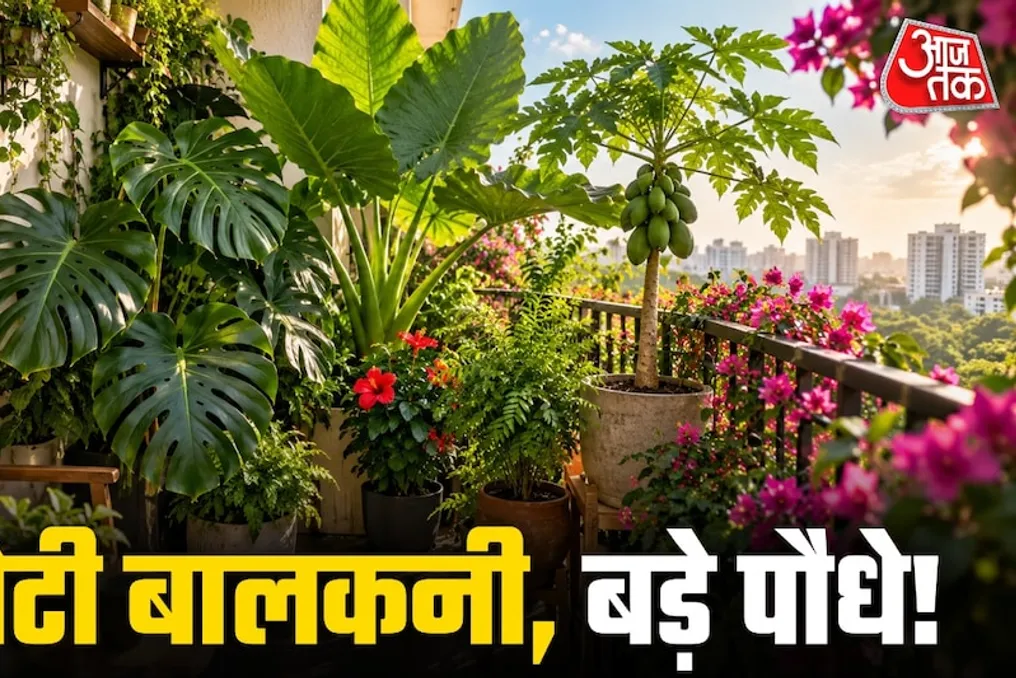
Seven large plants that can be successfully grown on a small balcony
Read more
www.aajtak.in

Seven large plants that can be successfully grown on a small balcony

There is a misconception that due to the small size of the balcony, one can only plant herbs like mint or basil. However, with careful selection, ensuring the right pot, sufficient light, and proper care, even a small loggia can become a place of lush flowering worthy of a large garden.

Some of these plants have large leaves, giving the balcony a tropical look, while others can spread out, covering entire corners in greenery. Among them is even a plant that can bear fruit right at home. Below is an overview of seven such species capable of exceeding size expectations.

Monstera: Although Monstera is often seen in small indoor pots, with proper care, it can grow significantly larger. To stimulate growth, it is recommended to use a large pot and provide support, such as moss pole. The plant thrives best in a bright location protected from intense direct sun. Over time, its large, split leaves can give the balcony a tropical appearance; it is important to regularly clean them from dust.

Elephant Ear: If you are looking for a plant that immediately attracts attention, Elephant Ear is a good choice. Under favorable conditions, its large, heart-shaped leaves can grow very large. It should be planted in a voluminous pot, maintaining constant soil moisture. This species prefers partial shade or areas where too bright sun does not fall, and its growth can accelerate in a warm and humid climate.

Bird of Paradise: Bird of Paradise plants are characterized by large leaves that can make the balcony very stylish. With proper care, it can reach a height of about five to six feet in a pot. This species requires good access to sunlight. If provided with a suitable spot and lighting, beautiful orange and blue flowers may appear over time, although full development requires patience.

Papaya: The mention of papaya in this list might be surprising, as it is usually considered that a fruiting tree of this type requires a large plot of land and an extensive garden. Nevertheless, papaya can be cultivated in large growing bags or barrels. Papaya needs good illumination, deep planting space, and soil that does not retain water. This fast-growing plant, if conditions are met, can bear fruit, turning the balcony not just into a green area, but also into a source of harvest.

Turmeric (Curry Leaf): Turmeric initially looks quite small, which often prevents people from appreciating its growth potential. When planted in a large pot and provided with sunlight, it can become impressive. Periodic pruning helps the plant become denser and bushier. As it grows, it will provide fresh leaves for cooking. Thus, it combines aesthetic value with practical kitchen use.

Marigolds (Carnation): At first glance, marigolds seem like a small flowering plant, but with proper care, they can turn into a large bushy specimen. In a large pot and with good light, it can grow up to five or six feet. Regular pruning is necessary to maintain good growth. With proper care, the plant will bloom profusely during the season, making the balcony colorful and picturesque.

Bougainvillea: If Bougainvillea is provided with sturdy support, it can spread from the pot onto the balcony railings or wall. Initially, it seems modest, but after strengthening the root system, its growth can accelerate. By providing it with a direction of growth using supports and regular pruning, it is possible for it to completely cover the balcony with flowers over time.

Popular