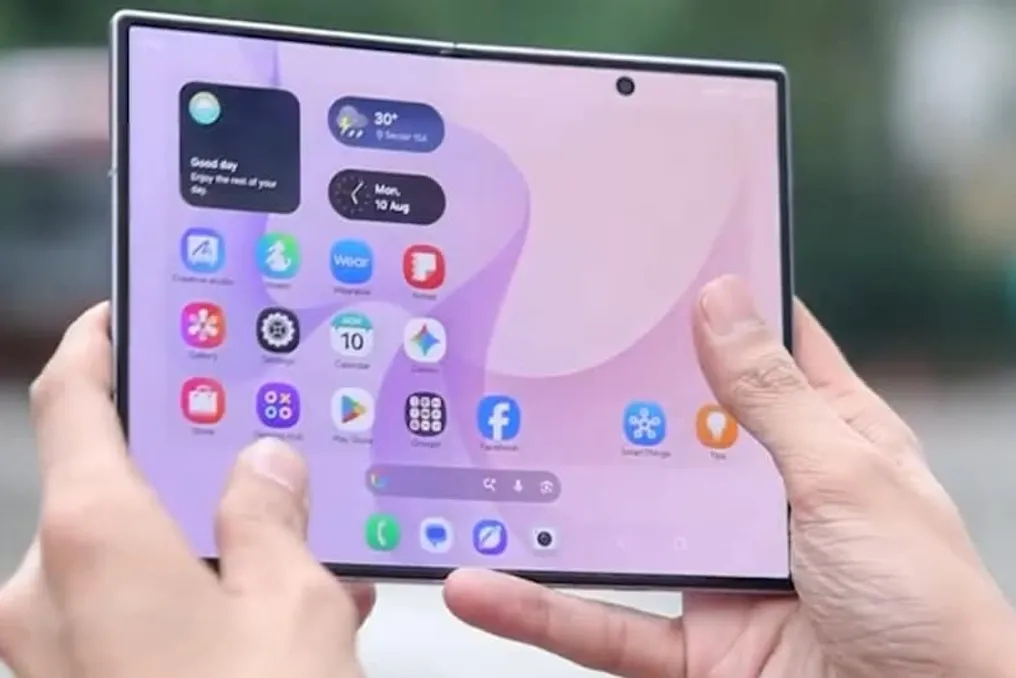
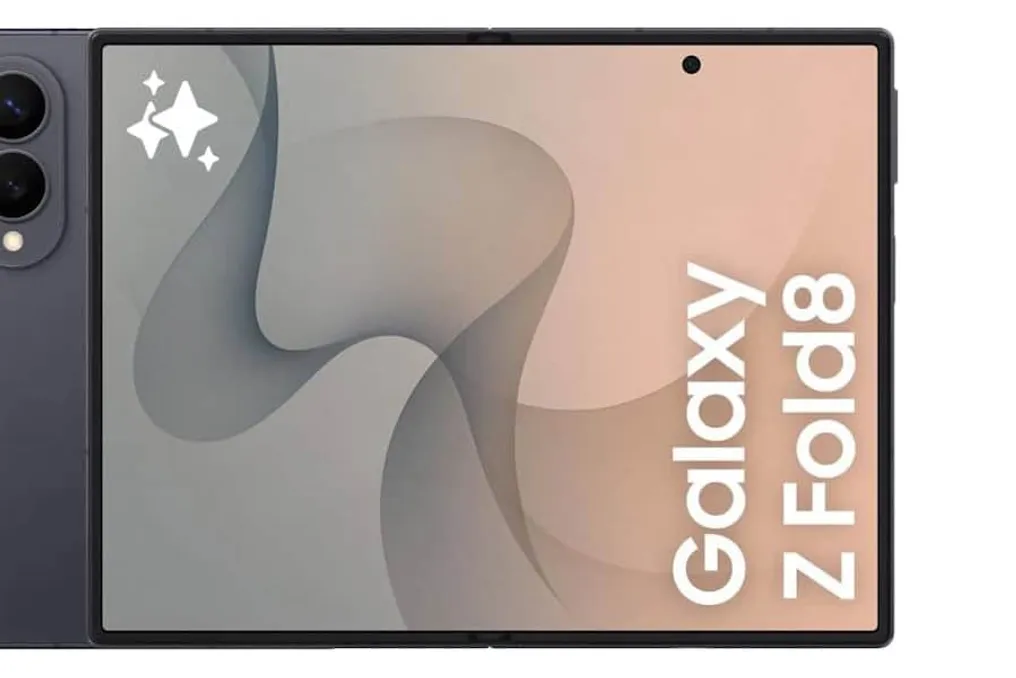
The week was notable for the foldable phone market, marked by both the launch of Apple's first flexible device and Xiaomi's anticipation with a similar model. Currently, three foldable devices are available on the market: the iPhone Duo, the Samsung Galaxy Z Fold 8, and the Xiaomi 18 Fold.
Although all share a similar design, the distinctions lie in the internal components. Olhar Digital has prepared a detailed comparison to clarify the functionalities of each of these three models.
The iPhone Duo features two screens: an external 5.4-inch screen and a foldable internal 7.6-inch screen. Both panels use OLED technology with a 120 Hz refresh rate, providing smooth animations. The internal screen has a finish that minimizes reflections and supports stylus pen usage, although the front camera occupies a visible space in the corner.
The Galaxy Z Fold 8 maintains dimensions close to its competitors, offering a 5.5-inch external display and a 7.6-inch main screen. Its screens are known for displaying vibrant colors and high brightness, aiding readability under direct sunlight. Unlike the iPhone Duo, Samsung did not include stylus support and maintained a slightly lower resolution than the Apple device.
The Xiaomi 18 Fold is slightly smaller than its rivals, featuring 5.38 inches on the exterior and 7.58 inches on the internal screen. However, it compensates with the brightest panel in the group and support for imaging technologies like Dolby Vision, ensuring excellent video viewing and good readability even in very bright environments.
The iPhone Duo is launched with iOS 27, which has been adapted for the foldable format for the first time. Its interface adjusts when opened, facilitating screen division into two apps or using the phone in a right angle on a surface for video calls and media consumption.
The Galaxy Z Fold 8 operates with Android 17, utilizing Samsung's One UI 9 interface. Due to its more consolidated presence in the market, the manufacturer offers advanced multitasking features, such as simultaneous execution of multiple applications and desktop mode when connected to an external monitor, in addition to guaranteeing seven years of system updates.
The Xiaomi 18 Fold runs HyperOS 4, a proprietary system built on Android 17. Its main focus is productivity, allowing the organization of up to four simultaneously open windows on the main screen, with good integration for users who already own other brand devices.
On the back, the iPhone Duo has two 48-megapixel cameras: a main one and an ultrawide for capturing images from wider angles. This model stands out for Apple's image processing and the ability to record 4K videos at up to 120 frames per second, although it lacks a dedicated long-range zoom lens.
For calls and selfies, the iPhone Duo includes a 12-megapixel camera on the external screen and innovates by using an under-display sensor on the flexible internal screen, resulting in uninterrupted viewing during video playback.
The Galaxy Z Fold 8 also has two rear cameras, both equipped with 50-megapixel sensors. Even without a specific telephoto lens for long-distance zoom, the setup records in 8K resolution and uses the high megapixel count of the main sensor to perform digital zooms with good sharpness.
Regarding front cameras, the Galaxy Z Fold 8 uses two 10-megapixel sensors: one located in the external screen punch-hole and another on the internal screen. This configuration ensures good definition photos and optimized colors for social media on both screens.
The Xiaomi 18 Fold differentiates itself through variety, offering three cameras on the rear. Its set includes a 200-megapixel main camera, a 50 MP ultrawide, and a dedicated 50 MP telephoto lens with 3.5x optical zoom, making it the best choice for those who want to photograph distant objects without losing detail.
For front sensors, the Xiaomi 18 Fold adopts two identical 16-megapixel cameras, one on each panel, ensuring uniformity in image quality and resolution regardless of the device's open state.
The performance of the iPhone Duo is supported by the 2-nanometer Apple A20 Pro processor, complemented by 12 GB of RAM in all its configurations. In terms of internal storage, the model caters from basic use to large capacity needs, offering options from 256 GB to 2 TB.
The Galaxy Z Fold 8 uses the Snapdragon 8 Elite Gen 5 chip, recognized as one of the fastest in the Android ecosystem. It is available with 12 GB of RAM and 256 GB or 512 GB of internal storage.
The Xiaomi 18 Fold is equipped with the 3-nanometer XRing O3 processor, developed internally by the brand. It can be purchased in versions with 12 GB or 16 GB of RAM, and storage capacities of 256 GB, 512 GB, or 1 TB.
In terms of power, the iPhone Duo has a dual-part battery totaling 5,800 mAh. The device supports fast wired charging, reaching half charge in approximately 20 minutes, in addition to offering 25W MagSafe wireless charging.
The Galaxy Z Fold 8 has the smallest battery capacity among the three, at 4,800 mAh. To compensate, its 45W wired charging reaches just over 60% in 30 minutes, and it also supports 20W wireless charging and accessory inductive charging.
The Xiaomi 18 Fold offers the largest physical autonomy in the comparison, with a 6,000 mAh battery. This model also excels in charging speeds, accepting up to 67W wired and 50W wireless power.