
How the Springboks defeated the All Blacks despite statistical deficit
Read more
IOL
iol.co.za

How the Springboks defeated the All Blacks despite statistical deficit

The victory of the Springboks over the All Blacks in the series of matches between the greatest rugby rivals represents an interesting statistical anomaly. The Springboks' triumph with a score of 3:1 demonstrates how the team managed to overcome the opponent's numerical indicators.

According to official data, the New Zealand team led South Africa in the number of touchdowns (17 against 14), made more breakthroughs (35 against 28), and was more effective in the opponent's attacking zone (3.5 points per entry into the zone versus 2.6). Furthermore, the New Zealand team's defense was significantly stronger, as they allowed only 99 tackled tackles compared to 129 by the Boks.

Nevertheless, despite lower efficiency in pure attacking power, the Springboks maintained the advantage for a remarkable 210 minutes of the entire series, whereas New Zealand spent only 77 minutes in the lead. These figures highlight how Rassie Erasmus's team used territorial control, pressure in the ruck, and game management to secure the series victory.

Discipline and Territorial Control

South Africa's territorial dominance was built on the tactical use of kicks and a high level of discipline. The Springboks made 94 kicks throughout the overall game, while New Zealand made 78. This constantly forced the All Blacks to play deep in their own half and make plays under high pressure.

Moreover, the Boks excelled in controlling contentious kicks: the All Blacks could only secure 30% of all high balls and controversial lineouts.

Penalties Received by the Team

The Boks received 35 penalties across four matches, while the All Blacks received 43. This difference in discipline suppressed New Zealand's pace, giving the home team position and opportunities to score decisive points via penalties.

The Springboks' scrum also played a huge role throughout the series, ensuring the acquisition of important penalties.

Card Difference

Notably, South Africa managed four cards across the entire series (compared to one for New Zealand), relying on a large volume of defensive work, making 585 tackles to survive periods of numerical disadvantage.

Dominance in Ruck Play and Effectiveness in Scrums

Although New Zealand won more raw rucks (51 against 43), the Springboks' pressure in the breakdown showed a much more decisive picture. South Africa lost only 2 rucks on its throw, while the All Blacks conceded 8. These eight lost rucks were critical moments that reduced New Zealand's momentum, as they often use the ruck as the main platform for attack.

The Springboks were awarded a total of 14 scrum penalties (plus one penalty try during a scrum) in the four-match series against the All Blacks. This accounts for approximately one-third of all penalties received by the All Blacks in this series.

Regarding collisions, both teams demonstrated an identical amount of meters after contact (1387 against 1388), highlighting continuous physical struggle at the start. However, as the series progressed, the Boks achieved greater success in advancing using their big runners.

Effectiveness Versus Control

The All Blacks were lethal in open space, utilizing 35 breakthroughs and excellent conversion in the red zone (3.5 points per visit to the 22-meter zone) to remain competitive. Nevertheless, the Springboks' ability to dictate the pace, limit penalties, and maintain precise game management ensured they led for almost three-quarters of the total series time.

Similar stories

Springboks demonstrate growing superiority over All Blacks in series of matches
Read more
iol.co.za

Springboks demonstrate growing superiority over All Blacks in series of matches

Springboks captain Siya Kolisi and his teammates achieved an impressive result against the All Blacks led by Russell Erasmus, further solidifying the team's dominance over their arch-rival.

The triumphant series for the Springboks, with a score of 3:1 against the All Blacks, revealed a significant gap between these two Southern Hemisphere giants. After the fourth test in the greatest rugby rivalry in Baltimore, where the world champions won 43:28 and secured their first trophy, it is becoming increasingly difficult to claim that these two teams are evenly matched.

The Boks are now operating at a different level, and even the mighty representatives of New Zealand are struggling to keep up. To win three consecutive matches against the All Blacks requires a special team, and this is exactly what the Boks did, concluding the series after a loss in the first match at Ellis Park in August. However, three dominant performances, backed by immense squad depth, allowed them to defeat their bitter rivals.

Squad depth is the defining advantage of the Springboks

What makes the defeat of the world's second-ranked team even more significant is that in the last 10 encounters, the Springboks have won eight times, while the All Blacks have managed only two victories—one in Auckland and one in Ellis Park.

Meanwhile, the Boks have dominated them, especially in the match where they crushed the team 35:7 in Twickenham, the 43:10 victory in Wellington, and the latest win in Baltimore. This indicates that the evolution of the Springboks machine has surpassed the development of the mighty black team, and they are currently dominating their competitors. It is almost unheard of for the New Zealanders to lose three consecutive matches to the same team, let alone eight out of the last ten meetings against them.

However, this is the current situation between the two sides. And the most worrying thing is that in none of the Greatest Rivalry matches were the Boks playing at their best level. Issues such as lineup changes due to injuries, uncharacteristic errors, inability to convert numerous attacks in the 22-meter zone into points, and a high number of penalties slowed down the Springboks at various times. Nevertheless, even making these mistakes, the world champions find a way to win.

This is what currently distinguishes the teams: the depth of the Boks' squad, the ability of all players to fulfill any role, and the quality of that depth. New Zealand has failed to catch up over four tests, and injuries have severely undermined them, with the loss of captain Ardie Savea in the third match likely being the most significant. South Africa has shown them how to cope and win despite various changes, and this kind of depth is currently unprecedented in world rugby. The task now is to continue moving in this direction. Erasmus has demonstrated that they can change tactics and still beat the best in the world.

A warning for the 2027 World Cup

Before the matches against the Wallabies and Italy, before they meet France and Ireland in the Nations Cup, opportunities open up for further squad experimentation from Erasmus and his management. If they manage to include players such as Paul de Villiers, Cameron Hanekom, Johan Grobbelaar, Jan-Hendrik Vessels, Morne van den Berg, Ntutuku Mchunu, Zack Porten, Ben-Jason Dixon, Ethan Hooker, and Edwill van der Merwe, it will put the Boks in an even stronger position ahead of the 2027 Rugby World Cup.

The Boks have already won the World Cup, defeated the All Blacks on home soil, dominated them in South Africa, and crushed them on neutral ground. More importantly, they did this with different combinations, different players, and under different circumstances. Perhaps this is the biggest wake-up call for the rest of the world: this Springboks team is not just beating the All Blacks—it is building sustainable dominance over them, making it a dangerous contender. Currently, the New Zealanders are chasing the world champions, and Erasmus and his management will want to maintain this state for many years to come.

The rivalry between the Springboks and All Blacks remains the greatest in rugby due to mutual respect
Read more
iol.co.za

The rivalry between the Springboks and All Blacks remains the greatest in rugby due to mutual respect

Despite the rivalry between the Springboks and the All Blacks being arguably the greatest in world rugby, respect between the players and teams is maintained even after the match concludes.

Unlike many other sporting confrontations where players might avoid interacting after the game, the opposite occurs in this rivalry. Although players fight fiercely during the 80 minutes of play, and coaches sometimes exchange sharp remarks at press conferences, the atmosphere quickly normalizes after the match ends, and both teams demonstrate mutual respect.

Erasmus and ReNNy shared a beer

This rivalry between South Africa and New Zealand illustrates the essence of the sport. The Springboks coach Rassie Erasmus and his colleague from the All Blacks, Dave Rennie, although they may have tactical disagreements, set these differences aside after the final whistle and media duties.

These two coaches have repeatedly met over a pint before and after various series matches, serving as a reminder that their confrontation is based on respect, not hatred. Erasmus mentioned that they drank beer after the match and planned to meet in Cape Town.

Dave Rennie confirmed that they shared a beer immediately after the game, despite verbal sparring over the score.

This friendly relationship extends to the players. Springboks captain Siya Kolisi and All Blacks captain Ardie Savea have developed a deep friendship that goes beyond rugby. They have attended church together, and Savea's children show particular affection for the Springboks captain, calling him 'Uncle Siya.'

Kolisi emphasized that when he plays against a friend, he shows respect by giving everything he can on the field, which he believes is very important. This says a lot about what lies beneath what could be considered the most intense rivalry in international rugby.

For 80 minutes, Kolisi and Savea lead their teams into battle, ready to risk their bodies for victory. Although Kolisi delivered a strong hit to Savea in Cape Town, Savea admitted feeling it, but after the battle, respect remains.

Springboks and All Blacks share a flight

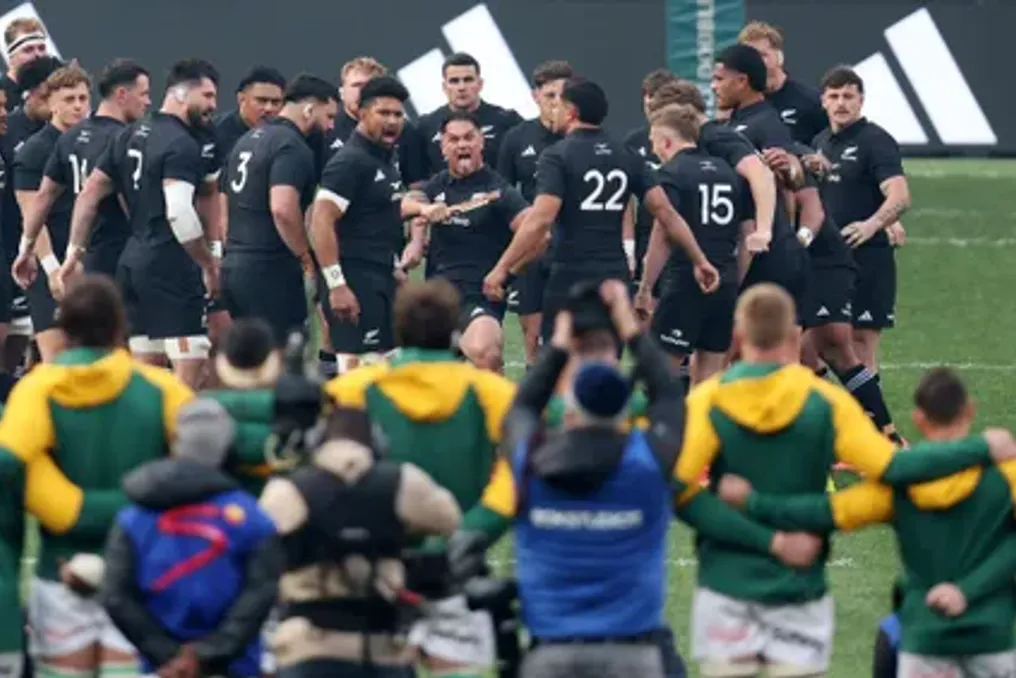
The rivalry does not need to become personal. On the contrary, the mutual respect between the players makes this spectacle special. This was demonstrated in an unusual way before the fourth and final match in Baltimore, when the Springboks and All Blacks traveled together on a charter flight from Johannesburg to Washington.

Most of the journey passed in silence, according to eighth player Jasper Wiese, but the mere fact of the joint long journey was symbolic. The silence was understandable, as one team had won while the other had lost. Despite harsh words, powerful hits, tactical battles, and continuous competition, it is still rugby, and that is why the Springboks and All Blacks rivalry will go down in history as perhaps the greatest contest on the planet outside the Rugby World Cup. Because the Boks and the All Blacks might want to destroy each other for 80 minutes, running the oval ball across the field, but when it is over, they can still share a beer, eat together, attend church, and call each other friends.

Springboks win first tournament of greatest rugby rivalry, Erasmus downplays gap with All Blacks
Read more
iol.co.za

Springboks win first tournament of greatest rugby rivalry, Erasmus downplays gap with All Blacks

Springboks coach Rassie Erasmus expressed satisfaction after his team defeated the All Blacks in Baltimore on Saturday. Despite the Springboks starting with a 0-1 deficit, they managed to win the first four-match 'Greatest Rugby Rivalry' tournament with a score of 3-1 after a tense final in Baltimore.

Greatest Rugby Rivalry

The Springboks secured the series with a convincing, albeit error-prone, victory of 43-28 over the All Blacks at M&T Bank Stadium on Saturday. This win was an impressive turnaround after the visitors shocked the world champions in the first match at Ellis Park Stadium.

The Boks team responded to the defeat by winning the next three games in Cape Town, Soweto, and Baltimore, thereby claiming the title of the first series champion. Although the trophy was won in the US with a very convincing triumph, Erasmus quickly downplayed the final score, discussing the difference between the two teams.

Responding to the question of whether the 3-1 victory makes the team better against opponents, Erasmus noted: 'I wouldn't say we are the best team. At sixty minutes I thought we were still balanced.' He added that the victory was achieved due to more points on the board, considering this probably the most important thing in most games. He emphasized that until the last eleven minutes he was not sure of the victory.

Although the Springboks controlled the game at various times, the All Blacks did not give up and continued to apply pressure until the final whistle. The converted touchdown by substitute player Bioden Barrett late in the match allowed the Kiwis to maintain a more respectable score, demonstrating their fight.

The Springboks' dominance in the forward play, as well as skillful second-row attacks in the second half, ensured constant scoring. The decisive moment came in the last 10 minutes when winger Kurt-Lee Arendse broke through the defense to score the crucial touchdown. Following this, substitute forward Cameron Hanekom scored the sixth touchdown for the Boks.

Commenting on the game, one player noted: 'When Kurt-Lee scored, it was a turning point. He started to outrun the guys. He admitted that he was experiencing a mental and physical slump after concussions. The game was still balanced then. Sometimes someone like Cheslin Kolbe changes the game, today the whole team did it, but I think Kurt-Lee did something special.'

Popular