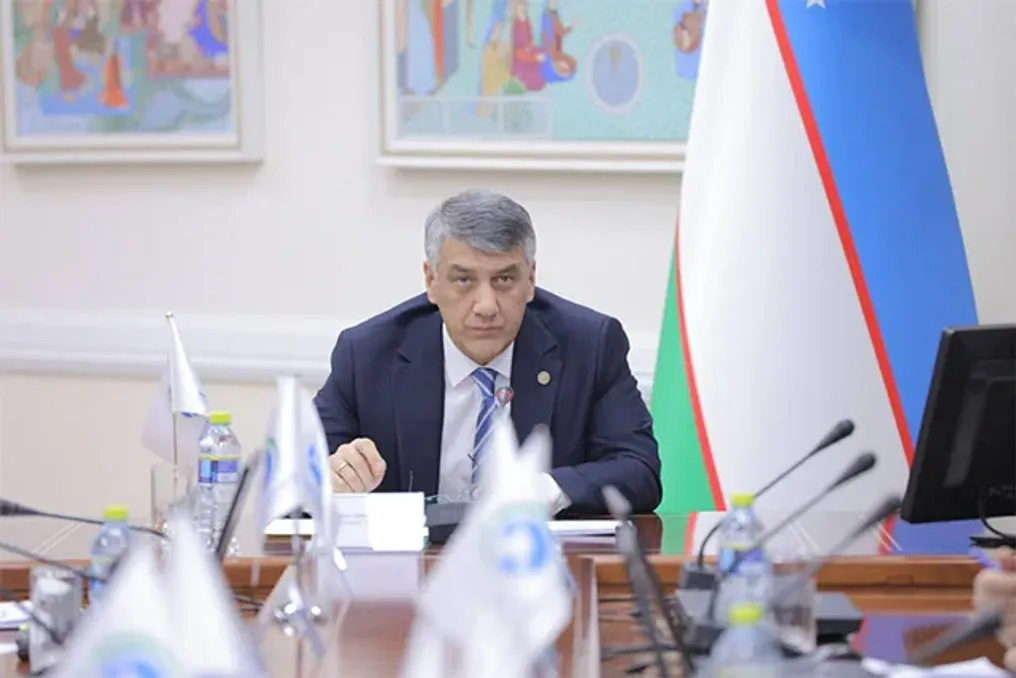
Alisher Kadyrov, chairman of the Milliy Tiklanish party, criticized the methods used by the Cultural Agency of Uzbekistan in preserving historical sites. He questioned the necessity of preserving one of the buildings in the center of Tashkent, calling it the 'house of a Russian artist,' and stated the need for a differentiated approach to allocating state resources among cultural heritage objects.
Kadyrov emphasized that when determining priorities, the historical and cultural significance must be taken into account. As an example, he compared the building under consideration with the Shah-i-Zinda complex and noted that the Agency should prioritize national cultural heritage.
Response from the Cultural Heritage Agency
The Cultural Agency objected, clarifying that the issue concerns House No. 7 on Babur Street in Tashkent, which is under state protection. The Agency insists that the value of objects must be determined based on legislation, scientific expertise, as well as their historical and cultural significance.
According to the Agency's data, House No. 7 was built between 1935 and 1936 according to the design of architect Alexey Shchusev. The Agency also reported that scientists who contributed to the development of science and culture in Uzbekistan lived and worked there, including academicians Tashmukhmmed Kari-Niyazov and Vasily Shishkin, as well as professors Rahim Atajanov and Nathan Mallayev.
Elmurad Nazimov, the Agency's first deputy director, stated that it is incorrect to link the value of a historical building to the nationality of the person associated with it. In his opinion, the history of Tashkent was shaped by representatives of different peoples, and dividing historical places into 'ours' and 'theirs' based on nationality could shift the professional discussion about heritage preservation towards national confrontation.
History of the Dispute over House No. 7
The conflict surrounding House No. 7 began back in 2018. At that time, the Tashkent city administration decided to allocate a land plot to the company Universal Packing Masters for demolishing existing structures and constructing a multi-story residential complex. The Agency explained that this decision was made before the building received official status as a cultural heritage object.
In 2020, the Agency's Scientific and Expert Council included the house in the National Register of Material Cultural Heritage Objects. In 2021, the proposal to exclude the building from the register was rejected. In August 2026, the issue of excluding the house from the National Register was raised again, but the Agency deemed such a step inappropriate.
On September 8, the Agency appealed to the Prosecutor General's Office to conduct a legal assessment of the circumstances of the Tashkent city administration's 2018 decision and take appropriate measures if violations were found.
Further Actions and Scope of the Problem
Following the Agency's statement, Kadyrov published a response on his Telegram channel. He announced that his party intends to use its parliamentary powers to obtain answers regarding the Agency's activities and the use of budget funds. The politician also pointed to problems he believes exist concerning other cultural heritage sites, such as Sarmissoy, Shah-i-Zinda, and Mizdahan. He raised questions about the condition of these sites, the expenses for their preservation, and the Agency's actions toward state bodies.
Kadyrov added that issues concerning the Agency have been raised since last year and stressed the need to hear the Agency's report in parliament. Thus, the dispute over House No. 7 on Babur Street has gone beyond the issue of a specific building, touching upon approaches to establishing priorities in cultural heritage preservation, as well as the use of state funds.