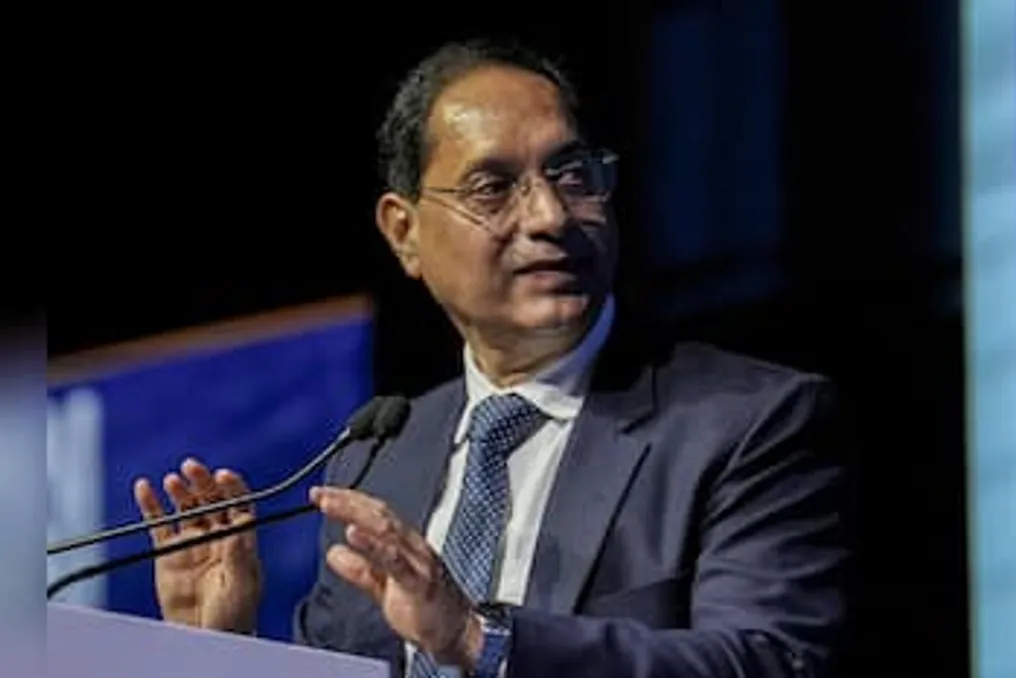
SEBI Chairman Tuhin Kanta Pandey stated on Thursday that the regulator will examine the issues raised by securities brokers concerning the new Merchant Discount Rate (MDR) for large fund transfers via the Unified Payments Interface (UPI).
The MDR rate for capital market operations is set at 0.02 percent of the transaction amount, with a cap of 300 rupees for payments to mutual funds, securities, brokers, dealers, and investment advisors. This MDR system will become effective from October 15.
However, recurring standing instructions or mandates through UPI, such as Systematic Investment Plans (SIPs) in mutual funds, will not be subject to MDR charges.
Review of Broker Concerns
Pandey noted that there are important aspects that will be reviewed to find ways to alleviate these concerns. Several brokers have expressed worry about the MDR charges because, under SEBI's mandate, brokers are required to periodically return unused client funds, known as client float, back to clients. SEBI introduced this rule to prevent the misuse of funds by brokers.
Sources added that broker associations have sent letters to the market regulator, and discussions are currently underway regarding the rising operational costs. Uttam Bagri, Managing Director of BCB Brokerage, stated that treating brokers as sellers for MDR purposes is fundamentally flawed. He emphasized that brokers are primarily transit structures where client funds enter clearing corporations to ensure margin and settlements. Consequently, levying MDR on the entire flow of funds, rather than on the actual income of the broker, which is the brokerage commission, will make UPI excessively expensive and practically unsuitable for the brokerage industry.
Other brokers also pointed out that this levy will become a permanent operating expense, amounting to millions, without generating any trades or revenue for the broker. Nitin Kamath, founder of the discount brokerage platform Zerodha, wrote on social media that the regulation essentially forces money movement every month or quarter, and the broker may end up bearing the cost when the money is returned, without receiving any additional gain or income.
Payment processing partners for such brokers indicate that some brokers might prefer using internet banking over UPI, given that internet banking transactions have a fixed fee of 8–12 rupees agreed upon directly with banks. In comparison, an MDR of 0.02 percent for a UPI transaction of 1 lakh would result in a fee of 20 rupees for the broker. For capital market payments, the UPI limit per transaction is set at 5 lakhs, and the daily limit is set at 10 lakhs.
Other Regulatory Priorities
Speaking at the summit, the SEBI chairman also announced that the regulator will focus on expanding participation in Real Estate Investment Trusts (REITs) and Infrastructure Investment Trusts (InvITs), deepening the corporate bond market, and continuing the development of the Alternative Investment Fund (AIF) structure. He highlighted the potential to attract a larger volume of domestic institutional capital, long-term global investors, and retail participants into REITs and InvITs. Furthermore, the corporate bond market requires a broader base of issuers, greater participation, and better secondary market liquidity.
Regarding AIFs, SEBI proposed revising the accredited investor structure to broaden access for qualified investors, increase the pool of domestic and foreign venture capital, and strengthen the market ecosystem. Pandey also identified strengthening municipal financing as a priority task, as cities are expected to require more sophisticated financing mechanisms. He stressed that building institutional capacity, improving governance, and enhancing financial reporting will be crucial for boosting investor confidence and transforming municipal bonds into a more significant source of funding for urban infrastructure.