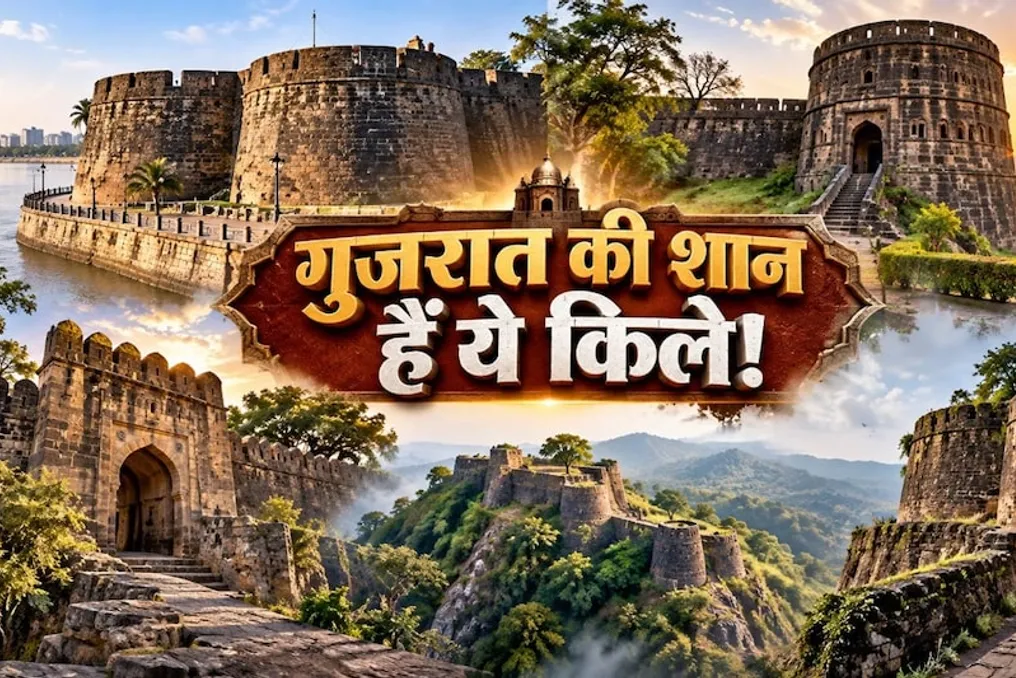
10 Famous Forts of Gujarat: Discovering the Royal History of the Region
Read more
Aaj Tak
www.aajtak.in

10 Famous Forts of Gujarat: Discovering the Royal History of the Region

Gujarat is known not only for its seas, temples, and picturesque cities but also for its rich heritage of historical forts. These fortifications once served as symbols of the power of local rulers. Today, the walls, gates, towers, and surrounding landscapes of these forts allow tourists to get closer to history. If you enjoy exploring historical sites, you should include these forts in your travel itinerary through Gujarat.

Famous Forts of Gujarat:

1. Uparkot Fort, Junagadh

Uparkot Fort in Junagadh is a prominent heritage site of Gujarat, with a history estimated at approximately 2000 years. Inside, visitors can see an ancient badgir, secret caves, a mosque, and famous cannons. The massive gates, huge walls, and ancient atmosphere make this place a must-visit for history lovers and travelers.

2. Pavagadh Fort

Pavagadh Fort is located on a hill in the Panchmahal region. This area is renowned for its religious and historical significance. The road to the fort and the surrounding natural scenery lend the trip a special charm. The Champaner-Pavagadh Archaeological Park, located here, is of particular interest to history enthusiasts.

3. Bhujia Fort, Bhuj

Bhujia Fort, situated on Bhujia Hill in Kachchh, is connected to the city's history. It offers a beautiful view of Bhuj itself. The atmosphere around the fort will particularly appeal to travelers who prefer strolling through historical sites in a calm and open setting.

4. Lakhpat Fort

Lakhpat Fort in Kachchh, near the border of India and Pakistan, is known for its old fortified town. The thick stone walls still speak of the past. Around the fort, one can see old religious structures and abandoned settlements.

5. Bhadra Fort, Ahmedabad

Bhadra Fort, located on Court Road in the old city of Ahmedabad, is part of the historical heritage. It was built by Ahmad Shah in the 15th century. Near the fort are places such as the Bhadra Kali temple and the historic market. It can be seen during a tour of old Ahmedabad; it is open to visitors from 8:00 AM to 5:00 PM.

6. Surat Fort

Surat Fort, located on the banks of the Tapi River, represents an ideal vintage historical location. Built during the Mughal era, this fort served as the main defense of the city against external attacks. If you want to experience royal history and enjoy the view of the Surat River, this fort should be on your must-visit list.

7. Dabhoi Fort

Dabhoi Fort in Vadodara is famous for its impressive architectural style and intricately decorated gates. Its four main gates are its distinguishing feature and impress both photography lovers and historians. The fine carving on the stones and walls recreates an ancient atmosphere worth exploring during a trip through Gujarat.

8. Idar Fort

Idar Fort, hidden among the hills and rocks of Sabarkantha, is an ideal secluded spot. If you are traveling alone or prefer quiet exploration, you will be drawn to the magnificent natural views and ancient ruins. To have an unusual and less crowded experience during a trip through Gujarat, be sure to include it in your list.

9. Vantli Fort

Vantli in Junagadh is a wonderful historic town where you can see old forts and defensive structures. If you like the atmosphere of old buildings and want to feel the history from within, it is worth visiting this less obvious place during a trip to Junagadh.

10. Dhrangadhra Fort

Dhrangadhra Fort in Surendranagar is a magnificent place associated with the royal past and the legacy of the dynasties of Gujarat. Its old architecture and fortifications transport visitors directly into the era of the great kings of Gujarat. If you are interested in history and love exploring unique architecture, do not miss this lesser-known attraction.
Similar stories

400-year-old temple in Bihar linked to the ban on entering the forest after sunset inspired film featuring Siddharth and Tamanna
Read more
www.aajtak.in

400-year-old temple in Bihar linked to the ban on entering the forest after sunset inspired film featuring Siddharth and Tamanna

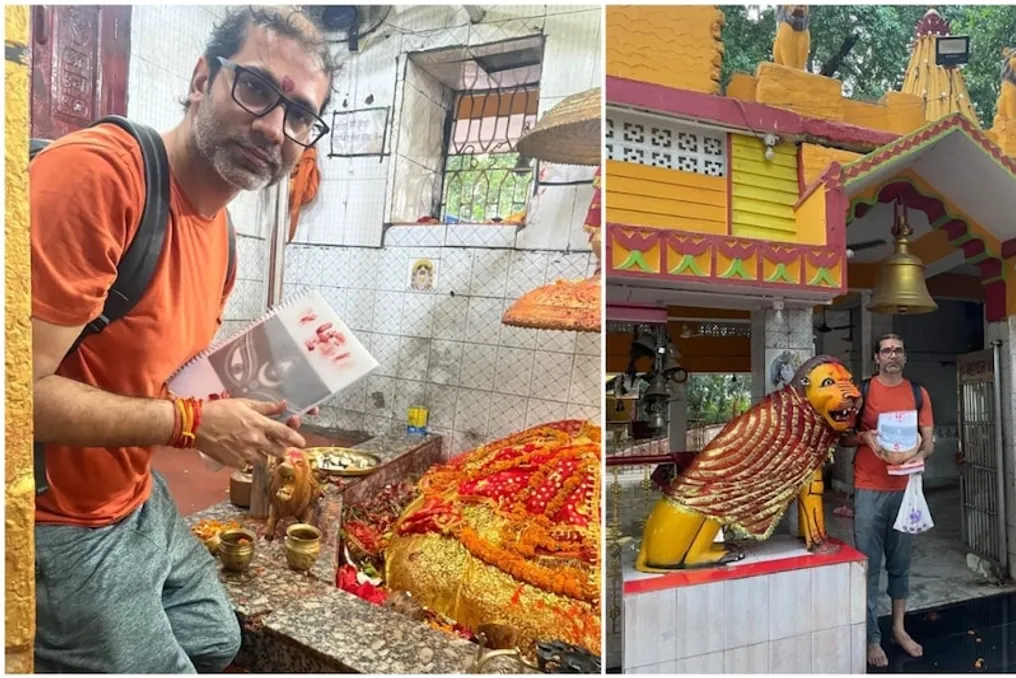
India has numerous temples whose stories are passed down through generations. Some are known for their grandeur, while others have gained fame through mysterious folk legends. In Bihar, there is a similar temple, estimated to be around 400 years old. This sanctuary, located in the middle of a dense forest, is revered as the abode of Maa Van Devi.

Interestingly, the history of this temple has reached Hollywood. The plot of the upcoming film starring Siddharth Malhotra and Tamannaah Bhatia, titled 'The Vvaan: Force of the Forrest,' is based on legends associated with this very Van Devi temple. The filmmakers stated that local legends and the temple itself played a significant role in shaping the narrative.

Location of Maa Van Devi Temple in Bihar

The Maa Van Devi temple is presumed to be near Bihata in Bihar. It is situated approximately 35 kilometers west of Patna, close to the borders of the villages of Amhara, Ragopur, and Kanchapur. This religious site, being small and lacking high spires, attracts attention due to its traditions and surrounding rural landscape rather than its monumentality.

Worship Features: Worshiping the Stone, Not the Statue

The most distinctive feature of the Maa Van Devi temple is its method of worship. Here, the deity is revered not in the form of a traditional sculpture, but as a sacred stone lingam. According to local beliefs, Van Devi is considered the protector of the forests. This belief, passed down through generations among local residents, states that the goddess protects the forest and the people living nearby, which distinguishes this temple from others.

Reason for the Ban on Entering the Forest After Sunset

One of the most intriguing aspects associated with Maa Van Devi is an ancient tradition concerning the forest. According to local tales, mysterious events used to occur in this forest, causing concern among the surrounding residents. Because of this, the tradition was formed to prohibit people from approaching the forest after dusk. Today, this information is preserved in folklore, although scientific confirmation of these events has not been provided.

History of the Temple's Founding and the Figure of Vidyanand Mishra

There is also an interesting folk legend about the founding of the temple. It is narrated that Vidyanand Mishra, who lived in Ragopur, was a devout follower of Maa Vindhyavasini. He regularly made pilgrimages to Vindhyachal to worship the goddess. However, as he aged, it became increasingly difficult for him to undertake such long journeys, but his devotion remained unwavering.

According to the legend, one day the goddess appeared to him in a dream and instructed him to take a part of her sacred lingam and install it in the local forest. After this, he placed this sacred stone near the border of Amhara, Ragopur, and Kanchapur. At that time, the entire area was surrounded by a dense forest, and it is here that the Van Devi temple subsequently developed.

How the Temple's History Relates to the Siddharth-Tamanna Film

A question arises as to how the history of such an old and locally known temple in Bihar ended up in cinema. The authors and directors of the film 'The Vvaan: Force of the Forrest,' Dipak Kumar Mishra and Arunab Kumar, indicated that they drew inspiration for the plot from the local legends associated with the temple. Arunab Kumar noted that the legends of the temple and the mystical traditions related to the forest had a strong influence on him.

Thus, the film's plot will reflect not just fictional horror or mystery, but also the imprint of local Bihari faith. Folk legends and cinema have found an unexpected point of convergence. Although many stories related to the Maa Van Devi temple are based more on oral traditions passed down through generations than on historical documents, this story, claimed to be about 400 years old, has attracted wide audience attention thanks to the film 'The Vvaan,' bringing a local legend to the screen.

Popular