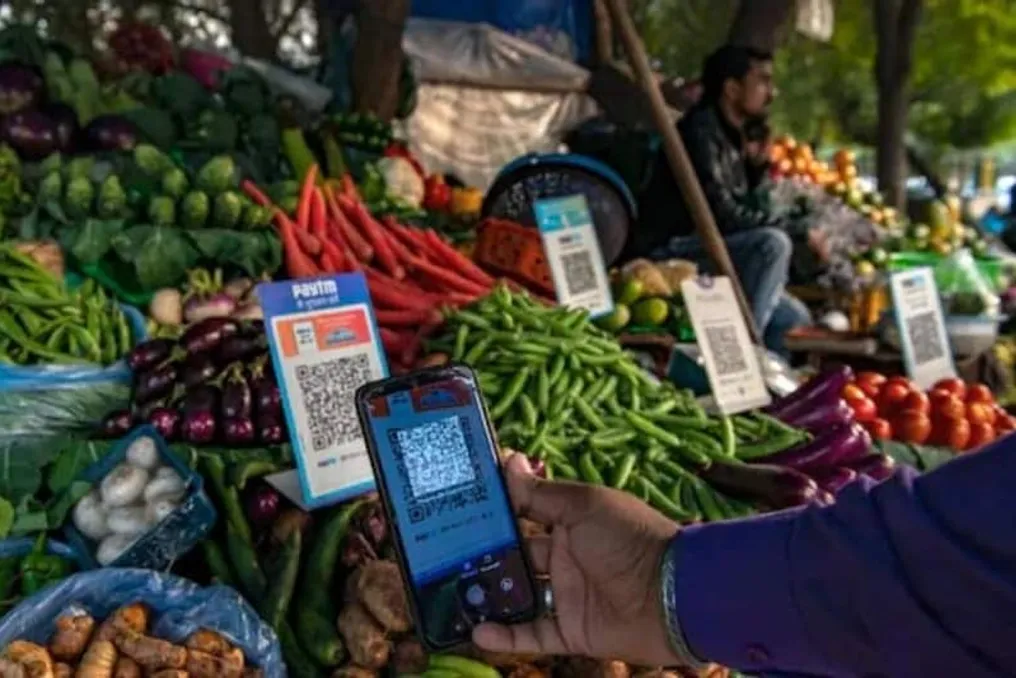
Since the central government announced the introduction of a Merchant Discount Rate (MDR) of 0.4% for UPI transactions exceeding 2000 rupees, concern has grown among traders, entrepreneurs, and ordinary citizens. Many believe that the entire burden of this levy will ultimately fall on consumers.
Meanwhile, shop owners and traders fear that their profits will decrease or they might face losses. This issue has caused unrest in political circles. However, the government's argumentation differs from these concerns.
According to an NPCI circular, this levy will affect only 4% of certain traders, while 96% of small businesses will remain unaffected. The MDR will be charged to these four percent of sellers for transactions over 2000 rupees, with a maximum amount of 300 rupees. Entrepreneurs earning up to 100,000 rupees per month and traders conducting transactions below 2000 rupees will not feel this impact.
Despite the government's arguments, people remain worried about the new UPI rules. In this regard, the Aajtak team conducted conversations with traders, shop owners, and customers in Noida, Delhi, and some smaller towns to gather their opinions on this levy.
Kishan noted that the burden of the UPI levy entirely depends on the seller. He emphasized that although the government claims that ordinary people do not have to pay a penny extra, the question arises: if a buyer takes goods worth 2500 rupees, the seller might demand cash payment or refuse to accept the UPI payment, demanding an additional fee. In such a case, he would have to deal with it, as the government would not participate in resolving disputes with the seller.
Shagun expressed the opinion that not only traders but also consumers will suffer from this levy. He suggested that if traders' expenses increase, they will eventually pass them on to customers. If they cannot do this directly, they will find some reason to charge consumers. Another young man, Amit, compared this to the introduction of GST, where the burden fell on consumers, and believes that traders are imposing this levy on the public. Young people like Jatin and Kashish also believe that this levy will ultimately fall on the population.
Traders and shop owners in Noida also raised questions regarding the UPI levy. They argue that even if this levy is not charged directly to the customer, it can affect business margins and the overall cost of doing business.
Shop owner Vikas Jain commented on the government's new rules regarding UPI payments, calling the move unfair to both traders and customers amid inflation and competition. Jain believes that this decision could pose a threat to businesses, as there are already too many government taxes. Furthermore, he thinks that this new levy might encourage customers to revert to cash transactions, leading to damage instead of stimulating digital payments.
According to Arif Ali, who works in interior design, introducing a levy on online payments over 2000 rupees is misguided. Since they already pay taxes, he considers it unjustified to levy this charge for every amount over 2000 rupees. Nowadays, most people use digital payments due to the decline in cash circulation. This decision may force traders to reduce digital payment options to avoid frequent bill deductions, which will not promote digital payments and will not benefit customers.
Rajesh Ojha, a trader of equipment and supplies from Noida, stated that the decision to levy a charge on large payments is unwise. He noted that nowadays most people prefer cashless transactions and find it difficult to keep cash notes of 10, 20, or 50 rupees, and having less than 500 rupees in cash has become hard. Traders and entrepreneurs now depend on mobile payments like Paytm, where a levy of up to 0.4% becomes burdensome. This can reduce traders' profits. He added that if this levy is introduced, sellers will pass this burden onto customers.
A fixed MDR of 5 rupees is set at petrol pumps for UPI payments exceeding 2000 rupees. Dealers note that their profit per liter is limited, so the expense of 5 rupees for each large UPI payment might be unbearable. Some dealers have stated their intention to accept cash instead of UPI payments over 2000 rupees if they are not given a discount.
Accountant Kishlay Anand believes that small entrepreneurs fear that new payment expenses will affect their profits. Some trade organizations are concerned that cash payments may increase instead of large UPI payments. Manish Sharma, Deputy Head of the Youth Trade Association of Uttar Pradesh, stated that the profit of small traders is already very low, and this decision will directly affect earnings and increase costs. Sharma from Anshika Electricals blamed that accepting UPI payments has become a habit, but if an additional fee is charged for every large payment, some sellers may start preferring cash.
What are the concerns of traders in Alwara? Traders from Alwara reported that about 90% of transactions are now done online, and the average large payment exceeds 2000 rupees. Consequently, due to this new merchant discount rate...