Memories of old clothes and jewelry often evoke strong feelings. In the town of Chatsworth, women arriving from afar could often be seen exchanging porcelain dogs, pitchers, and swans for unwanted clothing. They were situated on a street corner, usually not far from the main road, where they displayed their goods, advertising them with voices reminiscent of a church choir.
The names of these women were never ascertained; to everyone, they were simply 'Mama.' Although this seemed respectful at first glance, it also reflected the crude anonymity bred by colonialism and apartheid, recalling dark times when white people derogatorily called all Indians from Durban 'Mary' and 'Sammy.'
However, my talkative mother tried to bridge this gap. Latuchkamma Alimal Naidu, who grew up on a farm in Hillary and lived at 2 Belfast Lane, near Arundel Road, possessed an amazing gift for speaking all Indian languages, from Urdu to Bollywood. As for African languages, she only knew isiZulu and avoided the awkward jargon of 'Fanagalo.' Her vocabulary, accent, and intonation allowed her to appear as a rural Zulu woman.
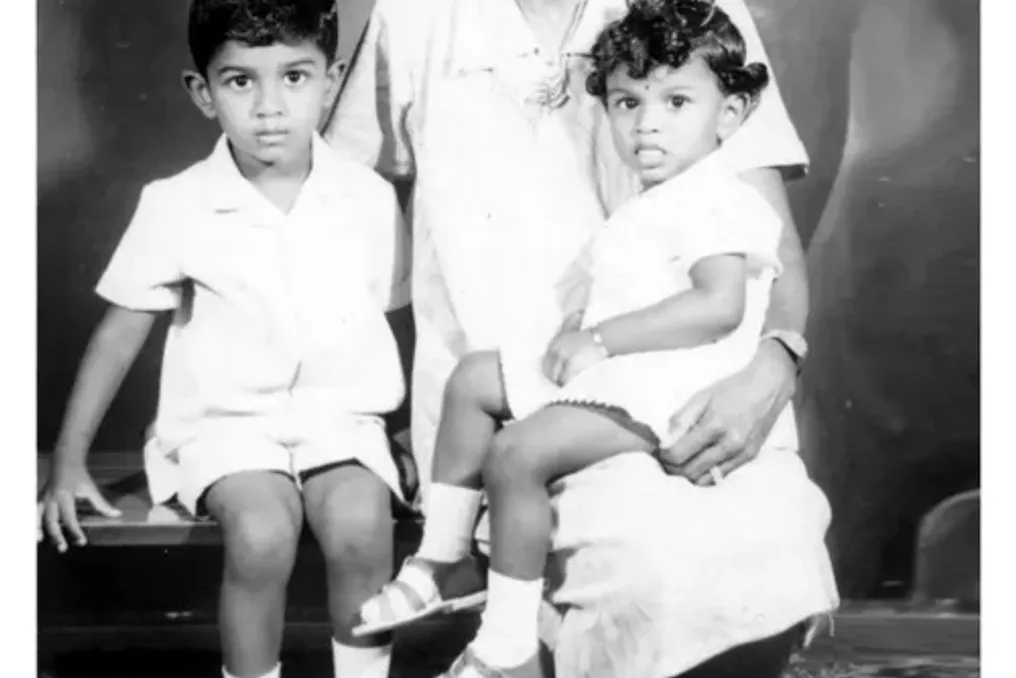
As the eldest son, whom my younger siblings called the 'golden child,' I accompanied my mother everywhere. We often took the bus into town. I remember the shouting conductors in their Town Talk or pale-white Pointer shirts, whose overalls hung low from the weight of coins stuffed in the front and back pockets. I would ask her, 'What is WEMA, Mama?' and 'And yours, Happy Valley and eThekwini?' She gave me expert lessons in geography, linguistics, and history right there on the seat.
When we arrived at Grey Street and the bus station opposite Patel's shop, bandits and drivers greeted us by tipping their hats. My mother dressed in elegant dresses and low-heeled shoes that looked like they belonged on London's Sloane Square. She stood out in the crowd. I would stop to admire the Chevrolet Fleetline, Ford Fairlane, and Valiant parked nearby, transporting passengers long distances, while their street vendors shouted: 'eMgungundlovu, Dukuza, Shepstone...'. After several more lessons, she would tell me, 'Let's go.'
Looking at the men in custom-tailored wool suits and cigarette holders, I felt like stopping to fully experience what it meant to be in the 'city.' But a sharp tug on my thin sleeve made me move on. 'Don't look. Those are the bandits—Dushens, Salots, Red Leagues.'
Over time, I met the TDK—the children of the Dushens from the city—when we visited my aunt in Himalaya Flats on the corner of Old Dutch and Centenary Road, near Warwick Avenue. My aunt was an amazing woman who wore her hair up like Audrey Hepburn, applied bright lipstick, and had dimples as deep as the Blyde River canyon. The TDK helped my mother carry shopping bags to my aunt's apartment and run errands, such as picking up a bag of sweet cookies from the cafe downstairs. At other times, they could disarm a defiant cadre from neck to ankle with a single swing of an Okapi hunting knife. I also heard legends of Bibi Salot, who wore a pistol with a pearl handle in her stocking and once shot a man under a table.
As we returned to the Blue Flame Gains bus sanctuary on Higginson Highway and Unit 3, I left behind the excitement associated with the bandits. Later, playing dress-up in my father's clothes, I could never replicate the image of those men leaning on lampposts on Grey Street.
In our world, the typical path involved black trousers, a white shirt, and a bow tie for working as a waiter. If you were lucky, 'connections' could secure work at a sewing or shoe factory. Getting a job in a bank, even as a clerk, was considered the highest achievement. In our small pond, imagination did not extend to obtaining degrees or becoming university professors.
All of this changed suddenly when Jeffrey from the pink house across the street enrolled in medical college, and Charlie Sigapragasen from the next corner began studying to be a teacher. They created new aspirations. The parental motto was: 'Study hard, and you can become like those boys.' Father regularly repeated: 'Read, and you can become like the eloquent orator of the British Empire, the venerable Sir V. S. Sastri.'
Despite his deep political consciousness, which encompassed communism and Black Consciousness, the irony of colonialism escaped him at that moment. In Sastri, he saw only an elegant, highly educated Indian in a well-tailored suit. My father's old suits came in handy when my mother needed something to exchange for porcelain ornaments. When it became clear that the woman's isiZulu was not the most basic, my mother asked one of the vendors, 'Where are you from, Ma?' The answer was: 'Mankweng.' For the first time, the place name and language stumped my mother. The location remained in my memory, as did the registration number on their large yellow Ford F-250: LEB, if I recall correctly. Today, as vintage is fashionable, I regret not saving some wide bell-bottom trousers from Bronson's from my father instead of the ornaments left by my mother in her will.