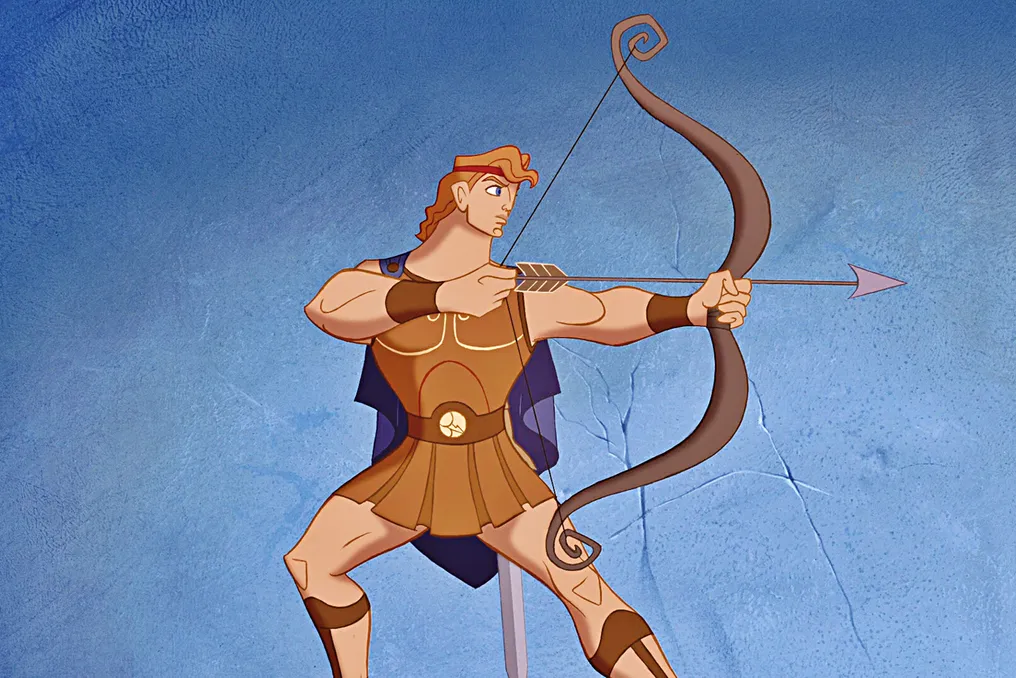
Greco-Roman mythology presents the remarkable story of Hercules, a hero famous for his extraordinary strength. Being the son of Zeus, the leader of the gods, and a mortal woman, his birth provoked the fury of Hera, Zeus's official wife. From an early age, Hercules displayed immense strength, subduing the two serpents sent by Hera through strangulation.
Hera's persecution persisted, leading Hercules to a state of madness, which culminated in the tragic loss of his wife and children. Seeking redemption and direction, the hero turned to the Oracle of Delphi. This oracle determined that he should serve Eurystheus, king of the city of Mycenae, who then imposed the famous twelve labors.
According to historian Renata Beleboni from Unicamp, the twelve labors were intended to allow Hercules to redeem himself for the murders committed and, additionally, elevate his status to divine at the end of his journey.
The Twelve Tasks Required Strength, Courage, and Intelligence
The twelve missions demanded superior attributes of strength, bravery, and shrewdness. Among them are highlighted:
- Nemean Lion: A colossal and almost indestructible lion ravaged the area of Nemea, near Mycenae. Hercules killed it by strangulation and used its skin as clothing.
- Lernaean Hydra: In the city of Lerna, there lived a nine-headed serpent, one of which was immortal. Hercules cut off eight heads, and his nephew, Iolaus, cauterized the wounds to prevent new sprouts. The eternal head was buried. By dipping his arrows in the Hydra's blood, the hero made them poisonous.
- Erimanthian Boar: A fierce boar terrorized the outskirts of Mount Erimanthus, located in northwestern Arcadia. This enormous animal killed anyone who passed by, and the task was to capture it alive. After being surrounded, the animal was subdued by Hercules when it exhausted itself.
- Ceryneian Hind: On Mount Ceryneius, near Arcadia, there was a hind with golden horns and bronze hooves. Due to its great speed, it had to be captured alive. Hercules chased it for a year until the known limits of the world, managing to capture it while crossing a river.
- Stymphalian Birds: In a forest near Lake Stymphalus, in northern Arcadia, there were birds that not only consumed local crops but also attacked human beings. To eliminate them, Hercules first used an ancient cymbal to attract them. As soon as the birds came out of the woods, the hero shot them down with his poisoned arrows.
- Cattle of Augeas: Augeas, king of Elis, a region west of Arcadia, possessed vast herds of horses (or cattle, depending on the version), but neglected his stables, which accumulated a mountain of manure over the years. Hercules managed to clean everything in a single day, using the water of two rivers whose courses he diverted with his strength.
- Cretan Bull: As an act of retaliation, Poseidon, the sea god, had driven mad a magnificent bull belonging to the king of Crete, a Greek island. The animal devastated the fields in the area, and Hercules went there to control it. After subduing the beast, the hero had to swim from Crete to the mainland carrying the animal.
- Diomedes' Mares: Diomedes, son of Ares, the god of war, resided in Thrace (a region currently part of Turkey and Bulgaria). He kept four wild and carnivorous mares, which were fed with strange travelers arriving in his lands. Hercules captured the mares and, realizing their hunger, offered Diomedes as food for them.
- Belt of Hippolyta: Hippolyta was the queen of the Amazons, a group of warriors who inhabited near the Black Sea. She possessed a beautiful belt, desired by Eurystheus' daughter. Under the king's order, Hercules persuaded Hippolyta to hand over the item, but Hera incited the Amazons to fight, forcing the hero to kill the queen.
- Cattle of Geryon: Geryon, a three-headed giant, lived on the island of Erytheia (possibly near Cadiz, southern Spain) and managed a large herd of cattle. The animals were watched by a monstrous shepherd, Eurystheus, and his dog, both with multiple heads. After eliminating this duo, Hercules defeated Geryon with his club and delivered the cattle to Eurystheus.
- Golden Apples: The golden apples were located in an unknown garden, and Hercules traveled the world in search of them. Some mythological accounts indicate that Atlas was the one who finally found the apples for the hero, as he had been punished by Zeus to support the world on his shoulders. While Atlas searched for the apples, Hercules held the world in place.
- Guardian of Hades: Cerberus, a three-headed dog with a serpentine tail, guarded the entrance to Hades, the underworld, allowing entry but preventing exit. Hercules captured Cerberus and, after presenting him to Eurystheus, returned the guardian dog to the realm of the dead.
After completing the challenging 12 Labors, Hercules married Deianira. During a trip, the centaur Nessus attempted to violently assault her and was killed by the hero. However, Nessus, in his final moments, deceived Deianira, claiming that his blood was a love elixir. Later, suspecting Hercules' affection for another woman, Deianira sent him a cloak soaked in Nessus' blood. Upon wearing the cloak, Hercules felt the poison and died.
Mythology recounts that his physical body was incinerated on a pyre, but his essence ascended to Olympus, the home of the gods.