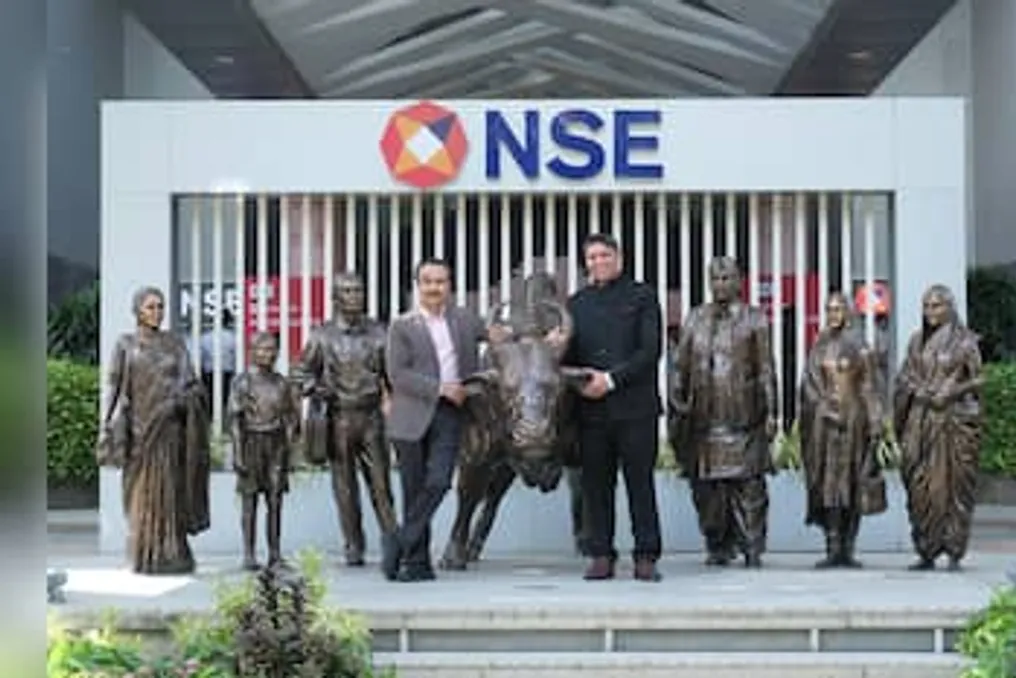
The listing of RentoMojo on the stock market proved successful: shares rose by almost 19% on debut day. This occurred after Accel, one of the platform's earliest institutional investors, sold about 317 crore rupees worth of shares, representing the largest stake in the IPO.
When Prashant Prakash agreed to support a small startup company from Bangalore in 2015 that rents out sofas and refrigerators, most of his venture capital colleagues were skeptical of the idea. However, eleven years later, the market validated this conviction.
RentoMojo, a furniture and appliance rental platform supported by Accel pre-Series A, demonstrated a strong start on the exchanges on Thursday. The offering of 1,255.57 crore rupees was subscribed 72.89 times, and the company listed nearly 19% above the issue price.
Accel, acting as the largest seller in the Offer for Sale (OFS), monetized part of its early stake, which many investors at the time did not take seriously. The RentoMojo IPO took place from September 9 to 11, 2026, ahead of the listing on BSE and NSE on September 17.
At the listing price, the company's estimated market capitalization was around 5,071 crore rupees, valuing it at approximately 48.6 times earnings for the financial year 26 post-listing.
IPO Challenges and Successes
Accel India IV (Mauritius) Ltd became the largest seller in the RentoMojo OFS, offering shares worth about 317 crore rupees, which constitutes approximately a quarter of the total OFS. Before the IPO, Accel held a stake of 20.92%, which was the largest among shareholders. The exact stake after the IPO will change slightly depending on the final allocation, but this sale represents a partial, not a complete, exit.
Prakash noted that in 2015, Accel noticed a structural shift that later confirmed the firm's own analysis: as urbanization grew, more people had sufficient income to furnish a home but could not afford to buy directly. Founder Gitansh Bamania saw this shift even earlier than Accel and persuasively presented this argument within the company, according to Prakash, an Accel partner.
Since nearly 88% of the total IPO volume consists of OFS, and only 150 crore rupees represents new capital, analysts termed the offering 'heavy on the divestment side.' Prakash stated that the relatively small primary component reflects RentoMojo's profitability, not a need for capital to grow.
He emphasized that RentoMojo is one of the most profitable companies in the Indian startup ecosystem, having three years of profitability built for both scaling and profit generation. Consequently, the company can finance its expansion through internal accruals rather than new capital, which, according to Prakash, explains the small size of the primary IPO component.
According to RentoMojo's Draft Red Herring Prospectus (DRHP), operating revenue grew by 45.5% year-on-year to 386.99 crore rupees in FY26, compared to 265.96 crore rupees, with a compound annual growth rate of revenue over three years at 41.71%. Net profit after tax surged by 142% to 104.30 crore rupees, marking the fourth consecutive profitable year.
The EBITDA margin slightly decreased to approximately 41.5% from 43.6% in FY25. Prakash explained that RentoMojo's profitability depends on asset utilization efficiency, which in turn depends on engineering capabilities covering electrical, plumbing, and carpentry work necessary to maintain products in good condition and ready for reuse.
IPO Lessons and Prospects
Prakash believes that the main lesson from the RentoMojo IPO is that scale and profitability must go hand in hand. He added that companies aiming for a public market should demonstrate growth of more than 30% while showing double-digit EBITDA margins either at the time of the IPO or in the foreseeable future. He called this a specific requirement that Accel is now promoting among its portfolio.
Accel has observed the listings of companies such as BlueStone, Urban Company, and Swiggy, and Prakash noted that public markets have shown strong demand for consumer companies that are becoming leaders in their category, citing Titan as an example. He believes that investors see potential in RentoMojo to create a new category over the next decade, which drives demand for its IPO.
Looking ahead, Prakash reported that Accel has several companies that may go public. He expects six or seven companies from the portfolio, including Moneyview, HomeLane, and BookMyShow, to do so within the next one to two years.
Before the IPO on September 8, 2026, RentoMojo raised 376 crore rupees from over 40 anchor investors, including Kotak Mutual Fund, HDFC Mutual Fund, and Goldman Sachs, at the upper end of the price band.
The RentoMojo IPO takes place against the backdrop of Accel's deepening commitment to India and the transformation of startups through artificial intelligence. Recently, the firm raised $550 million for its ninth early-stage fund in India, which is part of a total raise of $3.5 billion across four new global instruments, including a $1.35 billion growth fund to support companies from seed round to IPO.
Prakash explained that Accel's thesis on AI is based on three directions: expanding consumer access using AI, especially voice AI; transforming defense and manufacturing through physical AI; and bringing Indian AI-focused products to global markets.
Responding to the impact of the Middle East conflict on fundraising and IPO timelines, Prakash stated that he does not see broader issues, as most of the startup ecosystem has adapted to supply and price shocks. The most unresolved issue remains oil prices, which directly affect certain sectors. However, for most other companies, he said, consumer demand in India remains encouraging, and Accel is helping a relatively small group of risk-exposed companies in the portfolio navigate this period.