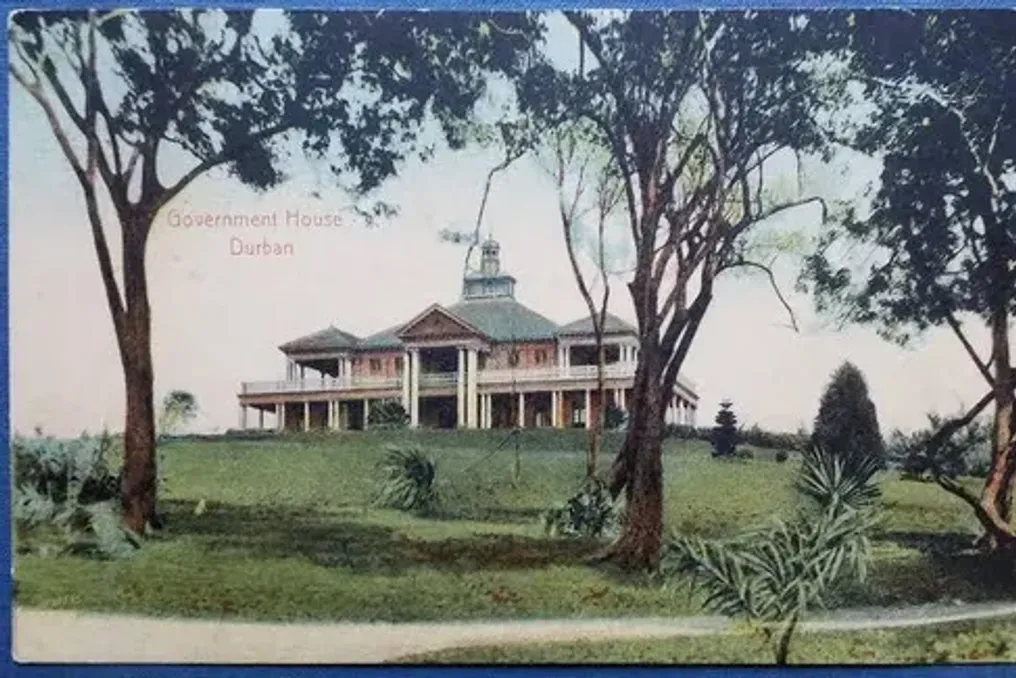
An old postcard dated 1907 depicts the Royal House in Durban, which was published on the Durban History and Stories Facebook page. A modern photograph of the building is featured on the Presidency website, allowing the house to be viewed without needing to look through a wire fence.
The history of the Royal House began in 1872 when Durban Mayor U. M. Palmer welcomed Governor-General Anthony MacGregor in Natal and expressed hope that His Excellency would spend part of the year residing in Durban. Palmer informed MacGregor that the city would provide a 'sea residence appropriate to the position and dignity of Your Excellency.'
However, it was not until 1901 that Mayor John Nicol announced the construction of a sea residence on the 'beautiful grounds of Montpelier.' Fifteen thousand pounds sterling were allocated for the construction, a sum later increased to 28,000 pounds sterling.
Today, this building is known as Dr. John L. Dubbe House. The design was carried out by chief architect A. E. Daintone in collaboration with architects Scott and Kirby from Pietermaritzburg. On June 29, 1904, Sir Henry Bail, Chief Justice of Natal, became the first resident, and the opening was marked by a civic luncheon.
The first governor to reside in the Royal House was Sir Henry McCallum. In 1906, the house hosted its first royal guests—Prince Arthur, Duke of Connaught, his wife Princess Louise Margaret, and their younger daughter Princess Patricia, who visited Durban briefly.
In 1947, the Royal House hosted King George VI of the United Kingdom and his family during a royal tour. In 2012, President Jacob Zuma renamed the Royal House Dr. John L. Dubbe House in honor of the esteemed educator, journalist, and first president of the African National Congress, Dr. John Langalibelele Dubbe.