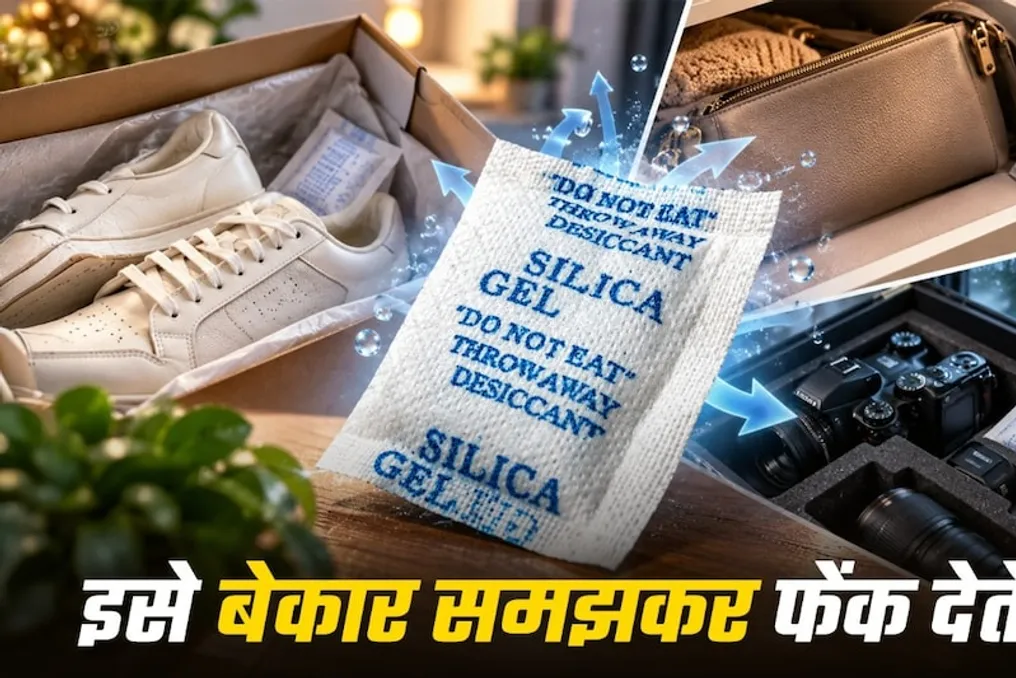
When purchasing new shoes, bags, mobile phones, or other electronic goods in packaging, you often find a small packet marked "Do Not Eat." Many people consider it useless and discard it immediately after taking it out of the box. However, this small packet is actually designed to protect the product from moisture.
The fine particles inside absorb surrounding moisture. This is why such packets are placed in the packaging of shoes, bags, and electronics.
This small packet contains silica gel granules. Although the name might suggest the presence of wet or sticky gel, silica gel usually consists of small, solid granules. Its characteristic feature is the ability to absorb moisture present in the surrounding air. This is precisely why companies include it in their packaging.
Moisture can cause damage to electronics in particular, so silica gel helps reduce humidity inside the package.
New shoes are kept in closed boxes for a long time. If moisture remains inside, it can negatively affect the product. In some cases, moisture can lead to mold growth. Silica gel helps mitigate this threat by absorbing ambient moisture. Therefore, this small packet is often found with new shoes and bags.
Silica gel can be used wherever low humidity needs to be maintained. Some people use it near large containers for storing sugar or salt to control moisture. Nevertheless, extreme caution is required here: the silica gel packet must not be torn, and its granules must not come into contact with food products.
If there is moisture in shoes, a sports bag, or a storage closet, you can place a silica gel packet inside. It will help absorb the surrounding moisture. However, it is important to understand that silica gel is not a magic cure for odors. If shoes or a bag smell, they need to be cleaned and thoroughly dried.
When a mobile phone falls into water, it is often advised to place it with a silica gel packet. Silica gel can absorb moisture, but this does not mean it can fix any water-damaged phone. If the phone has gotten wet, it should first be turned off, and connecting a charger is strictly forbidden. It is also not recommended to try to disassemble the phone yourself or heat it with hot air. If there is suspicion that water has entered the phone, it is safer to consult a service center.
The small packet is marked "Do Not Eat" because silica gel is not an edible product. It is created to absorb moisture, not for consumption. It should be kept away from children and pets. If the packet is torn or the granules spill, it should not be placed near food products. Next time you find this small packet in a box of new shoes, a bag, or electronics, do not rush to throw it away, thinking it is useless. Its main function is to help keep the item dry by absorbing surrounding moisture.
Thus, this small packet, despite its modest size, is not just part of the packaging but a simple way to protect the product from moisture. It is important to avoid consuming it and to pay attention to the condition of the packet and the instructions for use.