In 2025, the US concluded a business deal with Russia worth $5.9 billion, covering both exports and imports. This figure is 14.4 percent higher than the volume of deals in 2024. In 2025, America imported $3.8 billion from Russia, which is 25.6 percent more than in 2024. These figures were published by the US Department of Commerce, indicating America's capacity to trade with Russia to meet its own needs.
European countries are also permitted to import gas from Russia. In 2025, natural gas imports from Russia to the European Union amounted to about 36–38 billion cubic meters (bcm), which was approximately 12–13 percent of the EU's total gas imports. European states continue to purchase Russian LNG, with an increase in LNG imports noted in the early months of 2026. Gas supply via pipeline reaches countries such as Hungary and Slovakia through the Druzhba pipeline. Some processed products indirectly reach Europe through third countries.
Despite the European Union's plans to completely cease Russian gas imports by 2027, purchases under old long-term contracts are currently ongoing. A question arises as to the basis upon which the US is hindering India and China from importing Russian oil. If this refusal continues, the US president may impose a 100 percent tariff on exports coming into the US from India. However, this is more likely a strategy of blackmail by the US than an actual 100 percent tariff.
The US demonstrates dual behavior, as it can purchase fertilizers, uranium, industrial raw materials, chemicals, and precious metals from Russia for its own needs. European countries can also continue to import from Russia, but if India starts doing the same, the US is preparing to impose a 100 percent tariff against India. This US law does not comply with international principles and norms.
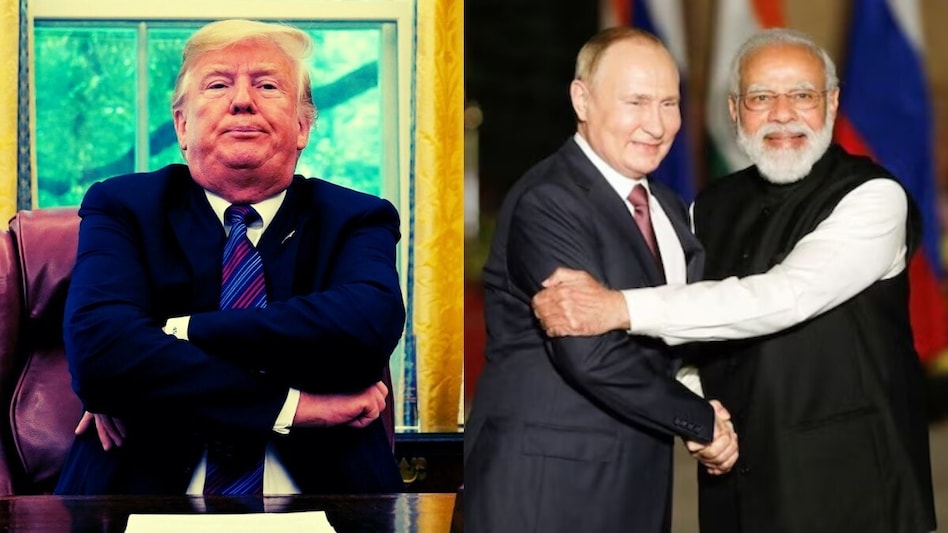
On Wednesday, the US House of Representatives passed a law that grants President Donald Trump broad powers to impose sanctions against Russia and levy tariffs of up to 100 percent on countries purchasing Russian oil and gas. This law will now be sent to Trump for approval. This law will have the greatest impact on India and China, as both countries purchase significant volumes of oil from Russia. According to the analytical center 'Center for Energy and Clean Technology Research' (CREA), from December 2022 to August 2026, China accounted for half of Russia's total crude oil exports, followed by India (37%), Turkey (5%), and the EU (5%).
Michael Krugman, a geostrategic expert, noted in a BBC article that 'this new bill could create serious problems for India, and this could happen at the most difficult moment when sensitive trade negotiations are underway in the final stages and there are large-scale tense relations.' It should be noted that negotiations on trade agreements are constantly taking place between India and the US.
Indian security expert Brahma Chellani suggested considering the possibility of preparing retaliatory tariffs (countertariffs) following the example of Mark Carney. Carney did something few leaders dared to do: he rejected a trade agreement that seemed disadvantageous to Canada and responded with a dollar-for-dollar American tariff. Indeed, in response to the Trump administration's introduction of new tariffs of up to 50% on Canadian goods, Canada imposed retaliatory 'dollar-for-dollar' tariffs.
Ajay Srivastava from the Global Trade Research Institute (GTRI), speaking to the BBC, stated that 'this bill is a direct and dangerous attempt to force India to sign a bilateral trade agreement on unilateral terms. India buys oil from Russia to obtain affordable energy for 1.4 billion people, not to finance a war, and these purchases have helped stabilize global supplies and prices.'
Russian Oil Ensures Stability in the Commodity Market
The US links India's purchase of crude oil to Putin's 'war machine.' However, America ignores the fact that by buying Russian oil, India has prevented a rise in global crude oil prices. After the start of the war in Ukraine in 2022, Western countries imposed an embargo on Russian oil, leading to the redirection of Russian oil from Europe to Asia. India acquired this preferential oil product in large volumes. If a major economy like India did not buy this oil, it would have had to seek other markets, and Russian companies could have suddenly stopped production. This would have caused a sharp drop in global supplies, and benchmark prices such as Brent could have risen by $10–$15 per barrel or more. India's purchases support the Russian oil market, ensuring supply stability and curbing price increases. Furthermore, India refines it in its refineries and exports diesel fuel and other products, thereby increasing global product supplies. This reduces inflationary pressure worldwide, including in developing countries.
The US Granted Concessions to India
US policy regarding Russian crude oil has never been static. In March 2026, the US temporarily granted India a 30-day deferral to allow India to purchase discounted Russian oil. This was due to disruptions in oil supplies caused by hostilities in the Strait of Hormuz, which affected global crude oil prices.