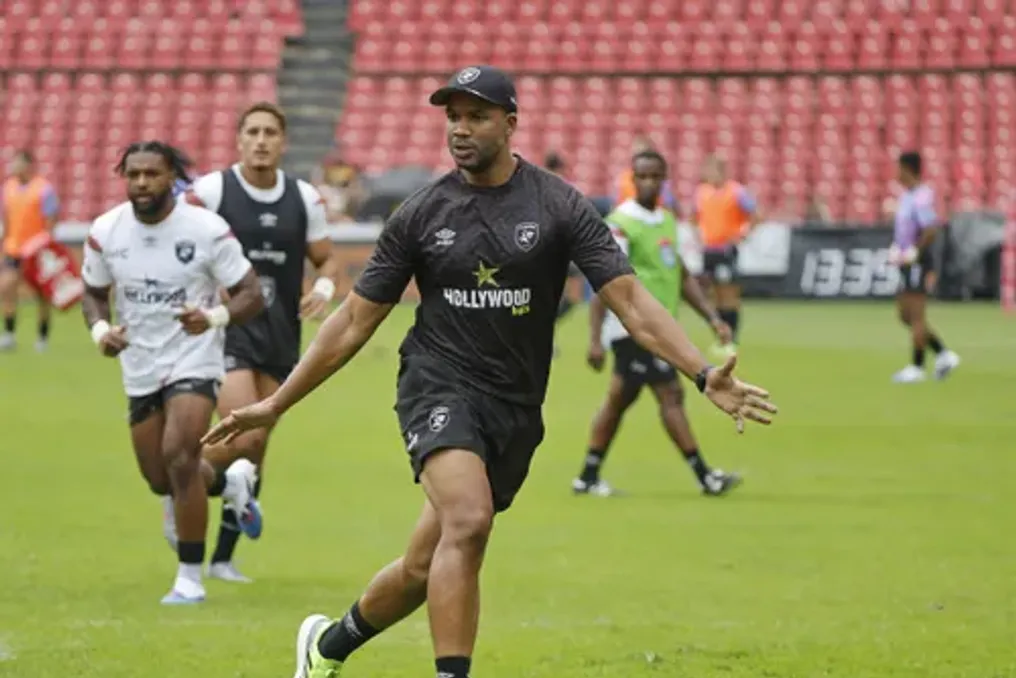
The era at the Sharks club where all responsibility for the professional rugby club's leadership rested on one captain is coming to an end. Ahead of the new United Rugby Championship (URC) season, coach JP Pietersen introduced an updated leadership structure that distributes duties between players on the field and those responsible for maintaining standards off the field.
South Africa's national team center, Andre Esterhuizen, remains the captain of the Sharks, which was expected after he was named Player of the Year by the players at last season's awards ceremony. However, he will now be supported by three deputies: Emil van Heerden, Nick Hatton, and Vincent Tsikuta. In the event of Esterhuizen's absence due to national team commitments or unavailability, Van Heerden, Hatton, or Tsikuta will take over the captaincy role.
Furthermore, another significant change has occurred: South Africa national veteran prop Vincent Koch and Fepsy Buthelezi have been appointed Club Captains. Their functions extend beyond game day and cover the training ground, gym, and locker room.
Sharks Leadership Structure
Pietersen believes that this structure ensures that leadership will no longer be concentrated in the hands of a single player but will become a collective responsibility. He noted: 'Andre was an outstanding leader, and I am absolutely confident that he will continue to set that standard on the field.' He added that the specialty of this group lies in squad depth: 'Emil, Nick, and Vincent Tsikuta will share this responsibility as deputies, while Vincent Koch and Fepsy Buthelezi will work alongside Andre and our coaching staff to raise standards.'
The Sharks coach has placed discipline, accountability, and respect at the core of his high-performance culture and wishes for every player to have a leader monitoring adherence to these norms. Pietersen emphasized: 'Every player in this squad has a leader next to them. This means that all of us—players and coaches—are accountable to each other. No one is above the standard; everyone adheres to it equally. This is the culture we will promote.'
Esterhuizen's role essentially corresponds to the traditional function of a captain: managing the game, making decisions under pressure, demanding discipline, and setting the physical level for teammates. The club captains carry a much broader mandate. Koch and Buthelezi will be custodians of the environment in which the Sharks prepare for games, helping to set standards in the locker room, gym, and training ground, acting as a link between the playing squad and the coaching and management groups. This is a deliberate attempt to ensure that the Sharks' identity does not depend on a single voice.
The new system also empowers two senior players with the responsibility of preserving team traditions while helping to define what the next generation of Sharks should inherit. For Pietersen, the message is clear: leadership is no longer the job of one person wearing the captain's armband. The Sharks will begin their URC season with a home match against the Ospreys on Saturday, September 26.