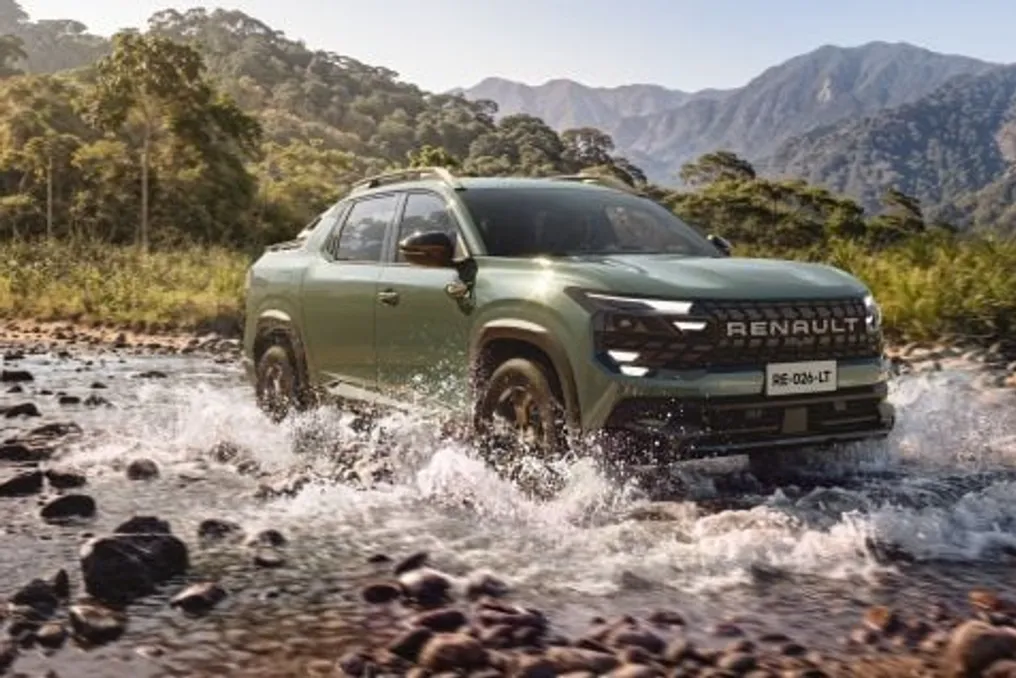
Renault Niagara presented as an alternative to the Fiat Toro, highlighting five technical and equipment advantages
Read more
AutoPapo
autopapo.com.br

Renault Niagara presented as an alternative to the Fiat Toro, highlighting five technical and equipment advantages

Renault has launched the Niagara, its new mid-size pickup truck, which will succeed the Oroch model. The announcement was made on September 10th in Argentina, with an expected arrival at Brazilian dealerships in November. This launch occurs 11 years after Renault entered this segment, a period during which the Fiat Toro consolidated its leadership.

The production of the Niagara will take place in Santa Isabel, Córdoba, with a primary focus on the Italian market. Renault demonstrates great confidence in the vehicle, aiming to produce around 65,000 units annually, of which 70% must be destined for export, with Brazil as the main destination.

Technical specifications have already been released, allowing for the identification of several advantages of the Niagara compared to its main competitor.

Engine and Version Differences

One of the Niagara's strongest points lies in its offering of four distinct versions. These include an entry-level model with a manual transmission and the top-of-the-line Outsider 4x4, both equipped with the 1.3 turbo flex engine, which generates 160 hp and 27.5 kgfm, available with either a manual or a six-speed wet dual-clutch automatic transmission.

In contrast, the Toro presents a different configuration: its line is dominated by the 1.3 turbo flex engine producing 176 hp with front-wheel drive. The 2.2 turbodiesel engine, which delivers 200 hp and all-wheel drive, is restricted to the two more expensive diesel versions.

The most affordable version of the Fiat Toro with 4x4 traction is the Volcano, which, being diesel, has a starting price from R$ 220,490. Although the prices for the Niagara have not yet been revealed, this amount exceeds market estimates, which point to a ceiling of R$ 200,000 for the new Niagara's most expensive variant.

Towing Capacity and Dimensions

The Niagara is announced with a towing capacity of 710 kg, a figure the manufacturer claims is the best in the category. This volume is significantly higher than the 400 kg offered by the Toro with the flex engine.

It is important to note that trailers with a gross weight up to 750 kg do not require their own brakes, according to Contran regulations; above this limit, independent service and parking brakes, known as implement brakes, are mandatory. Since the Niagara's 710 kg is below this reference, it suits light trailer use well, suitable for transporting motorcycles, ATVs, or construction materials, but it is not intended for pulling large trailers.

In an interview given to the Argentine portal 16 Válvulas during the launch event, Renault executives clarified that they did not disclose a braked towing number because the limit depends on both braking and the torque required for traction, especially on inclines. They stated that the unbraked capacity exceeds 700 kg and remains unchanged under both conditions.

The pickup's dimensions are 4.94 m in length for the 4x4 versions and 4.91 m for the 4x2, with a wheelbase of 2.96 m, a width of 1.83 m, and a height of 1.72 m. The internal width was assessed by AutoPapo during the presentation, indicating that the space allows for five passengers with greater comfort compared to the Toro. There is a 36-liter compartment behind the rear seat, and the backrest has a 25-degree inclination.

Trim and Technology

The interior trim follows the Boreal standard, characterized by soft materials on the panels and front doors, giving it a level of sophistication closer to the Ram Rampage than to its direct competitor. The rear suspension is independent multi-link, adjusted by Renault to reduce body movement by 30%, and the brakes are ventilated discs on all four wheels.

The instrument panel integrates a 10.2-inch screen into the 10.1-inch multimedia center. This system offers OpenR Link connectivity, native Google, Maps, Google Assistant, Play Store app support, Android Auto, and Apple CarPlay (wired or wireless), in addition to the Gemini assistant.

The assistance package is a notable differentiator, including six airbags, 360° camera, automatic parking, adaptive cruise control with stop and go function, autonomous emergency braking with pedestrian detection, blind spot monitoring, license plate reader, rear cross-traffic alert, and fatigue sensor, totaling 26 ADAS systems according to Renault. The stop and go feature helps reduce wear in traffic jams, while the cross-traffic alert aids visibility when reversing, an area often obstructed by the bed.

In the Toro, these advanced features are exclusive to the highest versions. The Ultra flex, priced at R$ 202,490 in the 2026 line configurator, is the one that incorporates autonomous braking, lane departure warning, and automatic high beams. Renault still needs to define how it will distribute these items among the four versions intended for the Brazilian market.

Bed and Market Positioning

The Niagara's bed accommodates 938 liters, measuring 1.03 m wide by 61 cm high, and features eight tie-down hooks and a 12-volt outlet. Its volume is only one liter larger than that of the competitor, which does not determine the final outcome. What truly differentiates them are the accessories: the Niagara offers factory-installed retractable hard cover, functional tonneau cover, and protective lining in the cargo area as standard, in addition to a damped opening lid. The Toro also offers the metal cover as a standard item in certain versions, but the hard top is exclusive to the Ultra version.

The difference in payload capacity is 654 kg for the Niagara, versus up to 750 kg for the Toro flex, in a 937-liter bed. Renault has not disclosed the prices or content of the versions for Brazil. The expectation is that the price positioning will be between R$ 150,000 and R$ 200,000, a range that currently covers the flex versions of the Toro, which vary between R$ 165,000 and R$ 202,000. If the Niagara enters the lower part of this range offering the 4x4 flex option, consumer analysis will change drastically; if positioned higher, it will become just another expensive option in an already dominated segment.

It should be considered that the pickup is imported from Argentina, which subjects its cost to exchange rate fluctuations, and that, at the moment, the brand only offers thermal engines. Renault has confirmed future plans for hybrid options, ensuring that it will not be a mild hybrid system, but rather a more robust setup.
Similar stories

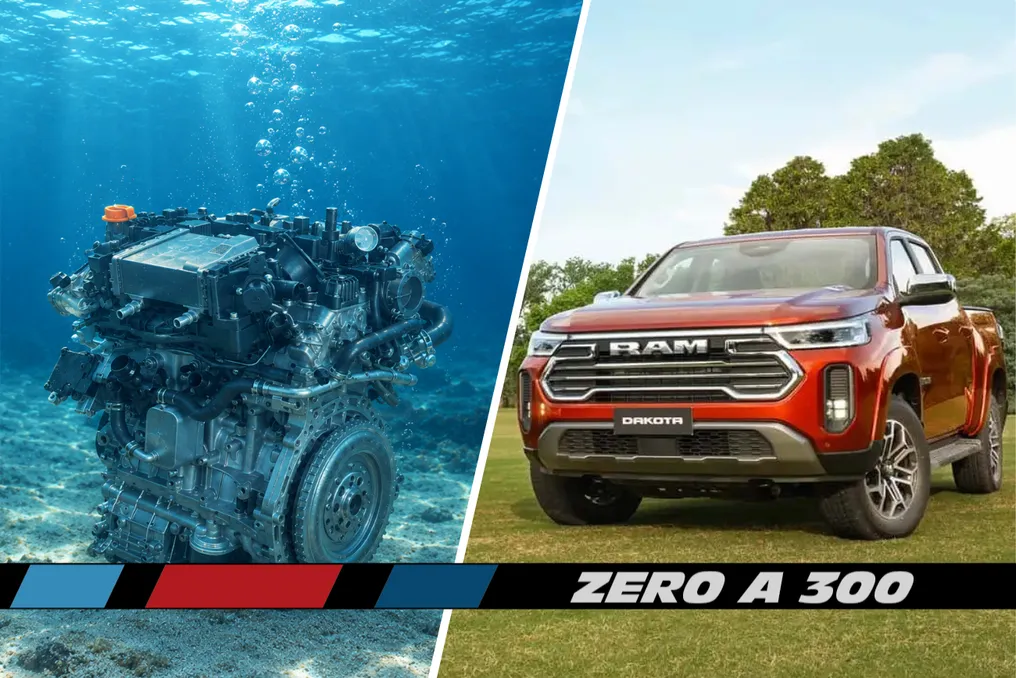
New automotive developments include submersible engine and restructuring at Volkswagen
Read more
flatout.com.br

New automotive developments include submersible engine and restructuring at Volkswagen

The automotive sector presents several novelties, ranging from a new hybrid engine capable of operating underwater to significant changes in pickup truck production plans and corporate restructuring within major automotive groups.

The Fiat Titano and Ram Dakota pickups have registered sales below expectations in the Brazilian market. It is observed that competing vehicles, such as the GWM Poer, surpass both in sales volume. The Titano, which faced reputation issues with its initial powertrain, holds the eighth position in the pickup ranking, while the Dakota, which uses the Ram name to boost sales, is in sixth place, behind models like the Toyota Hilux, Chevrolet S10, Ford Ranger, and Mitsubishi Triton.

Due to unsatisfactory performance, Stellantis decided to adjust the production of these pickups, cutting the pace in the Córdoba factory by half. The original target of 27,000 units for 2026 was reduced to 16,500. Specifically, the Dakota will drop from a forecast of 8,000 to about 3,000 units by the end of the year, and the Titano will fall from 1,500 to 1,000 units. In Brazil, the Titano registered about 3,400 registrations, and the Dakota reached approximately 3,200, figures lower than the more than 20,000 sold by segment leaders, such as the Hilux, which exceeded 30,000 units.

Stellantis communicated that it is 'adapting its production processes' to current demand and reinforced its commitment to the factory by investing US$ 380 million to transform Córdoba into a regional pickup center. Furthermore, starting in 2027, there will be local production of the 2.2 Multijet engine, which is currently imported from Italy and has 200 hp and 45.9 kgfm.

The sales problem appears to be linked to consumption habits, given that the leading models have been established for many years. It is argued that creating two similar pickups with distinct brands only increased design costs and separate distribution and after-sales channels, whereas the Ram brand is traditionally more associated with rural producers, the target audience of the Titano.

Volkswagen may sell Ducati

The crisis facing the Volkswagen Group could lead to the possible sale of Ducati. Gernot Döllner, CEO of Audi, confirmed that Ducati needs to be evaluated in the context of the German group's major restructuring. Although the company has belonged to the Volkswagen Group since 2012, after being acquired by Audi, integrating into the same group that includes Lamborghini and Bentley, no final decision has been made.

The sale hypothesis arose after the announcement of an aggressive cost-cutting plan by Volkswagen, which foresees the elimination of 50,000 jobs, the discontinuation of half of the models, and the simplification of the remaining model range. The group also plans to reduce its portfolio of holdings and businesses by about one third, potentially divesting activities without clear strategic or financial contribution.

Despite being profitable, Ducati recorded a 7% decline in sales in 2025, with revenue falling from €1 billion to €925 million and operating profit decreasing from €91 million to €52 million. However, the issue is not a deficit, but rather a strategic justification within a Volkswagen focused on concentrating capital in essential businesses. It is estimated that Ducati could be worth around €1.25 billion in a potential transaction, although there is no confirmation of buyers or the start of the sale process.

Horse presents new hybrid turbo powertrain that works underwater

Horse Powertrain, a joint venture formed by Renault, Geely, and Aramco, launched a new hybrid turbo engine called B20, specifically designed to operate submerged. This 2.0-liter four-cylinder turbo engine was conceived for hybrid SUVs and pickups that need to cross flooded areas or withstand intense off-road use.

The B20 meets the IPX8 standard, allowing it to function even when submerged in depths of up to 1.1 meters. This is achieved through a completely sealed structure, in addition to sensors and electrical components protected with IPX8 and a specific sealing at the junction between the engine and transmission. When the sensors detect submersion, the electronic control unit automatically adjusts certain operational parameters, potentially limiting power or modifying throttle response to ensure stability during crossing.

Horse also stated that the B20 was developed to operate continuously on slopes of up to 45%. Depending on the configuration, it generates between 190 and 252 hp, with torque ranging between 30.6 and 38.7 kgfm. Weighing 130 kg, the engine uses the Miller cycle, direct injection, and turbocharging. A notable highlight is its declared thermal efficiency of 48.4%, which represents almost half of the fuel's energy converted into mechanical work, an index comparable to that achieved by Formula 1 around 2017.

Audi Nuvolari 1,001 hp debuts in Italy alongside Tazio's Auto Union

Three months after its presentation, Audi took its new supercar, the Nuvolari, to Italy for the first time, choosing the city of Mantua. This choice pays tribute to Tazio Nuvolari, who was born in Castel d’Ario, in the same province, and competed for Auto Union in the late 1930s.

In the city, Audi displayed the Nuvolari at Palazzo Te, next to an Auto Union Type D, a model that Tazio won in the 1938 Italian Grand Prix in Monza. Subsequently, the vehicle passed through the Tazio Nuvolari Museum before heading to Monza and Milan.

The Nuvolari is the most powerful and fastest car ever developed by Audi, combining a 4.0-liter central-rear bi-turbo V8 with three electric motors to deliver 1,001 hp. Two electric motors act on the front axle, and the third works in conjunction with the V8, configuring the new generation of the quattro system. According to Audi, this setup allows the car to reach 100 km/h in 2.6 seconds, 200 km/h in 6.8 seconds, and exceed 350 km/h.

Additionally, the Nuvolari is the first Audi model produced in series with a carbon fiber body. Production will be limited to only 499 units. Reservations in Europe will begin this year, with the first deliveries expected in the first half of 2027.

Last Toyota Supra MkV to be auctioned for Paul Walker's foundation

Toyota delivered the last unit of the GR Supra MkV (VIN 99999) to Reach Out WorldWide, a humanitarian assistance organization founded by Paul Walker in 2010. This car will be auctioned by Barrett-Jackson in Scottsdale, Arizona, between January 23 and 31, 2027, and all proceeds will go to the institution.

This model has exclusive features, such as the 'Phantom Gray' silver paint and Akio Toyoda's signature on the tracks, Morizo. Mechanically, it follows the American specification of the GR Supra MkV Final Edition, equipped with a 3.0-liter six-cylinder turbo engine producing 387 hp and a six-speed manual transmission. The version also features upgraded Brembo brakes and a specific suspension tuning.

The decision to auction the vehicle was not random; in 2019, the first Supra MkV was also auctioned by Barrett-Jackson to support charitable causes. That unit, with a special VIN ending in 20201, sold for US$ 2,100,000.

Popular